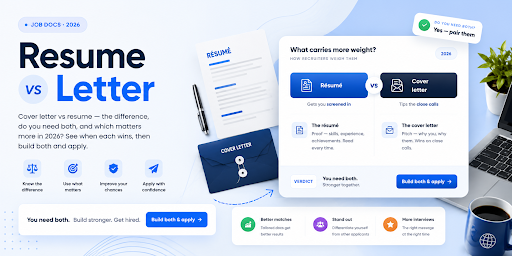
When you are short on time, where should you focus, the cover letter vs resume? It is a fair question, and most job seekers feel the same uncertainty. The honest answer is that you usually need both, and which one matters more depends on the situation. So the smart move is to understand the role each plays.
The numbers explain why this matters. Recruiters scan a resume in just six to eight seconds, and a cover letter in fifteen to thirty. Both documents must work hard, and fast. This guide breaks down the real differences, when each one wins, and how to make them work together. By the end, you will know exactly where to invest your effort.
| Want a head start? Create a free profile on CloudColleague, upload your resume and start applying for various live jobs. |
Cover Letter vs Resume: The Quick Answer
Here is the short version, before we dig in. A resume is the evidence. It is a structured summary of what you have done, built for fast scanning. A cover letter is the argument. It is a narrative that explains why your experience matters for one specific role.
Another way to see it is through time. Your resume looks to the past, listing what you have achieved so far. Your cover letter looks to the future, showing why you would fit this employer next. So the two complement each other, rather than repeat each other.
What Is a Resume?
A resume is a concise, factual overview of your career. It summarises your work history, skills, qualifications, and education, usually across one to two pages. Employers use it to gauge your fit quickly and to filter applications.
It is also built for software. A clean resume parses well through applicant tracking systems, which scan for relevance before a human reads it. Almost every job application requires one. For help building yours, see our resume writing guide and our guide to the best resume format.
Read Next: How to Write a Resume?
What Is a Cover Letter?
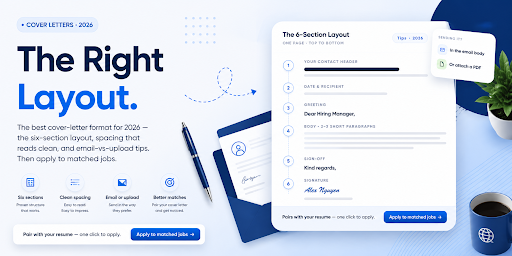
A cover letter is a one-page, first-person letter that accompanies your resume. Rather than listing facts, it makes a case. It connects your background to a specific company and role, and explains your motivation.
A good cover letter also signals effort, maturity, and writing quality. It helps a hiring team interpret your profile, especially if your path is unusual. However, it is not always required. For help writing one, see our cover letter guide and our guide to the cover letter format.
Read Next: How to Write a Cover Letter That Gets Noticed?(2026 Guide)
Cover Letter vs Resume: The Key Differences
So how do the two compare directly? This table makes the differences clear at a glance.
| Factor | Resume | Cover Letter |
| Purpose | Evidence of what you’ve done | Argument for why it matters |
| Focus | Past achievements | Future fit |
| Format | Bullet points, 1 to 2 pages | Full sentences, 250 to 400 words |
| Required? | Almost always | Sometimes |
| Recruiter scan | 6 to 8 seconds | 15 to 30 seconds |
In short, the resume catalogues your value, while the cover letter explains it. One supports fast screening, and the other adds context and judgement.
Do You Need Both a Cover Letter and a Resume?
In most cases, yes, you need both. Always submit a resume, because nearly every employer requires one. Then add a cover letter whenever it is requested, or whenever it genuinely strengthens your case.
There is one rule worth remembering. If the job ad asks for a cover letter, skipping it can cost you the application outright. So when the option is there, take it. A strong letter is a chance most applicants waste.
What Matters More, Resume or Cover Letter?
Here is the answer most guides avoid giving clearly. In 2026, your resume matters more for getting the interview, while your cover letter matters more for getting chosen. That distinction is the key to where you invest your effort.
The resume drives the first decision. It passes the ATS filter and tells recruiters quickly whether you fit. As a result, it largely determines your response rate. A weak or generic resume can sink your application before the cover letter is ever read.
The cover letter, however, becomes decisive when competition is tight. When several candidates look similar on paper, the letter provides the context and intent a resume cannot. So both matter, just at different stages of the process.
When Does a Cover Letter Matter Most?
A cover letter is not equally valuable for every role. So use it where it adds the most signal. Knowing the difference saves you effort and improves results.
A cover letter carries the most weight for leadership and client-facing roles, writing-heavy jobs, and high-ownership positions. It also matters for career changes, unconventional career paths, and internal moves, where context helps. By contrast, it adds less value for high-volume frontline hiring, where ATS resume matching drives the first decision.
Cover Letter vs Resume for No Experience
With little work history, both documents shift in emphasis. Your resume shows evidence from projects, study, internships, and volunteering. Your cover letter explains your intent, potential, and enthusiasm. If you are new to the country or the local market, a cover letter can add helpful context, and our guide for those starting their first job in Australia can help.
Cover Letter vs Resume for Career Change
For a career change, the cover letter often carries more weight. It frames your pivot and explains transferable skills the resume cannot fully show. So invest extra time in the letter here.
How to Make Your Resume and Cover Letter Work Together?
The strongest applications use both documents as a pair, not a duplicate. So align them carefully. Think of them as siblings, not twins.
Start with consistency. Use the same contact details, font, and design across both, so they look like one professional set. Then tailor both to the job’s keywords, drawn straight from the posting. Above all, avoid repeating content. Let the resume list your achievements, and let the cover letter tell the story behind them.
Common Mistakes With Both Documents
A few errors undermine even strong applications. So watch for these in both documents. Each one is easy to avoid.
The most common mistakes are repeating the resume in the cover letter, sending generic and untailored documents, missing job-specific keywords, and skipping proofreading. For deeper fixes, see our guides to resume mistakes and cover letter mistakes.
Read Next: Common Cover Letter Mistakes to Avoid in 2026.
Build Both and Apply to Matched Jobs
Here is the part that ties it all together. You do not have to choose between a cover letter vs resume. You need both, working as a pair, sent to the right roles. That is what turns strong documents into interviews.
CloudColleague brings it together. You can build your profile, pair a strong resume and cover letter, and let AI matching surface roles that fit your skills. The platform reads your details to match you, so you spend less time scrolling and more time applying. Explore how the platform works, browse different freelance tasks to gain quick skills and ear from day 1.
The cover letter vs resume question has a clear answer in 2026. You need both, and they do different jobs. Your resume wins the interview, while your cover letter wins the choice when the race is close.
| Ready to apply with both? Start as a Seeker on CloudColleague and get matched to live jobs. |
| Are your actively hiring? Start as an employer on CloudColleague and start your hiring journey. |
Frequently Asked Questions
A resume is a structured summary of your work history and skills, built for fast scanning. A cover letter is a narrative that explains why your experience fits one specific role. The resume shows the past, the letter, the future.
Almost always submit a resume. Add a cover letter whenever the job ad requests one or when it strengthens your case. Skipping a requested cover letter can cost you the application.
Your resume matters more for getting the interview, since it drives the first screen. Your cover letter matters more for getting chosen when competition is tight, because it adds context a resume cannot.
No. The two should complement each other, not duplicate. Let your resume list achievements, and use the cover letter to explain the story and fit behind them.
You can create a free CloudColleague profile, pair your resume and cover letter, and apply to live Australian roles that match your skills.