Most cover letters are not rejected for a lack of experience. They are rejected because they are generic, poorly structured, or simply forgettable. In a competitive market, that is a costly mistake. A cover letter that gets noticed, on the other hand, can open the door before a recruiter even reads your resume.
The good news is that a strong cover letter follows a clear, repeatable formula. You do not need to be a writer to get it right. This guide walks you through the structure, real examples, and the exact approach that works in 2026. By the end, you will know how to write a cover letter for any role.
| Want a head start? Start as a Seeker on CloudColleague, download the free cover letter templates and opening lines and skip the blank page. |
Are Cover Letters Still Relevant in 2026?
Yes, cover letters are still relevant, and in many cases they are expected. They matter most for competitive, senior, and career-change roles. They also matter whenever the job ad specifically asks for one. In that case, skipping it can cost you the application outright.
There is also a new reality to understand. Often, the first reader of your cover letter is not a person. An applicant tracking system or an AI screening tool may scan it first, looking for keywords and structure. However, a human still makes the final call. So you must write for both audiences at once, with relevant keywords and a genuine, human voice.
What to Include in a Cover Letter?
A strong cover letter has a clear anatomy, and every part earns its place. Miss one, and the letter feels incomplete. Include them all, and you look organised and professional.
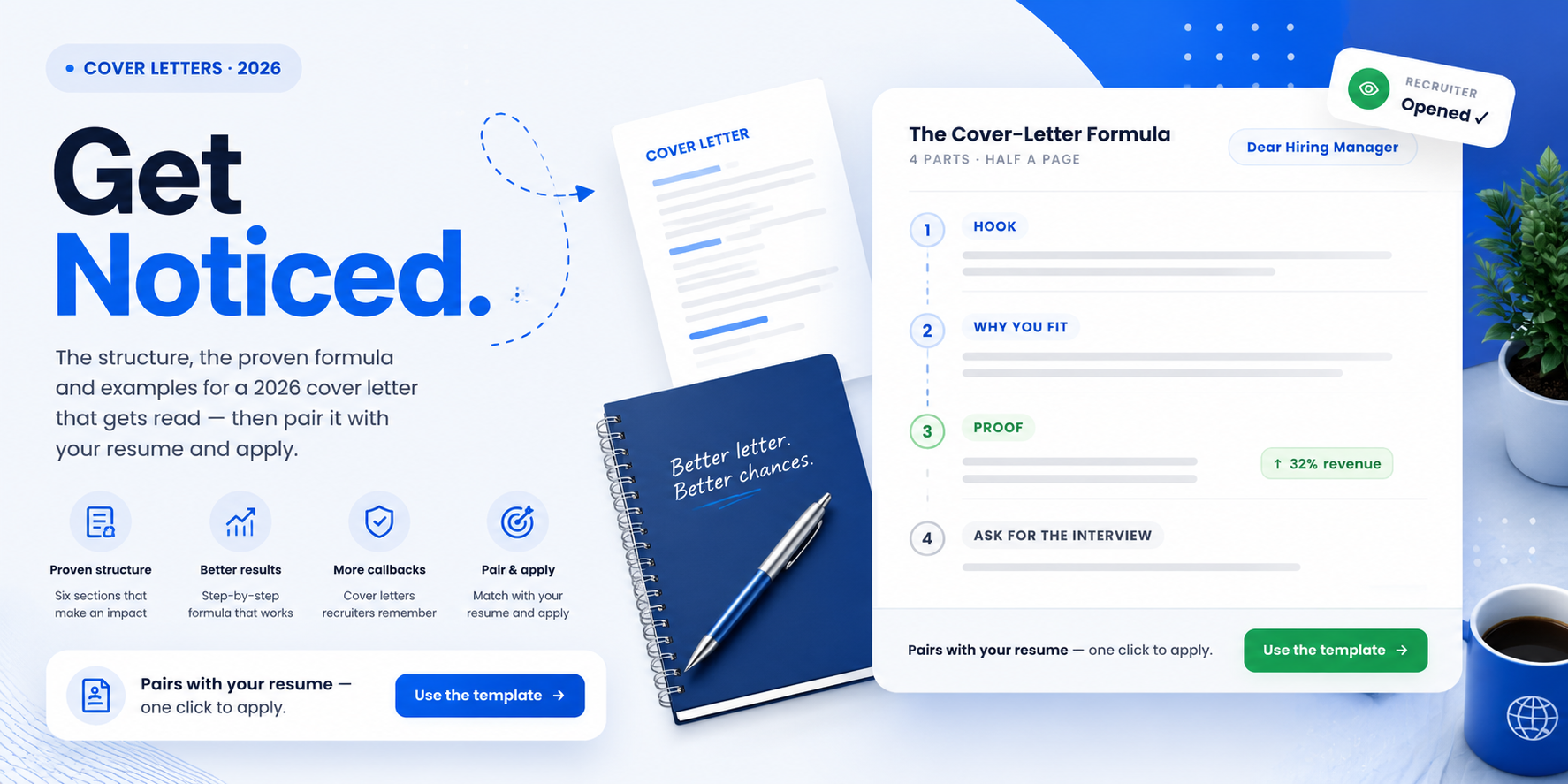
Here is what a 2026 cover letter should contain. It needs a header with your contact details, a personalised greeting, and an opening paragraph that hooks the reader. Then it needs one or two body paragraphs focused on your achievements, followed by a closing with a clear call to action. The sections below break each one down, so you can build yours with confidence.
Cover Letter Format (2026)
Format shapes the first impression, so keep it clean and simple. A cover letter should fit on one page and run 250 to 400 words. Use a clear, professional font, such as Arial or Calibri, in a readable size. Keep your spacing consistent and your paragraphs short.
Just as important, avoid anything that confuses screening software. Skip tables, text boxes, images, and decorative elements. Keep your contact details in the body of the document, not buried in a header or footer. For a matching, ATS-safe approach to your resume, see our guide to the best resume format.
Read Next: Cover Letter Template That Pairs With an ATS Resume: Free Download 2026
How to Start a Cover Letter?(The Hook)
Your opening line decides whether the reader keeps going. So make it count, and never waste it. The most common mistake is starting with “I am writing to apply for the role of.” It is dull, and every applicant uses it.
Instead, open with a genuine hook. Lead with the specific role, a standout achievement, or real knowledge of the company. Reference something concrete, such as a product you admire or a recent company milestone. This shows initiative and instantly sets you apart.
Compare these two openings. A weak start says, “I am writing to apply for the marketing coordinator position.” A strong start says, “When your team launched its 2026 sustainability campaign, I saw exactly the kind of purpose-driven marketing I have spent five years building.” The second version earns attention immediately.
How to Address a Cover Letter?
Always address the letter to a real person where you can. Find the hiring manager’s name on the job ad, the company site, or LinkedIn. If you cannot find it, “Dear Hiring Manager” is a safe, professional fallback. However, avoid outdated greetings like “To Whom It May Concern,” because they feel impersonal.
How to Write the Body of a Cover Letter?
The body is where you prove your value, so focus it tightly. Use one or two short paragraphs, not your entire career history. Remember, the cover letter is a highlight reel, while the resume holds the full record.
In these paragraphs, link your achievements directly to the job’s requirements. Pick the one or two things you have done that matter most for this role. Then back them with metrics, such as results delivered, revenue earned, or teams led. Numbers make your claims concrete and believable.
You should also mirror the language of the job description. Use the same key terms the employer used, naturally and without stuffing. This helps you pass automated screening and signals a clear fit to the human reader. Above all, tell a short, relevant story rather than listing traits.
How to End a Cover Letter?
A strong closing leaves the reader ready to act. So do not trail off or simply say thank you. Instead, reaffirm your interest in the role and the company. Then add a clear call to action, inviting the next step.
Keep it confident but polite. For example, you might write, “I would welcome the chance to discuss how my experience can support your team’s goals.” Finish with a formal sign-off, such as “Kind regards,” followed by your name. That leaves a professional final impression.
Cover Letter Examples
Examples make the formula click, so here are two short ones to model. Each follows the structure above. Use them as a starting point, then tailor every line to your target role.
Example opening for an experienced candidate: “Your recent expansion into the Brisbane market caught my attention, because I helped lead a similar regional launch that grew revenue by 35 percent in one year. As an operations manager with six years of experience, I would love to bring that same momentum to your team.”
Example closing: “I am excited by the chance to contribute to your next phase of growth. I would welcome a conversation about how my experience fits your goals. Thank you for your time and consideration.”
Cover Letter With No Experience
No experience is not a dealbreaker, so do not apologise for it. Lead with your education, projects, internships, and volunteering instead. Highlight transferable skills, such as communication, teamwork, or problem solving. Then show genuine enthusiasm for the role and the company.
For example, you might open with a relevant project. “During my final-year marketing project, I built a social campaign that reached 10,000 students, which sparked my passion for digital marketing.” That turns limited experience into clear evidence.
Cover Letter for Career Change
A career change needs a clear, confident frame. Acknowledge the switch briefly, then focus on what transfers. Lead with the skills and results that apply to the new field. Show why you are moving toward this role, not just away from your last one.
For instance, you might write, “After five years in hospitality management, I am moving into customer success, bringing proven skills in client retention and team leadership.” That reassures the reader and explains your story.
How to Write an ATS-Friendly Cover Letter
Since software often reads first, you must write for it too. Fortunately, the rules are simple and do not compromise quality. They simply help your letter parse cleanly and match the role.
Start by including the exact job title in your first paragraph. Then mirror keywords from the job description, using the precise phrases rather than synonyms. Keep your formatting plain, with no tables or graphics, and save the file as a PDF or Word document. For the full keyword method, see our guide to an ATS-friendly resume.
How Long Should a Cover Letter Be?
Shorter is almost always better, so resist the urge to pad. The ideal cover letter fits on one page and runs 250 to 400 words. Use three to four concise paragraphs, each with a clear purpose.
A long cover letter dilutes your strongest points. A tight one keeps the reader engaged and respects their time. So cut anything that does not directly support your fit for the role.
Using AI to Write a Cover Letter (Without Sounding Like a Robot)
AI can speed up your cover letter, as long as you stay in control. It helps with structure, keyword gaps, and tightening clunky sentences. So use it as an assistant, not a ghostwriter.
However, never let AI write the whole thing in its own generic voice. Recruiters can spot template language instantly, and it reads as forgettable. Worse, AI screening tools may flag fully machine-written text. So add your real stories, your specific achievements, and your authentic tone. Keep the human touch that software cannot replicate.
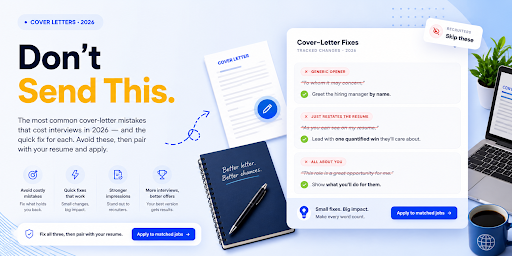
Cover Letter Mistakes to Avoid
A few common mistakes sink otherwise good cover letters. Scan this list, then check your own draft against it. Each one is easy to fix.
- Making generic claims like “hardworking and passionate” with no evidence.
- Repeating your entire resume instead of highlighting key wins.
- Mentioning salary expectations unless the ad asks.
- Explaining gaps, negatives, or why you left your last job.
- Sending the same letter to every employer without tailoring.
Avoid these, and your cover letter immediately rises above the noise.
Pair Your Cover Letter With a Strong Resume and Apply
Here is the truth that ties it all together. A great cover letter works hardest beside a strong resume, sent to the right roles. On its own, even the best letter cannot land the job. The application has to reach real, relevant employers.
CloudColleague brings those pieces together. You can build your profile, pair your resume with your cover letter, and apply to matched Australian roles in a few clicks. You also get AI-matched recommendations, so you focus on jobs that actually fit. For more on the resume side, see our resume writing guide, then learn how to use CloudColleague to find jobs.
| Ready to get noticed? Create your free CloudColleague profile and start applying today. |
Frequently Asked Questions
Open with a specific hook, not a generic line. Link one or two measurable achievements to the job, mirror the posting’s keywords, and close with a clear call to action. Keep it to one page.
Yes, especially for competitive, senior, and career-change roles, and whenever the ad requests one. The software may read it first, but a human makes the final decision, so write for both.
Keep it to one page, around 250 to 400 words. Use three to four short paragraphs focused on your fit for the role. Shorter and sharper beats long and padded.
Skip “I am writing to apply for.” Instead, lead with the role, a standout achievement, or genuine knowledge of the company. A specific, concrete hook earns attention immediately.
Yes, for structure, keyword gaps, and tightening. However, keep your own voice and real stories. Generic, fully AI-written letters read as forgettable and may be flagged by screening tools.
You can create a free CloudColleague profile, pair your resume and cover letter, and apply to live Australian roles that match your skills.