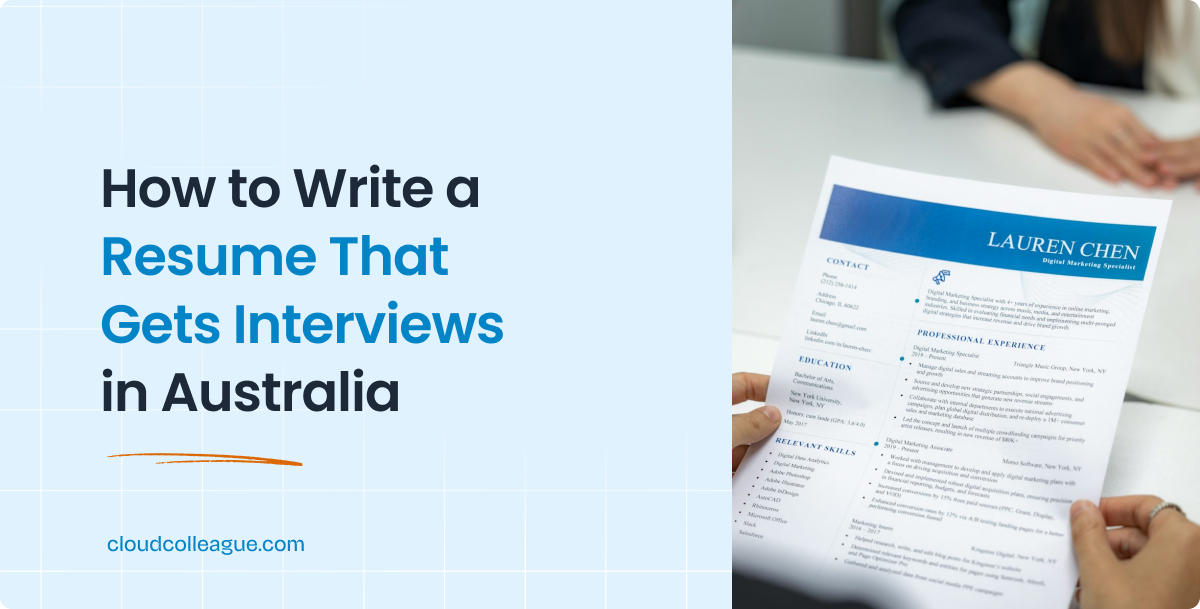
Your resume has approximately seven seconds to make an impression on a recruiter who is looking at it for the first time. Seven seconds is not enough time to read a document. There is barely enough time to scan it. In that window, a hiring manager decides whether what they are looking at is worth their attention or whether they move on to the next of the fifty-plus applications sitting in the same inbox.
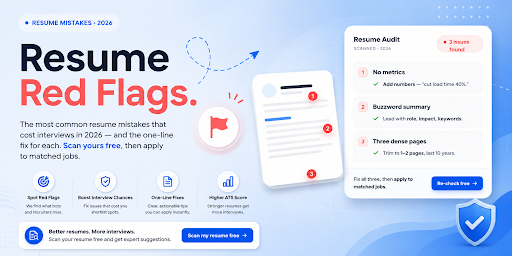
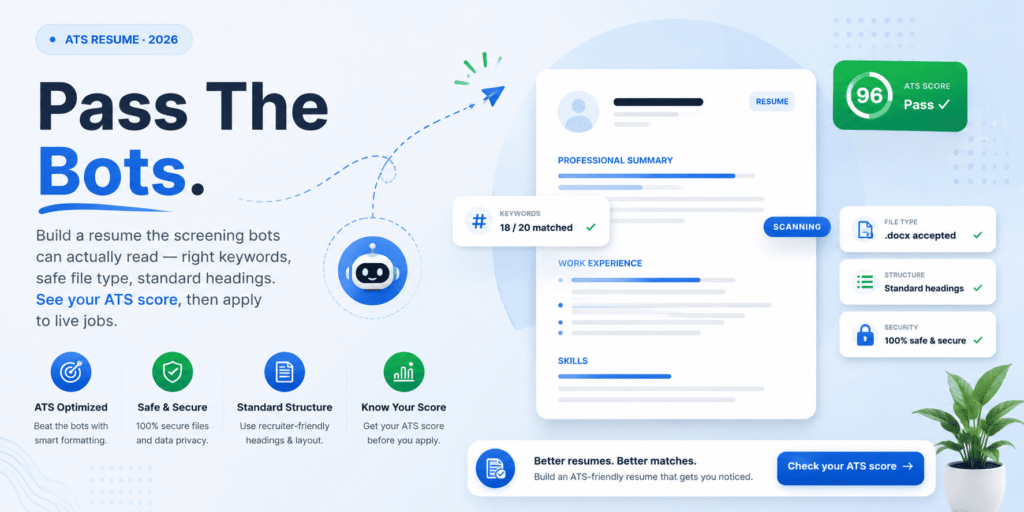
Before it even reaches that point, your resume has already survived, or failed, an automated filter. The majority of Australian employers with more than 50 staff now use Applicant Tracking Systems to process incoming applications. These systems scan resume content for keywords, assess formatting compatibility, and score documents before a human recruiter reviews anything manually. A resume that is perfectly written but formatted in a way the system cannot read will be rejected before anyone has seen it.
Writing a resume that gets interviews in 2026 means satisfying two audiences in sequence. The first is a piece of software. The second is a person who is time-poor, reading fast, and looking for reasons to narrow the shortlist. This guide walks you through how to do both, with practical examples drawn from the realities of the Australian job market and applicable to job seekers in the United Kingdom, Canada, New Zealand, and other English-speaking countries where the same hiring dynamics apply.
Difference Between Resume and CV in Australia
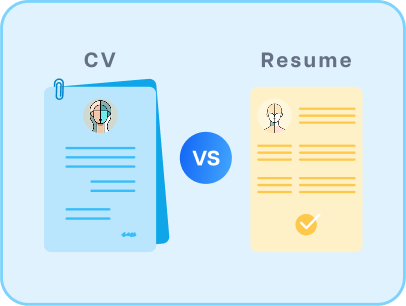
In Australia, the words resume and CV are used interchangeably in most professional contexts, and treating them as identical will not cause any problems in the vast majority of job applications. The technical distinction is worth understanding, however, because there are specific situations where it matters.
A curriculum vitae, or CV, is a comprehensive document covering your entire professional and academic history in full detail. It is the standard document format for academic positions, research roles, medical and scientific appointments, and some senior government positions. A CV has no defined length limit and can run to many pages.
A resume, by contrast, is a targeted document tailored to a specific role or type of role. It is concise, selective, and built around relevance rather than comprehensiveness. For the overwhelming majority of private sector job applications in Australia, and across the United Kingdom, Canada, and New Zealand, a resume is the expected format.
How long should your resume be? The Australian professional standard in 2026 is two to three pages for candidates with five or more years of experience. One to two pages is appropriate for recent graduates and early career professionals. Going beyond three pages for a non-executive role is generally too long and signals poor editorial judgment rather than impressive depth of experience.
Read Next: Resume vs CV: Key Differences Explained
What Should a Resume Include in Australia in 2026?
A well-structured resume contains six core sections, each serving a specific purpose in the hiring process. Missing or poorly executed sections reduce your chances at both the ATS filter stage and the human review stage. Here is what each section should contain and how to approach it.
Contact Information and Professional Links
Your contact information sits at the top of the resume and should include your full name, a professional email address, your phone number, and your suburb and state. You do not need to include your full street address. In the current privacy-aware environment, suburb and state is sufficient to confirm your location for a hiring manager assessing commute or relocation requirements.
Include your LinkedIn profile URL, preferably customised to your name rather than the default string of numbers LinkedIn assigns automatically. Go to your LinkedIn profile, click Edit public profile and URL, and set it to linkedin.com/in/yourfullname. A clean LinkedIn URL signals attention to detail and makes it easy for recruiters to find your full professional profile alongside your resume.
If you work in a field where portfolio work is relevant,, add a link to your portfolio website or a relevant work sample repository such as GitHub for developers. This gives hiring managers direct access to evidence of your capability than asking them to take your word for it.
What you should not include on an Australian resume: your date of birth, marital status, nationality, or a photograph. Australian anti-discrimination law prohibits employers from making hiring decisions based on these characteristics. Including them creates an awkward situation for hiring managers who are required to ignore information you have voluntarily provided. Leave it off entirely.
Professional Summary or Career Profile
The professional summary is the three to five line paragraph that sits immediately below your contact details and above your work experience. It is the first piece of substantive content a recruiter reads. It makes it the highest-value real estate on your entire resume.
A professional summary answers three questions in as few words as possible: who are you professionally, what do you bring to the role, and what are you looking for. It should be specific enough to be meaningful and concise enough to be read in under 20 seconds. Generic summaries that could apply to any candidate in your field waste this opportunity entirely.
An objective statement is a variation used primarily by recent graduates and career changers. In this statement the emphasis shifts from what you bring to what you are seeking. It acknowledges the gap between your current experience and the role you are applying for. While making a clear case for why you are worth considering despite it.
Here are two examples that show the difference between a weak and a strong professional summary:
Weak: Experienced marketing professional with strong communication skills and a passion for results. Looking for a challenging role in a dynamic organisation. Strong: Digital marketing specialist with six years of experience in content strategy, SEO, and paid social across B2B and e-commerce sectors. Consistent record of growing organic traffic by 40 to 60 percent within 12-month periods. Seeking a senior content or growth marketing role in a data-driven Australian or remote team.
The weak version says nothing a recruiter can act on. The strong version tells the recruiter exactly who this person is, what they have delivered, and what they are looking for. It takes 10 seconds to read and answer every question a recruiter needs answered at the profile stage.
Work Experience Section
The work experience section is the core of your resume and the section that hiring managers spend the most time on when a resume makes it through the initial ATS filter. It should be organised in reverse chronological order, with your most recent role listed first.
For each role, include the job title, the employer’s name and location, the dates of employment using month and year format. A set of bullet points covering your key responsibilities and achievements. The distinction between responsibilities and achievements is the most important concept in resume writing and the one that separates the resumes that get interviews from the ones that do not.
A responsibility tells a recruiter what your job required you to do. An achievement tells them what you actually delivered. Most resumes are full of responsibilities and short on achievements. Recruiters and hiring managers in Australia, the United Kingdom, Canada, and New Zealand consistently report that achievement-focused resumes stand out immediately from the majority that describe duties without demonstrating impact.
Here is how the same experience reads at each level:
| Level | Weak Version (Duty) | Strong Version (Achievement) |
| Basic | Managed social media accounts for the company | Grew Instagram following from 2,400 to 11,000 in 12 months through a weekly content strategy, increasing website referral traffic by 34 percent |
| Basic | Responsible for customer service | Maintained a 97 percent customer satisfaction rating across 200-plus monthly interactions, reducing complaint escalations by 28 percent over six months |
| Basic | Assisted with project management | Coordinated a cross-functional product launch across four teams, delivering on time and 8 percent under budget against an original scope of $180,000 |
| Basic | Handled recruitment for the team | Reduced average time-to-hire from 47 days to 29 days by introducing a structured candidate screening process, saving approximately $24,000 in agency fees annually |
Every achievement in the strong column contains a number. Numbers are the most credible form of evidence available on a resume because they are specific, verifiable, and immediately meaningful to a recruiter. Where you cannot use a precise figure, use an approximate one. Where you cannot quantify the outcome directly, quantify the scale: the size of the budget you managed, the size of the team you led, the number of clients you served, or the volume of work you processed.
Employment gaps are best addressed briefly and directly rather than obscured through creative date formatting. A short explanation in your cover letter or a brief contextual note in your resume, such as a career break for family care, personal health, or further study, is more reassuring to a hiring manager than a gap they notice but cannot explain.
Education and Qualifications
List your education and formal qualifications in reverse chronological order, with your most recent or highest qualification first. For each entry, include the qualification name, the institution, and the year of completion or expected completion.
TAFE certificates, diplomas, and short courses are absolutely worth including on an Australian resume when they are relevant to the role you are applying for. The completion of a TAFE qualification signals practical, vocationally-focused learning that many employers value equally to or ahead of a university degree depending on the industry and role.
Academic results are generally worth including for recent graduates within two years of completing their studies, particularly if the result was strong. After two years of professional experience, your employment history becomes the more relevant signal and academic grades recede in importance.
Certifications, professional licences, and industry-specific credentials should be included either within the education section or in a separate Professional Development section if the volume justifies it. Examples include a Certificate IV in Project Management through TAFE, a Google Ads certification, a Responsible Service of Alcohol licence, a White Card for construction, or a CPA qualification. These credentials are often the specific keywords that ATS systems are filtering for in relevant roles.
Skills Section
The skills section serves a specific and important function in the modern resume: it gives the ATS a concentrated list of keywords to match against the job description requirements. Understanding this function changes how you approach it.
The most effective approach to the skills section is to identify the most important hard skills listed in the job description you are applying for and ensure those exact terms, or close equivalents, appear in your skills section. Hard skills are technical, teachable, and typically verifiable: software platforms, coding languages, technical methodologies, industry tools, and certifications. They are what ATS systems are most reliably able to identify and score.
Soft skills, such as communication, leadership, problem-solving, and teamwork, can be included in the skills section but carry less weight with ATS filters because they are extremely common and non-specific. They are better demonstrated through achievement bullet points in your work experience section than listed in isolation.
How many skills should you list? Quality over quantity applies directly here. Eight to twelve carefully chosen, job-relevant skills outperform a list of 30 generic ones because they signal that you have read the job description carefully and are presenting yourself as a specific solution to a specific need. A list of 30 skills that includes Microsoft Office, email management, and time management tells a recruiter very little.
References
The Australian standard for references on a resume is to note references available upon request at bottom of the document. This is sufficient for most applications. It avoids using valuable resume space on information that will not be requested until late in the hiring process.
When a job listing specifically requests that referees be included with the application, provide two to three referees with their full name, their title, their organisation, their relationship to you, and their contact details. Former direct managers are the most credible referees for professional roles. Senior colleagues, clients, and academic supervisors are also acceptable depending on your career stage.
Always notify your referees before listing them and brief them on the specific role you are applying for. A referee who is contacted unexpectedly and cannot recall your most relevant work will provide a less compelling reference than one who has been prepared with context and has had time to think about what to say.
How to Format a Resume for Australian Employers in 2026?
Resume formatting is not a cosmetic issue. It is a functional one. A resume that is formatted in a way that an ATS cannot parse will be rejected before a human being reads it, regardless of how strong the content is. And a resume that passes the ATS filter but is visually cluttered, inconsistently formatted, or difficult to scan will fail the seven-second human test that follows.
File Format and Document Setup
PDF is the standard file format for resume submissions in Australia, the United Kingdom, Canada, and New Zealand. It preserves your formatting exactly as intended across all devices and operating systems, which means the resume a hiring manager opens on their laptop looks identical to what you designed.
The exception is worth knowing: some older ATS platforms, and some government application systems, parse Microsoft Word documents more reliably than PDFs. If you are applying through a government portal or a system that explicitly requests a Word document, use Word. For all other applications, PDF is the correct choice.
Name your file professionally. FirstName-LastName-Resume.pdf is the correct format. A file named resume-final-v3-updated.pdf or Document1.pdf signals poor attention to detail before the recruiter has read a single word.
Page margins should be set at 2 to 2.5 centimetres on all sides. Line spacing of 1.15 or 1.2 provides enough breathing room to be readable without wasting space. Use consistent spacing between sections so the document has a clear visual hierarchy.
Font, Size, and Visual Hierarchy
Choose a clean, professional font that renders clearly at standard sizes and does not draw attention to itself. Calibri, Georgia, Garamond, Lato, and Source Sans Pro are all reliable choices. Times New Roman is acceptable but slightly dated. Avoid decorative, script, or display fonts entirely. They reduce readability and signal a misunderstanding of professional document standards.
Body text should be 10 to 12 point. Your name at the top of the resume can be 16 to 20 point. Section headings should be 12 to 14 point and visually distinguished through bold formatting, a slightly larger size, or both. The goal is a clear visual hierarchy that allows a recruiter’s eye to move quickly and efficiently through the document.
Use bold sparingly and purposefully. In a work experience section, bolding your job title draws the eye to the most important identifier in each entry. Bolding random phrases within bullet points is visually noisy and reduces the impact of bolding where it actually matters.
What Resume Templates Are Safe to Use?
Resume templates are widely available through Microsoft Word, Google Docs, and design platforms like Canva. The critical question for any template you are considering is not whether it looks impressive but whether an ATS can read it accurately.
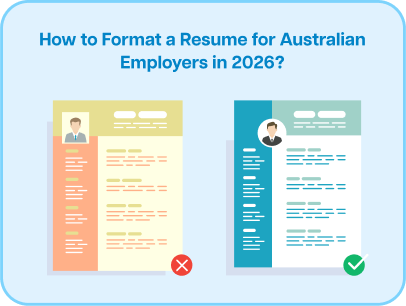
Templates that use text boxes, multiple columns, sidebar sections, tables for layout, headers and footers containing key information, or decorative graphics are problematic for ATS parsing. When an ATS reads a document, it processes text in a specific order based on the document’s underlying structure. A sidebar column that visually appears on the left of the page may be read last by the ATS, which means your contact details or professional summary could be parsed as coming after your work history.
The safest resume structure for ATS compatibility is a single-column layout with clearly labelled section headings, standard bullet points, and no design elements that live outside the main text flow. This sounds plain, but it functions reliably across all ATS platforms and the clean structure actually reads well to human reviewers too.
Canva resumes are visually attractive and appropriate for certain creative industries where a design-forward resume signals relevant skills. Graphic designers, art directors, and creative professionals can use visually styled resumes effectively. For roles in finance, law, technology, healthcare, administration, and most professional services, a clean functional resume outperforms a designed one because it is less likely to fail ATS parsing and less likely to seem inappropriate for the context.
Quick test: Copy and paste your entire resume into a plain text document like Notepad. If the content appears in a logical readable order with no missing sections or jumbled text, your resume is likely ATS-compatible. If sections are out of order or content is missing, your formatting has a problem that needs fixing before you submit another application.
How to Tailor Your Resume to a Job Description (The Step That Most Candidates Skip)
If there is one thing you take from this guide and apply immediately, make it this. Tailoring your resume to the specific job description is the single most impactful action available to any job seeker, and it is the step that the majority of candidates skip entirely.
The reason most people do not tailor is understandable. Writing and maintaining a resume is time-consuming, and the idea of rewriting it for every application feels exhausting. But the reality is that tailoring does not require rewriting your resume from scratch. It requires making targeted adjustments to specific sections that take 20 to 30 minutes per application and significantly improve your chances of both passing the ATS filter and making a strong impression on the human reviewer.
How to Read a Job Description as a Resume Optimisation Tool?
Before you open your resume, read the job description thoroughly and treat it as a source document. The language an employer uses in a job description is the language they want to see reflected back to them in your application. This is not a coincidence. It is how their ATS is calibrated.
As you read, identify the three to five requirements that are mentioned first, mentioned most frequently, or described with the most detail. These are the priorities. Then note the specific terminology used. If the listing says stakeholder engagement, does your resume say relationship management? If the listing says agile methodology, does your resume say flexible working approach? These are not equivalent in an ATS search. Synonyms do not score the same way that exact matches do.
The Tailoring Process Step by Step
Once you have identified the key requirements and terminology from the job description, open your resume and work through the following adjustments.
Update your professional summary
First, update your professional summary to reference the specific role type. Reference the employer’s most important skill or experience area. Where relevant, include a brief reference to the employer or industry. A summary tailored to a specific listing takes two minutes. It immediately signals your application was prepared for the recruiter. It also shows the application was not recycled from a previous one.
Check your skills section
Second, check your skills section against the job description. Are the most important technical skills mentioned in the listing present in your skills section using the exact same terminology? If not, add them where you genuinely possess the skill and adjust the phrasing to match.
Review your work experience
Third, review your work experience bullet points. For the two or three roles most relevant to this application, check whether your most relevant achievements appear near the top of the bullet point list for that role. ATS systems and time-poor recruiters both pay more attention to what appears first. If your most relevant achievement for this application is buried at the bottom of a seven-point list, move it up.
Specificity is reflected explicitly
Fourth, if the listing asks for something specific such as experience with a particular software platform, industry, team size, or type of client, make sure that specificity is reflected explicitly in your resume where it genuinely applies to your background. Do not fabricate experience you do not have. But do not leave relevant experience unstated simply because it did not occur to you to mention it when you wrote the original document.
Time-saving approach: Keep a master resume that contains your full employment history and all achievements in detail. For each application, create a copy of this master document and make your tailoring adjustments on the copy. This way you always have a complete record of your experience and a tailored version specific to each role.
Make Your Resume ATS-Friendly Without Sounding Robotic
Applicant Tracking System compatibility is one of the most discussed and most misunderstood aspects of resume writing in 2026. Understanding what an ATS actually does, allows you to optimise intelligently rather than turning your resume into a keyword-stuffed document that reads like it was written by software rather than by a person.
An ATS does not read your resume the way a human does. It processes the document as structured data, extracts text from each section, and runs that text through a scoring algorithm that compares it against the requirements defined for the role. The two most important variables in that algorithm are keyword presence and formatting compatibility. A resume that contains the right keywords but is formatted in a way the ATS cannot parse will score poorly. A resume that is perfectly formatted but missing the key terms from the job description will also score poorly.
Practical ATS Formatting Rules That Matter
Use standard section headings that ATS systems are designed to recognise. Work Experience, Education, Skills, Professional Summary, and References are all safe. Creative headings like Career Journey, My Story, or Core Competencies may or may not be parsed correctly depending on the system. Use standard terminology unless you have a specific reason not to.
Avoid text boxes, tables used for layout purposes, headers and footers containing important content, and any graphics including icons, logos, or decorative dividers. These elements either confuse the parsing algorithm or are ignored entirely, which means any content inside them may not be read.
Use a single column layout. Two-column resumes with a sidebar are popular in resume templates because they look visually organised, but the left and right columns are often read sequentially by ATS systems rather than in the parallel structure a human reader uses, which can produce nonsensical output when the document is parsed.
Spell out acronyms at least once. Write Search Engine Optimisation (SEO) rather than just SEO if the full phrase is what an employer might search for. Write Applicant Tracking System (ATS), Project Management Professional (PMP), or Registered Nurse (RN) at first use. Some systems search for both forms. Others search for only one.
Use standard bullet points. Custom bullet symbols, decorative icons, and special characters may render as unrecognisable text strings when an ATS parses the document. The default round bullet point available in Microsoft Word and Google Docs is the safest option for all resume bullet lists.
The Human Test That Follows the ATS Filter
Once your resume passes the ATS filter, a human recruiter reviews it for the first time. They usually give it about seven seconds of initial attention. Passing the ATS test and impressing a recruiter require different things. However, those requirements do not conflict. A well-structured, clearly written, achievement-focused resume satisfies both audiences simultaneously. It uses natural language and remains easy to scan at a glance.
The keyword integration principle is worth repeating here. Use relevant job description terminology naturally throughout your resume. Include those terms in your professional summary, skills section, and experience bullet points. Use them as you would in a genuine professional conversation. Avoid keyword stuffing by repeating the same term excessively. Also avoid inserting keywords in unnatural ways. Modern ATS systems score keyword stuffing poorly. Human reviewers also find it difficult to read.
How to Write a Resume When You Have No Experience?
A common misconception about resume writing is that no work experience means nothing to put on a resume. That is not accurate. It means the structure and emphasis of your resume needs to be different from someone with an established employment history, not that the document cannot make a strong case for your candidacy.
When formal work experience is limited or absent, the most effective approach is to lead with your education and qualifications, followed by a skills section, and then a section covering other relevant experience that demonstrates real-world capability even if it was not paid employment.
Freelance and short-term project work is worth calling out specifically. Completing paid tasks or projects through platforms like CloudColleague produces concrete, real-world work you can reference on a resume with specific deliverables and outcomes. A brief project completed for a real client is more persuasive to a hiring manager than a theoretical demonstration of the same skill in a classroom setting.
When writing achievement bullet points for experience that was not paid employment, apply the same principle as for formal roles: describe what you did and what resulted from it, using numbers where possible. Coordinated a community fundraising event that raised $4,200 for a local charity across 80 attendees is a meaningful resume entry even if it was volunteer work.
Read next: How to Apply for Jobs Without Experience complete strategy for entry-level job seekers
How to Write a Resume for a Career Change in Australia?
A career change resume presents a specific challenge. Your employment history is in a different field. You are applying for a new field. Recruiters may not immediately see the connection. They often read resumes quickly. Your resume must show a clear and credible connection. Do this before the recruiter’s attention moves on.
The transferable skills strategy underpins an effective career change resume. Every role develops capabilities that apply across multiple contexts. This remains true regardless of industry. Examples include project management, stakeholder communication, data analysis, and budget management. Team leadership, customer relationship management, process improvement, and written communication also transfer between industries. Employers value these skills regardless of where you developed them.
Identify the skills your target field requires. Match them against your existing experience. Then reframe your experience bullet points. Highlight transferable skills instead of industry-specific details.
Your professional summary should acknowledge the career transition directly. It should also frame the transition positively. For example, describe yourself as a finance professional with eight years of analytical and reporting experience. Mention your transition into data analytics. Also include your current data science certification through TAFE.
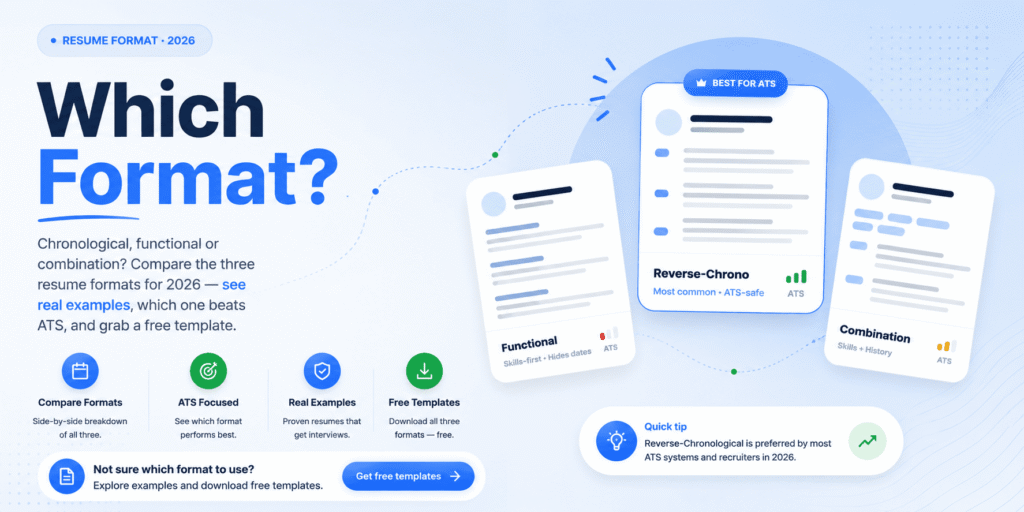
The resume format also deserves attention. A chronological resume remains the standard format. Most ATS systems expect this format. It is usually the best choice, even for career changers.
Read next: How to Change Careers Successfully (Complete Guide) full strategy for career changers
The Most Common Resume Mistakes Australians Make in 2026
The gap between a resume that generates interviews and one that does not is often not the quality of the candidate’s experience. It is a set of avoidable mistakes that appear consistently across the applications that never make it past the shortlisting stage. Here are the ones worth checking for before your next submission.
Listing Duties Instead of Achievements
This is the most common and most damaging resume mistake. A list of job responsibilities tells a recruiter what your role required. It does not tell them what you delivered. Every bullet point in your work experience section should describe something you did and what resulted from it. If you cannot attach an outcome to a bullet point, consider whether it belongs on the resume at all.
Using a Template That Fails ATS Parsing
Visually impressive templates downloaded from Canva or design websites are often built with text boxes, decorative columns, and graphics that an ATS system cannot parse. A beautiful resume that gets rejected by software before a human reads it produces the same outcome as a blank page. Test your resume for ATS compatibility using the plain text method described earlier in this guide.
Including a Photo
Including a photograph on an Australian resume is not standard practice and is not expected by hiring managers for professional roles. Australian anti-discrimination law provides protections related to physical appearance, and hiring managers who receive resumes with photos face an awkward compliance situation. Leave the photo off. It adds nothing to your application and creates an unnecessary complication for the person reviewing it.
Writing a Generic Professional Summary
A professional summary that could describe any candidate in your general field is a missed opportunity. Driven professional with strong communication skills and a passion for excellence tells a recruiter nothing specific about you. Rewrite your summary for every application you care about and make it specific enough that it could only describe you applying for this role.
Not Tailoring the Resume to the Role
Sending the same resume to fifty roles is not a job search strategy. It is a lottery with poor odds. The candidates who receive interview offers at a rate proportional to their effort are the ones who submit fewer, better applications rather than more, generic ones. Twenty minutes of tailoring per application is one of the highest-return investments available in a job search.
Using an Unprofessional Email Address
The email address at the top of your resume is the first piece of personal information a recruiter sees. An address that includes a nickname, a birth year, a string of random numbers, or anything that reads as informal signals poor professional judgment immediately. If your email address is not firstnamelastname at gmail or a similar professional format, create a new one before your next application.
Not Proofreading
Spelling and grammar errors on a resume are cited by Australian recruiters and hiring managers consistently as an immediate reason to remove a candidate from consideration. They signal carelessness in a document that, by definition, represents your best professional effort. Use Grammarly or an equivalent tool for automated checking, then read the document aloud to catch errors that spell-checkers miss, and ask someone else to read it before you submit it anywhere important.
Making the Resume Too Long
A resume that runs to four or five pages for a non-executive professional role does not demonstrate impressive depth of experience. It demonstrates an inability to edit. Hiring managers reading under time pressure will spend less time on a long resume than a concise one because the cognitive burden of processing it is higher. Keep to two or three pages, be selective about what earns a place on the document, and trust that well-chosen content carries more weight than exhaustive content.
Do You Still Need a Cover Letter in Australia in 2026?
The short answer is yes, for most professional roles, a cover letter is still expected and still read by hiring managers who are serious about making a quality hire.
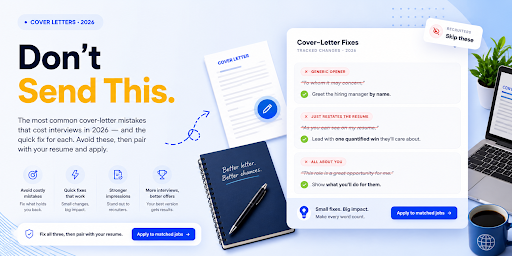
A cover letter does something a resume cannot. It explains context, demonstrates genuine interest in the specific employer rather than the role in the abstract, and addresses anything in your background that might raise a question in a recruiter’s mind, such as a career change, a gap in employment, or a move from a different industry or country.
The three elements every Australian cover letter needs are a specific opening that references the company and role by name rather than a generic introduction, a middle section that connects your most relevant experience to the two or three most important requirements in the job description, and a closing paragraph that is confident and clear about your interest without being presumptuous or pleading.
What a cover letter should not be is a prose version of your resume. If your cover letter simply restates the content of your resume in paragraph form, it adds no value and occupies a hiring manager’s time without giving them anything new. Use the cover letter to tell the story that the resume’s structured format cannot tell.
When does a cover letter matter less? In high-volume application contexts where the application form is the primary document, in trade and technical roles where specific skills and licences are the primary filters, and in casual or entry-level positions where the hiring process moves quickly. Even in these contexts, a well-written cover letter rarely hurts and sometimes produces a meaningful positive impression on a hiring manager who was not expecting one.
A Resume That Gets Interviews Is Built on One Principle
Every element of a strong resume serves the same underlying purpose: to give a specific person or system a clear, credible reason to move your application forward. The ATS needs to find the keywords it is looking for in a format it can read. The recruiter needs to see relevant achievements in the first seven seconds of review. The hiring manager needs to feel confident that your background genuinely fits what they are trying to hire for.
None of that requires you to be the most experienced candidate in the pool. It requires you to present your experience clearly, specifically, and in a way that speaks directly to what the employer has told you they need. That is the difference between a resume that produces silence and one that produces an invitation to interview.
Start with your professional summary. Make it specific. Then go through your work experience section and replace every duty-focused bullet point with an achievement. Tailor the language to the job description. Save it as a clean PDF with your name in the filename. And submit it with confidence.Ready to put your updated resume to work? Browse current job opportunities, short-term tasks, and professional roles on CloudColleague and find the right opportunity to apply to today.
Frequently Asked Questions About Writing a Resume in Australia
Write a professional summary that is specific to the role and employer. Use the work experience section to demonstrate achievements with quantifiable results rather than listing duties. Tailor the language in your resume to match the terminology in the job description.
Two to three pages is the standard for candidates with five or more years of professional experience. One to two pages is appropriate for recent graduates and early career professionals. Going beyond three pages for a non-executive role is generally too long.
No. Including a photograph on an Australian resume is not standard practice, is not expected by hiring managers, and can create an awkward compliance situation related to anti-discrimination law.
An Applicant Tracking System is software used by most medium and large employers to manage and filter incoming job applications. It scans resume content for keywords matching the role requirements and assesses formatting compatibility.
Lead with your education and qualifications, followed by a skills section built around the most relevant terms from job descriptions in your target field. Include any volunteer work, internships, freelance projects, TAFE placements, or casual employment regardless of whether it is directly related to your target role.
Read the job description carefully and identify the three to five most important requirements. Note the specific terminology used. Update your professional summary to reference the role type and most important skill area. Check that those key terms appear in your skills section.