Every working professional in Australia once applied for a job without relevant experience. Every single one. And Every chief executive in their industry today once applied for their very first role. They had nothing more than potential and a willingness to learn.
That fact does not make applying without experience feel easy. However, it does make it feel possible. Furthermore, the Australian job market in 2026 offers more genuine entry points than ever before. Technology, healthcare, trades, retail, and administration are all actively hiring. Digital marketing and professional services fields are recruiting for attitude and aptitude over existing credentials.
This guide is written for three specific groups of people. First, school leavers and first-time job seekers who have never held a formal position. Second, fresh graduates who have a qualification but have not yet worked in their field. Third, career changers who have years of professional experience but none of it in their target industry or role type. Each group faces a different version of the no-experience challenge. Consequently, this guide addresses all three with specific, actionable steps you can follow today.
No Experience Doesn’t Mean No Options in Australia in 2026
The phrase “no experience required” appears in hundreds of Australian job listings every single day. According to the National Skills Commission, entry-level roles across retail, hospitality, healthcare support, logistics, administration, and technology support consistently represent a significant share of total job postings. Furthermore, the Australian Bureau of Statistics confirms that school leavers and recent graduates enter employment without formal prior experience in their first role every year.
What “no experience” actually means in a job application context is important to understand. It does not mean you have nothing to offer. Instead, it means your capability is not yet demonstrated through a formal employment record. Consequently, your application must demonstrate capability, motivation, and reliability through other channels. Your education, volunteer work, personal projects, transferable skills, and willingness to learn all serve this purpose effectively.
Australian employers hiring for entry level, junior, trainee, or graduate roles are not looking for a candidate who already knows everything the role requires. Rather, they are looking for someone with the foundation to learn quickly, the interpersonal skills to work within a team, and the professionalism to show up and follow through. These qualities are demonstrable without a formal employment history. This guide shows you exactly how.
Find Entry Level Jobs and No Experience Roles in Australia
Finding roles genuinely accessible to candidates without experience requires knowing where to look. It also requires knowing which search terms surface the right listings. Not every job board presents entry level opportunities equally. Consequently, some platforms and sources are significantly more useful for no-experience job seekers than others.
Search for No Experience Roles on SEEK
SEEK is the largest job board in Australia and carries the highest volume of entry level listings. To surface no-experience roles effectively, use specific keywords rather than browsing broad categories.
Keywords that consistently return no-experience listings on SEEK include entry level, junior, graduate, trainee, no experience necessary, will train, and school leaver. Combine these with your preferred location and a relevant industry or role type. Consequently, a search for “entry level customer service Melbourne” returns far more relevant results than a general category browse.
Industries on SEEK with the strongest volume of no-experience listings in 2026 include retail and customer service, hospitality and food service, warehousing and logistics, aged care and disability support, administration and data entry, and technology helpdesk and support roles. These categories consistently list roles where employers explicitly state that full training will be provided.
Once you identify search terms that return strong results, save the search and set up a SEEK job alert with daily notifications. Entry level roles in competitive categories fill quickly. Furthermore, seeing a new listing within hours of it being posted gives you a meaningful advantage over candidates who check manually every few days.
Use LinkedIn to Find Entry Level Opportunities
LinkedIn is particularly useful for no-experience candidates targeting graduate programmes, corporate entry level streams, and structured cadetships. Many of these opportunities never appear on SEEK. Use LinkedIn’s Experience Level filter, set to Entry Level or Internship, to surface roles specifically designated for candidates without extensive professional history.
Following companies in your target industry on LinkedIn gives you advance visibility of roles before they are widely distributed. Many Australian employers post roles on their LinkedIn company page before syndicating them to job boards. Consequently, followers gain a first-mover advantage in application timing.
LinkedIn is also useful for researching which large Australian employers run formal graduate programmes. These are typically the most structured and best-resourced entry pathways available for candidates with a recent qualification. Furthermore, company pages, employee posts, and alumni profiles all provide useful intelligence about which organisations invest in developing talent from the ground up.
How CloudColleague Helps Candidates With No Experience Get Started?
CloudColleague is one of the most practically useful platforms for no-experience candidates. It provides access to short-term task-based work that does not require a formal employment history. This makes it fundamentally different from traditional job boards structured around ongoing employment roles.
A no-experience candidate who takes on a small task through CloudColleague produces something concrete. Writing product descriptions, formatting documents, assisting with social media content, conducting research, or providing administrative support all count. Completing a task successfully and receiving a positive client review produces three valuable outputs simultaneously. These are a portfolio item, a professional reference, and direct evidence of capability. Consequently, these three things are exactly what a job application without formal experience needs to be credible.
CloudColleague respects professionals and their effort. As a result, the platform charges only 7% commission on the total bid amount accepted by professionals. For an early career candidate building experience while also building income, this is a materially better arrangement than platforms that deduct a significant percentage of every transaction.
To find beginner-friendly tasks on CloudColleague, use the search and filter functions to identify task categories matching your existing skills. Start with tasks that require competencies you already have, such as writing, research, data entry, basic design, and administrative organisation. Then build from there as your confidence and portfolio grow.
Other Platforms and Sources Worth Checking
Indeed Australia aggregates job listings from company websites and other job boards. It often surfaces entry level listings that do not appear on SEEK. Consequently, running parallel searches on Indeed Australia alongside SEEK ensures you are not missing relevant opportunities.
Jora is an Australian-built job aggregator with particularly strong coverage of regional and blue-collar entry level listings. If you are searching outside major metropolitan areas or in trade-adjacent categories, Jora often returns more relevant results than the major platforms.
Workforce Australia is the federal government’s employment services platform and is particularly relevant for job seekers registered with Services Australia. It lists both private and public sector roles and provides additional support services for candidates transitioning into employment.
MYFUTURE is the Australian Government’s career exploration platform and is especially useful for candidates still deciding which entry level pathway to pursue. It maps realistic entry routes into specific careers from a no-experience starting point. Furthermore, it covers which qualifications are required, what typical career progression looks like, and what the employment outlook is for each occupation.
APSJobs is the Australian Public Service employment portal and lists graduate programmes and entry level streams for federal government roles. Government graduate programmes are structured, well-resourced, and genuinely accessible to recent graduates without prior public service experience. Applications typically open in the first half of the calendar year for the following year intake.
How to Build Experience Before You Apply So You Have Something to Show?
The most direct solution to a no-experience resume is to create experience before you submit your first application. Not fabricated experience or credentials you do not hold, but real, demonstrable activity that shows you have applied your skills in a genuine context. There are several practical pathways to doing this quickly in the Australian environment.
Volunteer Work and Community Involvement
Volunteer work is legitimate, valued, and frequently overlooked by no-experience candidates who assume it does not count. It does. Australian hiring managers across most industries recognise volunteering as genuine evidence of initiative, reliability, and the ability to contribute to a team without being paid.
Volunteering Australia is the national peak body for volunteering and provides a searchable database of opportunities across every state and territory at volunteeringaustralia.org. Search by skill type, industry, location, and time commitment. Structured volunteer roles in community administration, event coordination, social media support, aged care, environmental projects, and youth programmes all produce resume-worthy experience with specific responsibilities and outcomes.
Document your volunteer work on your resume using exactly the same format as paid employment. Give the role a title, name the organisation, and list your dates of involvement. Additionally, describe your key responsibilities and any measurable outcomes. Ask your volunteer coordinator for a professional reference before you finish the engagement. Furthermore, a well-documented volunteer role with a credible referee is a meaningful resume entry regardless of whether it was paid.
Internships and Work Placements
An internship is a structured period of work experience at an organisation, typically unpaid or minimally paid. It provides exposure to a professional environment and the opportunity to develop industry-relevant skills. A work placement is a similar arrangement, often embedded in a TAFE or university qualification as a mandatory component. A traineeship, however, is a paid arrangement that combines on-the-job training with structured study.
If you are currently enrolled in a TAFE programme or university degree, check whether your qualification includes a mandatory work placement component. These placements are among the most valuable experience-building opportunities available to students. Specifically, they are structured, supervised, and count as formal professional references upon completion.
To find internship opportunities independently, search company career pages directly for listings that may not appear on major job boards. LinkedIn’s job search with the Experience Level filter set to Internship surfaces a range of opportunities. Additionally, direct outreach to small and medium businesses in your target industry is a genuinely effective approach. Offer to assist on a project basis for a defined period. Many candidates overlook this approach because it requires more initiative than applying to an advertised role.
Fair Work Australia provides clear guidance on the legal framework for unpaid work experience. Unpaid internships are permissible in specific circumstances, primarily when they form part of a formal course requirement or meet the vocational placement criteria outlined in the Fair Work Act. Consequently, if you are offered an unpaid internship outside a formal course structure, check the Fair Work Australia website to understand your rights before accepting.
Freelancing and Short-Term Project Work
Freelancing is one of the fastest ways for a no-experience candidate to build a credible work history. The principle is straightforward. Identify a skill you already have that someone else would find useful. Find a client who needs that skill, complete the work to a professional standard, and document the outcome.
The barrier to entry for early career freelancing is lower than most people assume. Writing, editing, graphic design, social media management, data entry, research, basic web development, bookkeeping assistance, photography, and video editing are all services small businesses purchase regularly. Furthermore, none of these require years of experience to begin performing at an acceptable standard.
CloudColleague provides a practical starting point for early career freelancers. The task listings on the platform span a range of skill levels and budget ranges. Beginner-accessible tasks are consistently available across most skill categories. Completing your first task through CloudColleague and delivering it well produces three things simultaneously. These are a portfolio item you can reference on your resume, a professional reference from a real client, and evidence of your capacity to operate professionally without supervision.
Price your early freelance work honestly and competitively. You are not yet charging the rates of an experienced professional. Consequently, trying to do so makes it harder to win your first clients. Starting at a rate that reflects your current experience level and building from there as you accumulate portfolio work and positive reviews is both realistic and strategically sound.
Short Courses, Certifications, and TAFE Qualifications
A relevant certification or TAFE qualification is one of the most powerful changes you can make to a no-experience resume. It shifts the narrative from “no experience” to “actively developing in this area.” Even noting a current enrolment on your resume signals active investment in your capability. Consequently, it tells hiring managers that the gap between your profile and the role requirements is closing.
TAFE certificates and diplomas are the most accessible formal qualification pathway in Australia for entry level candidates. Courses are available across virtually every industry and can be completed part-time while job searching. Furthermore, TAFE programmes are significantly less expensive than university. They are recognised by Australian employers as credible evidence of practical, vocationally focused training.
Online micro-credentials and certifications from recognised providers carry real weight with Australian employers in specific fields. Google’s digital marketing certifications, including Google Analytics, Google Ads, and the Google Digital Marketing and E-commerce Certificate. They are valued by marketing employers across Australia. LinkedIn Learning certificates, CompTIA certifications for technology roles, PRINCE2 for project management, and first aid certificates for healthcare-adjacent roles are all strong examples. Each costs relatively little in time and money but makes a meaningful difference to an entry level application.
Research which certifications appear most commonly in job listings for your target role type. If the same certification appears in most listings you are applying for, completing it before submitting applications is a high-return investment.
Personal Projects and Self-Directed Work
A personal project is any work you undertake independently that demonstrates a relevant skill in a real context. For candidates without formal employment history, personal projects can serve the same function as work experience on a resume. However, they must be documented specifically and produce a genuine, visible output.
Credible personal projects look different across industry targets. A software developer builds a functioning web application and publishes it publicly. A writer maintains a blog with a consistent publishing history and measurable readership. A graphic designer creates a portfolio site showcasing original work. A digital marketer grows a social media account from zero using a documented strategy. A bookkeeper manages accounts for a family business or community organisation using industry-standard software.
The credibility of a personal project on a resume comes entirely from specificity. “Building a website” tells a recruiter almost nothing. Consequently, “Designed and built a responsive portfolio website using HTML, CSS, and JavaScript. Published it publicly, and optimised it for search engines, resulting in 200 monthly organic visitors within three months” tells them everything they need to know about your capability level and your approach to work.
How to Write a Resume When You Have No Experience in Australia?
A resume written for a candidate with no formal employment history uses a different section order and emphasis than a standard chronological resume. The goal is to lead with your strongest credentials, which for a no-experience candidate are typically your education, your skills, and any relevant non-employment experience rather than a work history section that does not yet exist.
The Right Resume Structure for a No Experience Candidate
The correct section order for a no-experience resume in Australia is: contact information at the top, followed by a career objective or professional summary, then education and qualifications, then a skills section, then a relevant experience section covering volunteer work, internships, freelance projects, and personal projects, and finally references.
This structure places your strongest credentials nearest the top of the document where a recruiter’s eye goes first, rather than opening with a work history section that highlights the absence of formal employment.
How to Write a Career Objective With No Experience?
A career objective is the appropriate opening statement for a no-experience resume because it tells the employer who you are and what you are working toward rather than summarising a professional history you have not yet built. It is honest, forward-looking, and when written well, immediately establishes your relevance to the role.
The three-part structure for a career objective: who you are and your most relevant qualification or attribute, what you bring to the role in terms of skills and personal qualities, and what specific type of role or opportunity you are seeking.
Example for a school leaver applying for a customer service role: Recent school graduate with a strong academic record and two years of volunteer coordination experience with a community youth programme. Developed communication, problem-solving, and team collaboration skills through direct client-facing community work. Seeking a full-time customer service or retail role where I can apply these skills in a professional environment and build a career in client-facing services.
Example for a fresh graduate applying for a graduate programme in marketing: Marketing graduate from the University of Melbourne with a major in digital marketing and a completed Google Analytics certification. Built practical experience through a university capstone project managing social media strategy for a local non-profit organisation, growing their Instagram engagement by 47 percent over three months. Seeking a graduate marketing role where I can contribute immediately while developing expertise in data-driven campaign strategy.
Present Education, Volunteer Work, and Projects as Relevant Experience
Every non-employment experience entry on your resume should be formatted with the same structure as a paid employment entry: a title or role name, the organisation or context, the dates of involvement, and a set of bullet points describing your responsibilities and outcomes.
Apply the achievement principle to non-employment experience exactly as you would to a paid role: describe what you did and what resulted from it, with numbers wherever possible. A volunteer coordination role becomes: Volunteer Event Coordinator, City Food Bank, January 2024 to March 2025. Coordinated logistics for quarterly community meals serving 150 to 200 attendees. Managed a volunteer team of 12 and liaised with three external supplier contacts. Reduced average event setup time by 20 percent through improved rostering.
A completed CloudColleague task becomes: Freelance Content Writer, CloudColleague platform, February 2026. Produced five product description articles for an Australian e-commerce client. Delivered on brief and ahead of deadline. Received five-star client review.
Each of these entries tells a recruiter something specific about your capability and work ethic. Neither requires formal employment to be credible.
How to Identify and Present Your Transferable Skills?
Transferable skills are capabilities developed in any context that apply directly in a professional setting. These include study, sport, volunteer work, casual employment, family responsibilities, and community involvement. For no-experience candidates, transferable skills are often the most valuable content on a resume. They represent genuine capability that is immediately relevant to an employer, even without formal work experience.
Common transferable skills that Australian employers consistently value in entry level candidates include written and verbal communication. Time management and prioritisation are equally important. Problem solving under pressure, teamwork, and collaborative working are highly sought after. Additionally, adaptability, willingness to learn, customer service orientation, attention to detail, and basic digital literacy all feature regularly in entry level hiring criteria.
The difference between listing a transferable skill and demonstrating it is significant. That difference separates a resume entry a recruiter ignores from one they remember. “Teamwork” tells a recruiter nothing. However, “Led a team of eight volunteers across three weekend events, coordinating logistics and resolving scheduling conflicts in real time” tells them exactly what your teamwork looks like in practice.
Write a Cover Letter With No Experience
A cover letter matters even more for no-experience candidates than for experienced ones because it is the place where you can explain who you are, what you bring, and why you want this specific role when your resume cannot yet speak for itself through a formal employment history. A well-written cover letter for a no-experience candidate reframes the absence of direct experience as a beginning rather than a disqualifier.
Opening Paragraph: Establish Interest, Not Apology
The most common mistake no-experience candidates make in a cover letter opening is leading with an apology or a disclaimer about their lack of experience. Opening with I understand I may not have all the experience you are looking for signals self-doubt before the hiring manager has formed any impression of you at all. Do not do this.
A strong opening establishes specific and genuine interest in the role and the company, and frames your background as the starting point it is rather than the limitation it is not. Reference something specific about the organisation or the role that you found during your research, the same way an experienced candidate would.
| Weak Opening | Strong Opening | |
| School leaver applying for retail | I am writing to apply for the Customer Service Assistant role. I am a recent school graduate and while I do not have formal work experience, I am eager to learn. | I have been shopping at your store since I was twelve years old and I know your product range and customer experience well. I am a recent school graduate with strong communication skills developed through two years of volunteer work, and I want to build my first retail career with a company whose values I genuinely share. |
Middle Paragraph: What to Write When You Have No Direct Experience
The middle paragraph of a no-experience cover letter is where you connect what you have done to what the role requires. The source material is your transferable skills, your education, your volunteer or community work, your personal projects, and any task-based work you have completed through platforms like CloudColleague.
The rule is the same as for any cover letter: be specific. A generic claim that you are a hard worker with strong communication skills is not memorable. A specific statement that you coordinated communications between twelve volunteers and three external suppliers across four quarterly events, ensuring all stakeholders were informed and that sessions ran to schedule, is memorable because it shows rather than tells.
Example middle paragraph for a fresh graduate applying for a junior marketing role: During my final year at university, I led the social media strategy for a local not-for-profit as part of my capstone project. Working within a defined brief and a zero budget, I grew their Instagram following from 340 to 1,150 over twelve weeks through a consistent content calendar, targeted hashtag strategy, and community engagement. I also completed a Google Analytics certification during this period and used the data I gathered to refine the content strategy mid-project based on what was actually driving traffic to their donation page. I am ready to apply that same data-informed approach in a professional marketing environment from day one.
Closing Paragraph: Confident and Direct
Close with a clear statement of your interest, a confident invitation to discuss your application, and a professional sign-off. The tone should be enthusiastic without being pleading and confident without being presumptuous.
I would welcome the opportunity to discuss how my skills and motivation align with what you are looking for. I am available for a conversation at your convenience and happy to provide any additional information that would be useful. Thank you for your time and consideration. Kind regards, Your Name
Apply for Your First Job in Australia Step by Step Guide
If this is your first job application, the process can feel overwhelming because everything is unfamiliar at once. Breaking it into five sequential steps removes that overwhelm and gives you a clear action sequence you can follow immediately.
Step 1. Choose a Realistic Target Role and Industry
Start by identifying the type of role and industry that is both genuinely accessible to you at your current skill level and that you have some authentic interest in. Applying for roles you have no realistic shot at wastes your time and produces demoralising rejections. Applying for roles you are genuinely suited for, even if they are entry level, produces interviews and employment.
Industries with the strongest entry level hiring volume in Australia in 2026 include retail and customer service, hospitality, aged care and disability support, warehousing and logistics, business administration, technology helpdesk and support, and trades through apprenticeships. Use MYFUTURE and the Australian Government’s Job Outlook tool to research realistic entry pathways into any career area you are considering before you commit time to applying.
Decide whether to target casual, part-time, or full-time roles for your first application campaign. Starting with casual or part-time work is often strategically smart for first-time job seekers because the hiring bar is lower, the commitment is lower for both parties, and it gives you the formal employment experience that makes every subsequent application stronger.
Step 2. Prepare Your Application Documents
Before you apply anywhere, have the following ready:
A resume structured for a no-experience candidate: career objective first, then education, then skills, then relevant experience.
A base cover letter template with a flexible opening and a clear structure that you can tailor in 15 to 20 minutes per application.
A professional email address in the format firstname.lastname at gmail.com.
Two referees identified, notified, and briefed on the types of roles you are applying for.
Your work rights status confirmed and ready to declare accurately in application forms.
Step 3. Create Complete Profiles on the Major Platforms
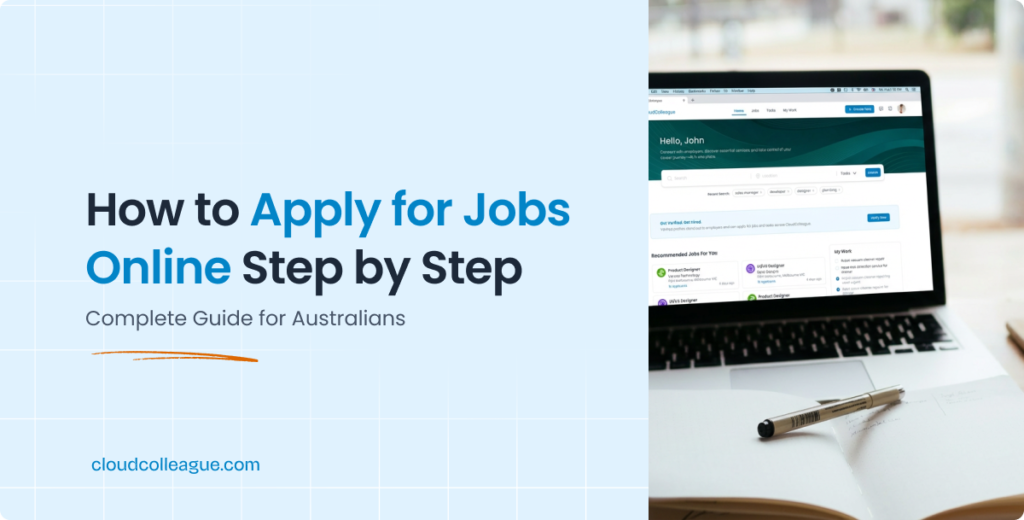
Create accounts on SEEK, LinkedIn, and CloudColleague before you start submitting applications. A complete profile on each platform means your information pre-fills application forms, reduces submission time, and allows recruiters to find you passively while you are actively applying.
On SEEK, upload your resume and set your work type preferences, location, and availability. Additionally, activate your profile visibility so recruiters can find you. On LinkedIn, complete every section of your profile including education, skills, and any volunteer or project experience. Furthermore, set your Open to Work preference to the recruiter-only setting. This keeps your availability visible to hiring professionals without broadcasting it publicly. On CloudColleague, write a specific and professional profile description, set your availability, and indicate which types of work you are open to.
Step 4. Apply Strategically, Not at Random
Five to ten well-targeted applications per week to roles you are genuinely suited for produces better outcomes than fifty generic applications to every available listing. Read each job description carefully before applying. Focus your effort on roles where you meet the minimum requirements, even if you do not meet all the desirable ones. Include a tailored cover letter for every role you genuinely want, even when the listing does not specifically require one.
Tailor the language in your resume and cover letter to match the terminology in each job description. If a listing says reliable and punctual, use those exact words to describe yourself with evidence. If it says team player, demonstrate teamwork with a specific example rather than simply claiming to be one.
Step 5. Follow Up and Stay Organised
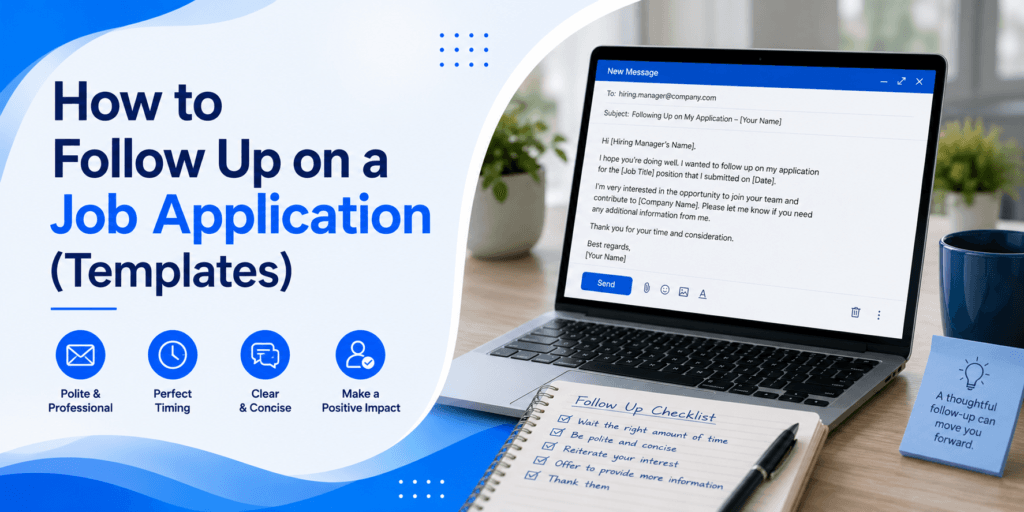
Follow up professionally five to seven business days after submitting each application. A brief email confirming your application, expressing continued interest, and offering to provide any additional information is sufficient. One follow-up per application is appropriate. More than one, in the absence of a response, is counterproductive.
Keep a simple tracking spreadsheet from the first day you start applying: role title, company, platform, date applied, current status, follow-up date, and outcome. This spreadsheet prevents duplicate applications, missed follow-ups, and the confusion that develops quickly when multiple applications are running simultaneously.
When you receive a rejection, respond briefly and professionally. Thank the employer for their time and express openness to being considered for future roles. Australian professional networks are small. Hiring managers remember candidates who respond to rejection with professionalism and maturity.
Apply for a Graduate Programme or Cadetship in Australia
Graduate programmes and cadetships are structured entry pathways offered by large Australian employers for recent graduates with limited professional experience. They are among the most valuable opportunities available to fresh graduates. Specifically, they provide a salary, structured training and mentoring, exposure to multiple business areas, and a clear career progression pathway from day one.
Large Australian accounting firms, the four major banks, federal and state government agencies, technology companies, healthcare organisations, engineering consultancies, and media companies all run formal graduate programmes. The scope and structure vary. However, the common feature is that they are designed for candidates entering the professional workforce for the first time.
The application timeline for most Australian graduate programmes follows a consistent pattern. Applications typically open between March and May for positions commencing in the first quarter of the following year. Consequently, checking graduate recruitment timelines at the start of your final year is essential. Missing the application window means waiting twelve months for the next intake.
Graduate programme applications typically involve multiple stages. These include an online application and resume submission, psychometric testing assessing numerical and verbal reasoning, a video interview with recorded responses, an assessment centre day involving group exercises and case study presentations, and a final panel interview. Each stage assesses specific capabilities, and preparation for each is worthwhile.
Several sources help you find graduate programme listings. Company career pages are the primary source since many programmes are not fully syndicated to job boards. LinkedIn is useful for identifying which companies run programmes in your target field. Additionally, GradAustralia is a dedicated Australian graduate recruitment platform that aggregates listings across most major employers.
Apply for an Apprenticeship or Traineeship in Australia
An apprenticeship combines paid on-the-job learning with structured study through a Registered Training Organisation, most commonly TAFE. It typically runs three to four years for a trade qualification. A traineeship applies a similar arrangement to non-trade industries and completes in one to two years. Both provide employment, income, and a formal qualification simultaneously, making them among the strongest no-experience entry pathways in the Australian labour market.
Trades with the strongest apprenticeship demand in Australia in 2026 include electrical, plumbing, carpentry and joinery, refrigeration and air conditioning, automotive mechanics, and construction. The National Skills Commission consistently identifies these trades as shortage occupations across most states and territories. Consequently, employers in these fields are actively seeking candidates without prior trade experience.
Traineeships are available across business administration, retail management, hospitality, aged care, early childhood education, and information technology. Many traineeships can be completed while working for the same employer throughout, which provides additional stability alongside the qualification.
Several resources help you find apprenticeship and traineeship opportunities. The Australian Apprenticeships website at australianapprenticeships.gov.au is the primary government resource, covering available programmes, funding arrangements, and registered providers. Skills Road provides detailed information on specific trade pathways. Additionally, SEEK and Indeed both list apprenticeship and traineeship vacancies. Direct approaches to employers in your target trade are also effective, particularly for smaller businesses that do not advertise vacancies widely.
When applying, employers look for genuine interest in the trade, practical aptitude, reliability, and basic literacy and numeracy for the study component. A cover letter demonstrating specific research into the trade and a clear explanation of why you want to build a career in it will distinguish your application from the majority.
Apprenticeship wages are set by the relevant modern award and increase at defined intervals as you progress through the qualification.
Answer The Interview Questions When You Have No Experience
Being invited to an interview as a no-experience candidate means the employer has already decided your application is worth their time. The interview is not a test of whether you have experience. It is an assessment of whether you have the capability, attitude, and potential to justify giving you some.
The core technique for answering experience-based interview questions without formal employment history is substitution: replacing professional examples with equivalent examples from study, volunteer work, personal projects, sport, community involvement, or task-based work. Most interview questions are designed to assess underlying capabilities, and those capabilities can be demonstrated through a range of contexts, not only paid employment.
How to Answer Tell Me About Yourself With No Experience?
Structure your answer in three parts: who you are and your most relevant qualification or background, what you have done that demonstrates relevant capability even outside formal employment, and why you want this specific role. Keep the whole answer to 60 to 90 seconds.
Example for a school leaver applying for a customer service role: I am a recent school leaver who has been volunteering as a youth programme coordinator for the past eighteen months. In that role I managed communications between participants, parents, and programme staff, which gave me strong experience in handling queries, resolving concerns, and working in a team under time pressure. I am looking for a customer service role where I can develop those skills in a professional retail environment and build a long-term career in client-facing work. Your company specifically appeals to me because of the values your team demonstrates through your community partnerships.
How to Answer Why Should We Hire You With No Experience?
Reframe the question in your own mind before you answer it. The employer is asking what you bring, not whether you have a formal employment record. Your answer should focus on three things: the transferable skills and personal qualities you bring, your capacity and willingness to learn quickly, and your specific interest in this role and organisation as opposed to any available entry level position.
Example for a career changer with transferable skills: I bring ten years of experience managing complex client relationships in a completely different industry, which has developed communication, problem-solving, and stakeholder management skills that transfer directly to what this role requires. I do not have direct experience in your sector yet, but I have completed a relevant TAFE certificate and I have been applying what I am learning through short-term project work. I am specifically interested in your organisation because of the direction you are moving in, and I am the kind of person who, once I commit to a new direction, puts everything into it.
How to Answer What Experience Do You Have With No Experience?
Expand your definition of experience before you answer. Everything you have done that required effort, skill, and produced an outcome for someone else counts as relevant experience in the broadest and most honest sense. Lead with your most credible and specific example, describe it using the STAR structure where possible, and connect it explicitly to what the role requires.
If you have completed any task-based work through CloudColleague, a volunteer role, an internship, a personal project, or any informal professional activity, these are all legitimate answer material. The hiring manager is not expecting you to have spent years in the field. They are looking for evidence that you can perform at an entry level and that you will invest in growing from there.
Apply for Jobs as a Career Changer With No Experience in the New Field
A career changer applying for roles in a new field faces a specific version of the no-experience challenge. You have years of professional experience, credibility, and demonstrated capability. However, it is all in the wrong industry. Your application must make the connection between where you have been and where you are going visible and credible to a hiring manager.
Start with a transferable skills audit. List every role you have held and write down the underlying capabilities involved, not the job-specific tasks but the broader skills. Project management, budget oversight, stakeholder communication, team leadership, data analysis, and process improvement all transfer across industries. Most professional careers develop these capabilities to varying degrees.
Next, map those transferable skills against the requirements of your target roles. The overlap is almost always more substantial than career changers initially expect. A teacher transitioning into corporate learning and development does not need to hide their classroom experience. Instead, they need to reframe it. Lesson planning becomes learning programme design. Differentiated instruction becomes adult learning methodology. Parent communication becomes stakeholder management.
The qualification bridge is often the most efficient way to change the story your resume tells. Enrolling in a relevant TAFE qualification or online certification programme signals active investment in the transition. Consequently, even noting a current enrolment on your resume tells the hiring manager you are bridging the gap rather than expecting them to take the transition on faith.
Finally, apply for roles that sit at the intersection of your old skills and your new direction. A project manager transitioning into technology might apply first for a project coordinator role at a technology company. That role uses existing project management skills while building the technology industry experience needed for the next step.
Your First Job Is Closer Than You Think
Every experienced professional in Australia was once where you are now: qualified to do more than their resume could yet prove, looking for someone to give them the chance to show it. The candidates who found that chance fastest were not the luckiest. They were the ones who prepared the most specifically, applied the most strategically, and built evidence of their capability through every channel available to them while they searched.
No experience is a starting point. It is not a verdict. The steps in this guide, from building your first portfolio entries through volunteer work and CloudColleague tasks, to structuring your resume and cover letter for maximum credibility, to applying with precision and following up professionally, are the same steps that every entry level hire in Australia used to get their foot in the door.
Take one action today. Choose your target role. Update your resume. Apply for one entry level task on CloudColleague. Submit your first application. The first step is the only one that matters right now.Start with CloudColleague. Browse entry level jobs, beginner-friendly tasks, and professional opportunities that are genuinely accessible to candidates at every stage of their career. Apply today at cloudcolleague.com.