Most job applications sent online in Australia today are never read by a human being. Not because the candidate was unqualified. Not because the resume was poorly written. But because a piece of software filtered it out before a recruiter ever opened the file. So, how to Find Jobs Online?
You applied. The confirmation email arrived. And then nothing. No response, no rejection, no feedback. Just silence. If that sounds familiar, you are not alone and you are not unlucky. That is the standard outcome for the majority of online job applications in Australia right now, and it has nothing to do with your ability or your experience.
So ask yourself this. Think about the last time you applied for a job online. Did you tailor your resume to that specific listing? Did you follow up five days later? And Did your LinkedIn profile show up in the recruiter’s search before you even applied? If the answer to any of those is no, something in your approach needs to change, and this guide is where that change starts.
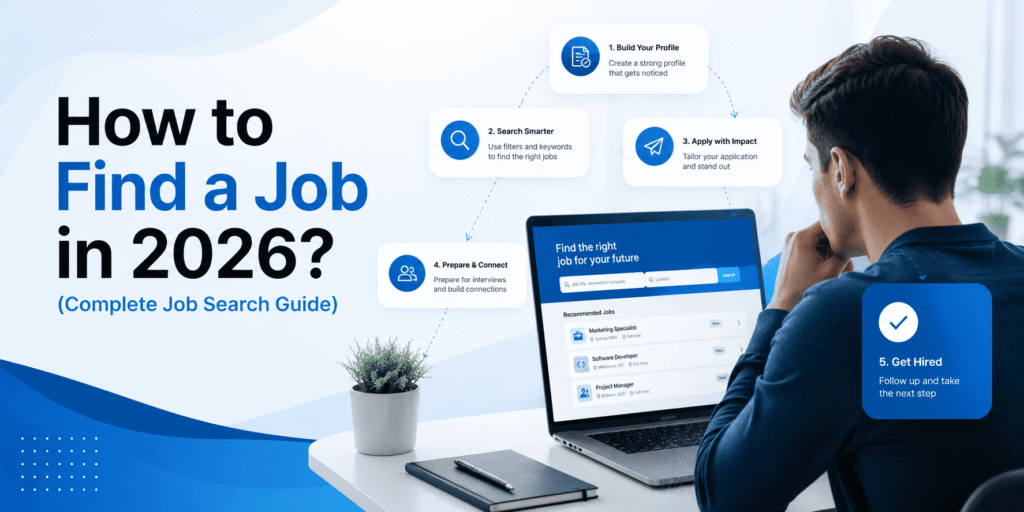
This guide covers everything you need to know about finding a job online in Australia in 2026. The best platforms to use, how to set up an efficient search, how to make LinkedIn work for you beyond just submitting applications, what happens to your application after you send it, how to follow up professionally, and the mistakes that quietly kill job searches before they produce results.
Whether you are looking for your first role, returning to the workforce after time away, changing industries, or simply ready for something better than what you have now, this is the complete guide to doing it effectively online.
How Online Job Search in Australia Evolved in 2026?
The Australian job market looks fundamentally different to what it looked like even five years ago. According to the Australian Bureau of Statistics, the proportion of job seekers who find employment through online channels has grown substantially year on year, with digital platforms now the dominant pathway for employment across most industries and skill levels.
At the same time, the hiring process itself has become more automated. The majority of medium and large Australian employers now use Applicant Tracking Systems, commonly referred to as ATS, to manage incoming applications. This means that in most cases, your application is filtered by software before a human recruiter ever looks at it. Understanding this is not a reason to feel discouraged. It is a reason to approach your online job search more strategically than the average candidate does.
The rise of LinkedIn as a genuine hiring platform, not just a professional networking site, has also changed the dynamics significantly. Recruiters in Australia now actively search LinkedIn for candidates rather than waiting for applications to come in. This means the most effective job seekers in 2026 are not just applying for roles. They are also making themselves findable by the people doing the hiring.
The platforms have multiplied, the process has become more technical, and the competition in most role categories has increased. But none of this makes finding a job online harder if you know what you are doing. It simply makes knowing what you are doing more valuable.
Best Websites to Find Online Jobs in Australia
Not all job platforms are built the same, and using the right combination for your situation is one of the most important strategic decisions in a job search. Here is an honest breakdown of the major platforms available to Australian job seekers in 2026.
SEEK: Australia’s Largest Job Board
SEEK is the dominant job board in Australia by a significant margin. It carries more active job listings than any other platform in the country, and the majority of Australian employers, from small businesses to major corporations, use SEEK as their primary advertising channel.
SEEK is most useful for volume browsing, salary benchmarking using its salary insights tool, reading company profiles and reviews from current and former employees, and setting up automated job alerts for specific role types and locations. The platform also allows you to upload a resume that employers can search, which adds a passive discovery element alongside active applying.
Where SEEK is weaker is in niche and specialised roles, freelance and project-based work, and short-term task opportunities. For those, other platforms are better suited.
LinkedIn: The Most Powerful Job Search Tool Available in 2026
LinkedIn has moved well beyond its origins as a professional networking site. In 2026, it is simultaneously a job board, a recruiter database, a company research tool, and a professional publishing platform. For Australian job seekers, it is the single most important platform to invest in beyond SEEK.
The distinction that matters most on LinkedIn is the difference between applying for jobs and being found for them. SEEK is almost entirely an outbound platform where you apply to roles. LinkedIn operates in both directions. You apply to roles through the platform, but recruiters also search LinkedIn’s candidate database actively, contact people through InMail, and make hiring decisions based on profiles they find rather than applications they receive.
This means your LinkedIn profile is not just a support document for your job search. It is an active part of the search itself, working in the background whether you are logged in or not.
CloudColleague: Jobs, Tasks, and Services in One Platform
CloudColleague offers something that traditional job boards do not: a single platform where you can find full-time jobs, short-term tasks, and packaged professional services in the one place. For Australian job seekers, this is particularly useful for two reasons.
The first is flexibility. If you are between roles, supplementing your income while searching, or testing a new career direction before fully committing to it, the ability to pick up short-term tasks and project work on the same platform you use to find permanent roles is genuinely convenient. The second is market exposure. Taking on task or project work through CloudColleague puts you in front of employers and clients who may offer further opportunities once they have seen your work directly.
CloudColleague also charges only a small commission of 7% on tasks, which means the almost full value of short-term project work goes to the professional rather than being reduced by platform fees. For job seekers who are building experience or income while they search, that distinction matters.
Other Platforms Worth Knowing About
Indeed
Indeed Australia operates as an aggregator, pulling job listings from company websites, SEEK, and other sources into a single searchable index. It is useful for finding roles that may not appear directly on SEEK and for research purposes, though the quality of listings varies more than on a curated platform.
Jora
Jora is an Australian-built job aggregator with a strong presence in regional and trade-based job categories. If you are searching outside major metro areas or in a blue-collar or trades-adjacent field, Jora is worth adding to your regular search rotation.
CareerOne
CareerOne is an established Australian job board with a strong history in professional and white-collar roles. Its volume is lower than SEEK but it attracts a different subset of employers and is worth checking if your SEEK searches are not producing enough relevant results.
Google for Jobs is not a standalone job board but a feature built into Google Search that surfaces relevant job listings directly in search results. Searching a role type plus location in Google will now often produce a job listing carousel at the top of results. This is a fast way to see a broad cross-section of current listings without navigating to individual platforms.
Glassdoor
Glassdoor combines job listings with company reviews, salary data, and interview experience reports submitted by current and former employees. It is most useful as a research tool to evaluate a company before applying or interviewing, rather than as a primary source of job listings.
Workforce Australia
Workforce Australia is the Australian Government’s employment services platform. It is specifically relevant for job seekers who are registered with Services Australia or receiving employment-related support, and it carries a range of listings that are not always duplicated on commercial job boards.
Facebook Jobs
Facebook Jobs has grown as a platform for local, trade, and casual employment, particularly in regional areas. If you are searching for work in a geographically specific area or in a trade, hospitality, or retail category, Facebook’s local job listings are worth checking alongside the major platforms.
Set Up Your Job Search for Maximum Efficiency

Browsing job boards without a system produces inconsistent results and a lot of wasted time. The job seekers who move most efficiently through the market are the ones who have set up their search to work for them continuously rather than relying on manual browsing sessions that happen when they remember to check.
How to Create Job Alerts That Actually Work?
Job alerts are automatic notifications sent to your email or phone when new listings matching your criteria are posted on a platform. They are one of the most underused tools in the Australian job search, and the job seekers who use them well are consistently ahead of those who rely on manual browsing because they see relevant listings within hours of them going live rather than days later.
The key to a useful job alert is specificity. A broad alert set for marketing roles in Sydney will produce dozens of irrelevant notifications per day and be ignored within a week. A specific alert set for content marketing manager, digital content lead, or SEO manager in Sydney with a salary filter applied will produce a smaller, higher-quality set of results worth acting on.
Set up job alerts on at least three platforms: SEEK, LinkedIn, and one other relevant to your industry. On SEEK, save your search after applying your filters and choose your alert frequency. On LinkedIn, apply your job search filters and then click the alert toggle at the top of the results page. Set the frequency to daily during active job searching and weekly during passive monitoring.
Quick tip: Set a calendar reminder to review and refresh your job alerts every four weeks. Search algorithms and platform filters evolve, and an alert that was working well in one month may drift out of calibration over time.
How to Organise Your Job Search So Nothing Falls Through the Cracks?
An unorganised job search creates its own problems. Duplicate applications to the same employer are embarrassing and signal poor attention to detail. Missing a follow-up deadline after an interview wastes the work you put in to get there. Forgetting which version of your resume you submitted to which role creates inconsistency that shows up at the interview stage.
A simple job search tracking spreadsheet solves all of these problems. Create a document with the following columns: role title, company name, platform where you found it, date applied, current status, follow-up date, notes, and outcome. Update it every time you apply for a role or receive a response. Review it at the start of each week to identify which applications need a follow-up.
Beyond the spreadsheet, set a weekly job search routine with defined parameters. Decide how many hours per week you will dedicate to active searching and applying, how many applications you will submit per week, what activities sit alongside applications such as networking, profile updating, and research, and which day of the week you will do your weekly review. Job searching without a routine tends to produce either feast or famine: intense bursts of activity followed by days of avoidance.
How to Use LinkedIn to Find a Job in Australia?
LinkedIn deserves its own section in any serious guide to online job searching in Australia because it operates differently to every other platform in the market. Understanding those differences changes how useful it is for your search.
How to Optimise Your LinkedIn Profile for Australian Job Searches?
Your LinkedIn headline is the most important line on your profile. It appears in recruiter search results, in connection request previews, and at the top of your profile page. Most people write their current job title in this field. That is a missed opportunity. A headline written as a searchable phrase rather than just a title performs significantly better in recruiter searches.
Instead of Senior Accountant at XYZ Firm, consider: Senior Accountant with CPA Australia Qualification | Financial Reporting | Tax Compliance | Open to New Opportunities. This version contains the keywords that recruiters in your field are actually searching for, not just the title your current employer gave you.
The About section
The About section should be written in the first person and should read like a professional introduction, not a list of duties copied from a position description. It is the first piece of extended writing a recruiter or hiring manager reads after finding your profile. It should answer three questions clearly: what do you do, what makes you good at it, and what are you looking for next.
Skills and endorsements
Skills and endorsements matter for search visibility. LinkedIn’s algorithm uses the skills listed on your profile as keywords when matching profiles to recruiter searches. List the skills that appear most frequently in job descriptions for the roles you are targeting, not just the ones you are most proud of. The overlap between what you have and what employers are searching for is what the algorithm rewards.
Recommendations
Recommendations from former managers, colleagues, or clients carry weight that endorsements alone do not. Two or three genuine recommendations from credible professionals are more valuable than a long list of endorsements from connections who clicked a button. Reach out to two or three people you have worked closely with and ask whether they would be willing to write a brief recommendation for your profile.
How to Search and Apply for Jobs on LinkedIn Effectively?
LinkedIn’s job search filters are more granular than most job seekers use them. Beyond the basic role title and location, you can filter by experience level, job type (full-time, part-time, contract, internship), date posted, company size, industry, and whether the role is remote, hybrid, or on-site. Using these filters precisely reduces the volume of irrelevant listings and makes your time on the platform more productive.
LinkedIn Easy Apply is a feature that allows you to submit an application using your LinkedIn profile without visiting the company’s own website. It is fast and convenient, but it is not always the best option. Easy Apply applications are processed in a different way to applications submitted through a company’s own recruitment portal, and for roles you are particularly serious about, taking the time to apply directly through the company website and tailor your documents specifically for that role is usually the better approach.
Following the companies you want to work for on LinkedIn gives you advance notice of job postings, visibility into the company’s culture through their content, and context for tailoring your application when you do apply. It also means that if a recruiter from that company searches for followers who fit a role they are trying to fill, you appear in that pool.
LinkedIn’s alumni tool, accessible through university and institution pages, allows you to see where graduates from your university or TAFE are now working. If you are trying to break into a specific company or industry, identifying alumni who are already there and reaching out for an informational conversation is one of the most effective networking strategies available to Australian job seekers.
Get Found by Recruiters on LinkedIn Without Applying
The passive job search is one of the most underappreciated strategies in the Australian employment market. Rather than only applying to advertised roles, the passive approach involves optimising your LinkedIn presence so that recruiters find you when they are searching for candidates.
Australian recruiters, both in-house and agency-based, use LinkedIn’s recruiter tools to search for candidates using keyword combinations, location, experience level, and industry filters. When a recruiter searches for a specific type of candidate and your profile appears in their results, they may reach out directly via InMail without any role having been advertised publicly.
The Open to Work feature on LinkedIn allows you to signal availability in two ways. The public green badge on your profile photo tells everyone including your current employer that you are looking. The private recruiter-only setting signals availability only to people using LinkedIn’s paid recruiter tools, which means your current employer will not see it unless they are using those tools themselves. For most employed job seekers, the private setting is the safer choice.
Engaging with content on LinkedIn by commenting thoughtfully on posts from industry leaders, sharing relevant articles with a brief perspective, or publishing short posts about your own professional experience increases your profile visibility in the feeds of your connections and their networks. This is a slow-burn strategy but it consistently produces recruiter outreach for professionals who do it regularly over time.
How to Find Remote and Flexible Jobs Online in Australia?

Remote and hybrid work arrangements are now a standard feature of the Australian employment landscape in 2026, particularly in technology, digital marketing, finance, consulting, and customer experience roles. The way remote work is advertised has also evolved, and understanding the difference between the terms used in job listings is worth the time it takes.
A fully remote role means there is no physical workplace requirement at all. A hybrid role involves a mix of remote and in-office days, typically two to three days in the office per week. A work-from-home-flexible role often means the employer prefers in-office attendance but is open to occasional remote days. Job listings do not always explain these distinctions clearly. Therefore, read the full listing carefully. If necessary, ask the employer directly during the interview before accepting a role you expect to perform remotely.
On SEEK, the Remote filter is available in the work type section of the search interface. On LinkedIn, a Remote filter appears in the job type options. Whereas, on CloudColleague, many task and project-based listings are inherently remote because the work is delivered digitally rather than on-site.
When assessing whether a remote role is genuinely supported by the employer, look for specific language in the listing. Phrases like remote-first culture, distributed team, or flexible work policy backed by a listed process for onboarding and communication suggest genuine organisational support for remote work. Employers often use vague phrases like “some flexibility available” or “open to remote for the right candidate” to describe their work arrangements. These phrases often signal that the company tolerates remote work rather than embeds it into its culture. As a result, you may experience friction after accepting the role.
How to Network Online to Find Jobs That Are Never Advertised?
Australian recruiters widely cite that employers fill a significant proportion of jobs through personal connections and referrals before they advertise them publicly. Although the exact percentage varies by industry and role level, one reality remains consistent: employers never list many filled positions on job boards, and candidates secure those roles through relationships rather than applications.
Online networking in the context of a job search is not about cold-messaging strangers on LinkedIn asking if they know of any openings. That approach produces almost no results and damages your professional reputation with the small number of people who actually read those messages. Effective online networking is about building genuine professional relationships that create the kind of mutual awareness that leads to referrals and introductions when opportunities arise.
Build a Genuine Network on LinkedIn Without Force
Start with your existing network. Connect on LinkedIn with every professional you have worked with, studied alongside, or had meaningful professional contact with. Many Australian job seekers underestimate the size of their existing network because they think of networking as meeting new people rather than formalising existing relationships.
When reaching out to people you do not already know, personalise every connection request with a brief note explaining why you are reaching out. A one-line explanation such as I came across your profile while researching the data analytics sector and found your work at X company interesting is infinitely more likely to be accepted than a blank connection request.
Engage with the content your connections post rather than just broadcasting your own. Commenting thoughtfully on posts from people in your target industry builds familiarity over time without requiring a direct approach. Many professional relationships that eventually lead to job opportunities started with a pattern of consistent, genuine engagement rather than a direct outreach message.
How to Use Informational Interviews Effectively?
An informational interview is a 20 to 30 minute conversation with someone who works in a role, company, or industry that interests you. You use the conversation to learn, build relationships, and gain insights rather than apply for a job.
It is one of the most consistently effective networking strategies available to Australian job seekers and one of the least used.
To arrange an informational interview, identify two or three people on LinkedIn who are working in roles or companies you are genuinely interested in. Send a connection request with a short personalised note explaining that you are exploring a career direction and would appreciate a brief conversation to learn from their experience. Keep the request low pressure and make it clear you are not asking for a job.
When the conversation happens, ask questions that produce genuinely useful insight: what does a typical week actually look like in your role, what skills do employers in this field value most that are not obvious from job listings, what would you do differently if you were starting out in this area now. The people who have these conversations consistently report that a significant proportion of them result in a referral, an introduction, or a direct opportunity within the following 6 to 12 months.
Industry Communities and Alumni Networks as Hidden Job Markets
Here’s the sentence rewritten in active voice:
Australian professionals share job opportunities in LinkedIn Groups, industry-specific Facebook communities, professional Slack workspaces, and Discord servers for tech and creative industries. They often post these opportunities before listing them on major job boards or instead of listing them there.
University and TAFE alumni networks are a particularly underused resource. Most Australian universities maintain active alumni LinkedIn groups, and the shared experience of attending the same institution creates a social connection that makes outreach significantly warmer than a cold approach to a stranger. Alumni who have made it into companies or roles you are targeting are often willing to provide introductions, referrals, or at minimum an honest account of what working at that organisation is actually like.
What Happens to Your Application After You Submit It Online?
Most Australian job seekers submit an application and then wait, with very little understanding of what is happening on the other side. Demystifying that process helps you make better decisions about where to invest your time and how to present your application.
When you submit an application through an online portal, it typically enters an Applicant Tracking System. An ATS is software that manages all incoming applications for a role, stores them in a searchable database, and in many cases applies automated filters before a recruiter reviews anything manually. The specific filtering logic varies by employer and ATS platform, but keyword matching is the most common mechanism: the system searches your resume for terms that match the role’s requirements and scores or ranks applications accordingly.
After the ATS filter, a recruiter or hiring manager reviews the applications that passed the initial screen. The average time a recruiter spends on an initial resume review is measured in seconds rather than minutes. The first impression created by the structure, clarity, and relevance of your resume in those first few seconds determines whether you advance to the next stage.
From there, shortlisted candidates are typically contacted for an initial phone screen, then a formal interview, then reference checks, then an offer. The timeline between application and offer varies significantly: it is often two to four weeks in smaller organisations and four to eight weeks or longer in larger corporations and government agencies.
Understanding this process tells you two things. Your resume is the most critical document in your online job search. And patience combined with proactive follow-up is a more productive approach than passive waiting.
Read next: How to Write a Resume That Gets Interviews full guide on resume writing
Write Better Job Applications Without Copying Others
Every application you submit online consists of the same core elements: a resume, a cover letter, and in many cases the completion of a structured application form on the employer’s website. The way you approach each of these elements determines how your application performs in both the ATS filter and the human review that follows it.
Generic applications fail for a simple reason. Applicants do not write these applications for the specific role they are pursuing. Instead, they create a general version and send it to multiple employers with only minor changes. Recruiters immediately recognise generic applications because applicants provide no evidence that they read the job description or explained why they are a strong fit for the specific role and organisation.
The single most effective thing you can do to improve your online application hit rate is to tailor the language in your resume and cover letter to match the specific terminology and requirements of each role you apply for. This does not mean rewriting your resume from scratch for every application. It means adjusting the language in key sections to reflect the priorities stated in that specific job description.
keyword principle
The keyword principle is simple in practice: read the job description carefully, identify the three to five most important requirements, and make sure those exact phrases or close equivalents appear in your resume in a natural and contextually accurate way. Do not stuff keywords artificially. Do use the employer’s language rather than defaulting to your own.
Cover letters in Australia are still read by most hiring managers for professional roles, even if their importance has declined in some high-volume application contexts. A cover letter that opens with a specific observation about why this role at this company interests you, rather than a generic I am writing to apply for the position of, demonstrates genuine engagement that generic applicants do not show.
Read next: Apply for Jobs Online (Step-by-Step Guide) complete walkthrough of the application process
How to Follow Up After Applying for a Job Online?
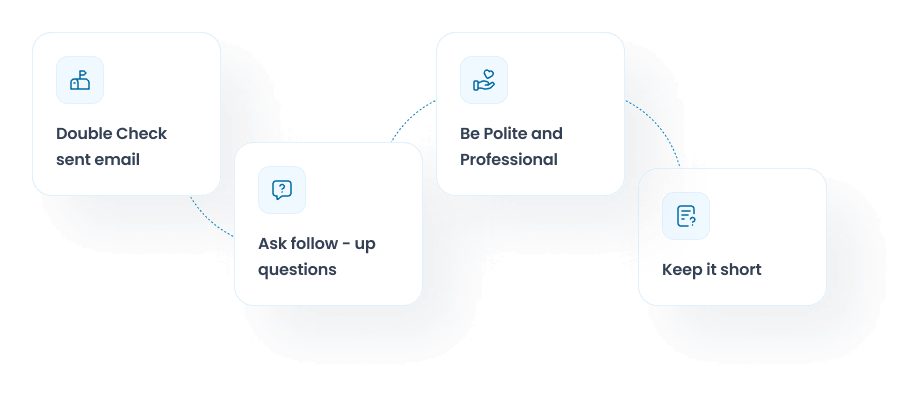
Following up after submitting a job application is one of the simplest things a job seeker can do to stand out, and one of the things the vast majority of Australian job seekers never do. Most people submit an application and then wait indefinitely. The candidates who follow up professionally signal something that passive waiting does not: genuine interest, initiative, and the kind of self-direction that employers value.
The right time to follow up on an application is typically five to seven business days after submission, unless the job listing specifies a closing date, in which case wait until two to three business days after that date has passed. Following up the day after you apply reads as impatient. Waiting three weeks without contact suggests you are not particularly invested.
How to Follow Up on a Job Application by Email?
An email follow-up should be brief, professional, and add something rather than simply restating your interest. Address it to the hiring manager or recruiter by name if you can identify them from the job listing or the company’s LinkedIn page. Keep your message to three short paragraphs. In the first paragraph, confirm that you applied for the role. In the second paragraph, add one relevant point that your application did not fully cover.And In the third paragraph, express your interest in discussing the role further and offer to provide any additional information the employer needs.
The subject line should include your full name and the role title: Application Follow-Up: Sarah Chen, Senior Marketing Coordinator. This makes it immediately searchable and professional.
How to Connect With a Hiring Manager or Recruiter on LinkedIn?
If you cannot find a direct email for the hiring manager or recruiter, LinkedIn is an alternative channel for a follow-up. Send a connection request with a personalised note: I recently applied for the Senior Marketing Coordinator role at your company and wanted to connect directly. I am very interested in the position and happy to provide any additional information that would be helpful.
Keep the message short and without pressure. You are not asking for a decision. You are opening a direct line of communication and demonstrating initiative. Many Australian recruiters respond positively to this kind of professional outreach because it saves them having to search for contact details when they want to follow up with a candidate.
How Many Times Should You Follow Up?
One follow-up after your initial application is appropriate. If you do not receive a response, a second brief follow-up two weeks later is acceptable. Beyond that, continued contact tips from professional persistence into behaviour that reflects poorly on your judgment. Some applications simply will not progress and the absence of a response, after two professional follow-ups, is the answer.
Following up after an interview is a separate and equally important step. Send a brief thank-you email to each interviewer within 24 hours of your interview. Hiring managers across Australia consider this standard professional practice and consistently report that it helps candidates stand out positively.
Read next: How to Prepare for a Job Interview full guide on interview preparation and follow-up
How to Find a Job Online When You Have No Experience?
No prior experience in a field does not mean no options in the online job market. It means the strategy for finding work needs to be adjusted to reflect where you are starting from, not abandoned because the obvious pathways are not yet available to you.
Entry-level roles, graduate programmes, internships, volunteer positions, and short-term project work are all legitimate entry points into new fields for people without direct experience. Each of these is findable through online channels with the right search terms and filters applied.
Short-term task and project work through platforms like CloudColleague is one of the most practical ways to begin building real experience in a new area without needing an employer to take a chance on you in a full-time capacity first. Completing a small project for a real client produces a portfolio item, a reference, and direct evidence of capability that is far more persuasive to a future employer than a qualification alone.
TAFE offers entry pathways into a wide range of industries for people who need to build foundational qualifications before applying for roles. Many TAFE programmes include work placement components that produce professional references and real-world experience alongside the qualification itself.
Read next: How to Apply for Jobs Without Experience complete guide with specific strategies and platforms
Common Job Search Mistakes Australians Make Online (And How to Avoid Them)
Most job searches that stall or fail do not fail because the person is unqualified. They fail because of avoidable patterns that undermine otherwise strong applications. These are the mistakes that come up most consistently in the Australian job market.
Applying to Too Many Roles Without Tailoring Anything
Sending the same resume and cover letter to 50 roles in a week feels productive. It almost never produces results proportional to the effort. A single tailored application often outperforms a batch of generic applications.Match your language to the job description and reference specific details about the company in your cover letter. Recruiters will see that you are genuinely well suited for the role.. Quality over volume is not just a cliche in job searching. It is a measurable reality.
Ignoring LinkedIn and Relying Only on Job Boards
If your entire job search is happening on SEEK and you have not updated your LinkedIn profile in two years, you are invisible to a large proportion of the Australian recruiters who are actively looking for candidates like you. LinkedIn is not optional in 2026. It is the platform where a significant number of Australian hiring decisions begin, often before a role is publicly advertised.
Not Setting Up Job Alerts and Checking Manually Instead
Checking job boards manually every few days means you are consistently behind the candidates who set up alerts and see new listings within hours of them going live. For competitive roles where the application window closes quickly, being among the first batch of applicants is a genuine advantage. Job alerts cost nothing to set up and take five minutes per platform.
Submitting Resumes With Formatting That Breaks ATS Filters
Complex resume formatting, text boxes, columns, tables, headers and footers with key information in them, and graphics all create problems for ATS systems that parse resume content. An ATS reads your resume as plain text. Anything that interferes with this parsing can cause the filter to score your application incorrectly or reject it before a recruiter reads it. Keep your resume formatting clean, simple, and left-aligned for online applications.
Never Following Up After Applying
As covered earlier in this guide, the majority of Australian job seekers never follow up after submitting an application. The small number who do, professionally and at the right time, consistently stand out in a pool where passive waiting is the norm. A single polite follow-up email is low risk and has a meaningful positive impact on your visibility with the hiring team.
Having an Incomplete LinkedIn Profile While Actively Job Searching
An incomplete LinkedIn profile during an active job search is the equivalent of a shop being open but having no products on display. If a recruiter finds your profile through a search and sees a blank About section, a missing profile photo, and no listed skills, they move to the next result. Profile completeness is not a cosmetic issue during a job search. It is a functional one.
Giving Up Too Early Based on Unrealistic Timelines
The average time between starting an active job search and receiving an offer in Australia varies significantly by industry, role level, and market conditions, but it is rarely less than four to six weeks for professional roles and frequently eight to twelve weeks or longer. Job seekers who expect results within two weeks and interpret the absence of an offer as evidence that they are doing something wrong often give up or dramatically lower their standards at exactly the point where their search is about to produce results.
How Long Does It Take to Find a Job Online in Australia in 2026?
One of the most common sources of anxiety in a job search is the absence of a reliable answer to this question. How long is it supposed to take? Am I behind? Is something wrong with my approach?
The honest answer is that timelines vary enormously based on factors that are partly in your control and partly not. Industry conditions, role scarcity, competition levels, the specificity of your target, and the quality and consistency of your search activity all influence how quickly an offer arrives.
As a rough benchmark for Australian professional roles in 2026: entry-level and graduate roles in high-demand fields tend to move relatively quickly, with offers possible within four to six weeks of active searching. Mid-level roles in competitive categories typically take six to ten weeks. Senior and executive roles often take three to six months or longer because the pool of suitable candidates is smaller, the hiring process is more involved, and organisations move more carefully at that level.
What you can control is the quality and consistency of your search activity: the relevance of your targets, the quality of your applications, the strength of your LinkedIn presence, the regularity of your follow-ups, and the depth of your networking. What you cannot fully control is market timing, employer decision-making speed, and competition from other candidates whose situations you cannot observe.
The most productive mindset during a job search is to treat it as a project with a defined set of weekly activities rather than a passive waiting exercise. Show up to the search every week with the same consistency you would show up to a job, and the results tend to follow with a lag that reflects the natural pace of the hiring process rather than a flaw in your approach.
Finding a Job Online in 2026 Rewards Strategy, Not Just Activity
The Australian job market in 2026 offers more online pathways to employment than any previous generation of job seekers has had access to. That abundance is an advantage, but only for the people who use the available tools deliberately rather than reactively.
The job seekers who find quality roles efficiently are not the ones who spend the most time on job boards. They are the ones who have an optimised LinkedIn presence working in the background, alerts set up to surface relevant listings immediately, a tailored approach to every application they submit, a professional follow-up habit, and a network they have invested in over time that produces referrals and introductions.
Start with the platforms. Build the profile. Set the alerts. Apply with care. Follow up. Network genuinely. Review and adjust your approach every few weeks based on what is and is not producing results. That process, repeated consistently, is what a successful online job search in Australia looks like.Ready to start applying? Browse jobs, tasks, and opportunities on CloudColleague and take the first concrete step toward your next role today.
Frequently Asked Questions About Finding a Job Online in Australia
Speed in a job search comes from removing friction and increasing visibility simultaneously. Set up specific job alerts so you see new listings immediately. Apply to roles within the first 24 to 48 hours of them being posted whenever possible.
SEEK is the most widely used job advertising platform in Australia. LinkedIn is the dominant platform for professional and white-collar role recruitment, Indeed Australia and Jora are used as supplementary channels by many employers. CloudColleague is growing as a platform for flexible, task-based, and professional service hiring alongside traditional job listings.
Use the remote or work-from-home filters available on SEEK and LinkedIn when setting up your searches. On CloudColleague, most task and project-based work is inherently remote. Read job descriptions carefully to distinguish between fully remote, hybrid, and home-flexible arrangements, as these terms are used inconsistently across listings. Industries with the strongest genuine remote availability include technology, digital marketing, finance, consulting, and data roles.
For professional roles, a realistic expectation is four to twelve weeks of active searching before receiving an offer, depending on the role level, industry, and market conditions.
Yes. Entry-level listings, graduate programmes, internships, and project-based work through platforms like CloudColleague are all accessible to job seekers without direct industry experience.