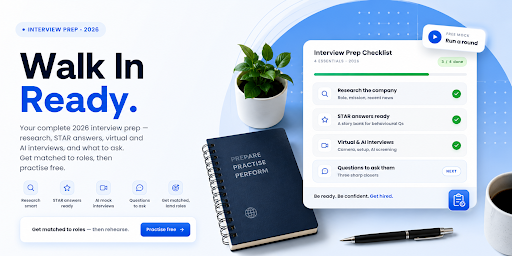
Getting a job interview is hard enough. Sitting across from a hiring manager and not being able to recall a single relevant example from your own career, despite having years of solid experience, is a particular kind of frustrating that most job seekers have experienced at least once.
It does not happen because the candidate was not capable. It happens because the candidate was not prepared. Interview performance and professional capability are not the same thing, and the gap between them is almost entirely explained by preparation.
Research from the Australian HR Institute consistently shows that hiring decisions are often shaped in the first few minutes of an interview, well before a candidate has had the chance to demonstrate the full depth of their experience. The candidates who make a strong early impression are not necessarily the most qualified. They are the ones who walked in knowing what they were going to say, why they were going to say it, and how it connected to what the employer needed.
This guide covers every element of job interview preparation that matters in the Australian context in 2026, from researching the company and preparing for common questions to managing nerves on the day and following up professionally afterwards. The same principles apply to job seekers in the United Kingdom, Canada, New Zealand, and other English-speaking markets where interview conventions follow similar patterns.
How to Research a Company Before a Job Interview?
Walking into an interview without having researched the company is the fastest way to confirm that your application was not genuinely serious. Hiring managers ask questions designed to reveal whether a candidate has thought about why they want to work for this specific organisation, and an unprepared candidate is immediately identifiable in those moments.
Research before an interview serves two purposes. It gives you the material to answer company-specific questions intelligently. And it gives you the confidence that comes from knowing your subject, which changes how you carry yourself in the room.
What to Research Before Any Interview?
Start with the company’s core business. Understand what they do, who their customers or clients are, how they generate revenue, and what market position they hold. This sounds basic, and it is, but a surprising number of candidates arrive at interviews with only a vague understanding of what the organisation actually does beyond the job title they applied for.
Read their mission statement, values, and any public statements about their culture and working environment. These are typically found on the About or Careers section of the company website. Understanding what an organisation says it stands for allows you to frame your answers in language that reflects their priorities rather than generic professional terminology.
Look for recent news. A Google News search of the company name will surface press coverage, industry mentions, and any significant recent developments. Knowing that a company recently won a major contract, launched a new product, expanded into a new market, or faced a notable challenge demonstrates a level of engagement with the organisation that most candidates do not show.
Re-read the job description carefully the night before. The job description tells you exactly what the hiring manager values most. The requirements listed first and described in most detail are the priorities. Read it with the question in mind: for each requirement, what specific evidence from my experience can I offer?
If you know the name of your interviewer, look at their LinkedIn profile briefly. Understanding their professional background, how long they have been with the company, and what their role involves gives you useful context for how the interview is likely to be structured and what they are most likely to prioritise.
Find Company Information Before an Interview
The company website is the starting point for any pre-interview research. The About, Careers, News, and Blog sections typically contain the most useful context about the organisation’s culture, direction, and recent activity.
LinkedIn’s company page shows the organisation’s recent posts, announcements, and employee activity. It also gives you a sense of headcount and recent growth or contraction, which is a relevant context for understanding the role you are stepping into.
Glassdoor is one of the most underused pre-interview research tools available to Australian job seekers. It contains reviews from current and former employees about what it is genuinely like to work at the organisation, interview experience reports from candidates who have been through the process before, and salary data for comparable roles. Reading Glassdoor reviews before an interview can give you a realistic picture of the workplace culture that no company website will provide.
SEEK company profiles carry employer reviews and ratings from current and former staff and are worth checking alongside Glassdoor for an Australian employer perspective.
If the role you are interviewing for was listed on CloudColleague, revisit the listing before the interview. The way an employer writes a job listing, the language they use, the qualities they emphasise, and the problems they describe, tells you a great deal about their priorities and culture. Reading it again with fresh eyes the night before gives you specific material to reference during the interview that most candidates overlook entirely.
Research principle: The goal of pre-interview research is not to memorise facts about the company. It is to have two or three genuinely specific things to say about them that demonstrate you thought about why you want to work there before you walked in the door.
Prepare Answers to Common Interview Questions in Australia
The most common interview questions in Australia are not secrets. They are used because they work, because they consistently reveal something useful about a candidate, and because they are open-ended enough to allow a wide range of answers. Preparing for them in advance does not mean scripting a response word for word. It means knowing the structure of a strong answer and having specific examples ready to populate it.
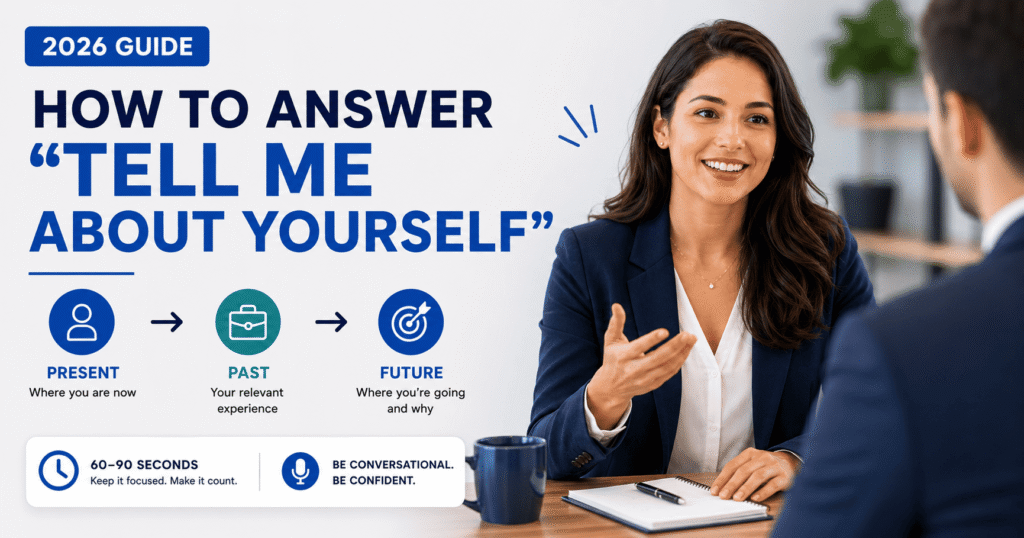
How to Answer Tell Me About Yourself?
This is almost always the opening question in an Australian job interview, and it is consistently the one that candidates answer most poorly. Most people either start from the beginning of their career and narrate every role in sequence, which takes too long and buries the relevant information, or they give such a brief answer that the interviewer has to prompt them for more.
What the interviewer is actually asking is: give me a framing of who you are professionally that helps me understand why you are here for this specific role. It is an invitation to set the terms of the conversation in your favour. A well-prepared answer to this question establishes your most relevant credentials immediately and creates a platform for everything that follows.
The three-part structure that works reliably is: present position and key professional strength, your most relevant past experience, and why you are here for this role specifically. The whole answer should take 60 to 90 seconds.
Example: I am a digital marketing specialist with six years of experience across content strategy, SEO, and paid social for both B2B and e-commerce clients. In my current role at a Melbourne-based agency, I have led organic growth campaigns that consistently delivered 40 to 60 percent traffic increases within 12-month periods. I am looking to move into an in-house role where I can build a longer-term strategy rather than managing multiple client accounts simultaneously, and your company’s investment in its content team is specifically what drew me to this position.
Notice what this answer does. It names a specific skill set, provides evidence of results with numbers, explains the reason for the move, and connects directly to something specific about the employer. It leaves the interviewer with a clear professional picture and a natural opening for follow-up questions.
How to Answer Why Do You Want to Work Here?
This question separates prepared candidates from unprepared ones more reliably than almost any other question in a standard job interview. An unprepared candidate gives a generic answer about the company’s reputation, growth opportunities, or good culture. A prepared candidate gives a specific answer that references something they actually discovered during their research.
The structure of a strong answer contains three elements: a specific observation about the company that is positive and genuine, a connection between that observation and your own professional values or career direction, and a brief expression of why this makes the role feel like a genuine fit rather than just an available opportunity.
| Weak Answer | Strong Answer | |
| Why do you want to work here? | Your company has a great reputation and I am looking for an opportunity to grow my career in a strong organisation. | I read about your recent expansion into the aged care technology sector and the partnership you announced last month. I have spent the last three years working in health-adjacent technology, and I have been looking for a company that is trying to solve a genuinely meaningful problem in that space. That combination of social purpose and technical ambition is exactly what I want to be working on. |
How to Answer What Are Your Greatest Strengths?
This question is not an invitation to be modest, and it is not an invitation to list five things you are good at without evidence. It is an invitation to demonstrate self-awareness and to connect your capabilities directly to what the role requires.
The rule is: name the strength, provide a specific and brief example of it in action, and connect it to the role you are applying for. One or two strengths presented with genuine evidence and relevance is more persuasive than five strengths listed without support.
Choose the strength you lead with based on what the job description has told you is most important. If the role emphasises stakeholder management, lead with your ability to build and maintain complex professional relationships and support it with a specific example. If the role emphasises analytical thinking, lead with that. The interviewer is not just assessing whether you have strengths. They are assessing whether your strengths are the ones they need.
How to Answer What Are Your Weaknesses?
The weaknesses question has been a standard part of job interviews for decades and is still consistently answered poorly. The two most common failure modes are giving a non-answer disguised as a weakness, I care too much or I work too hard, which reads as either dishonest or self-unaware, or naming a weakness that is a core requirement of the role, which is a genuine disqualifier.
A strong answer to this question names a genuine weakness that is real but not fundamental to the role, explains specifically what you have done to address it, and provides evidence that the work has had an effect. This structure demonstrates exactly what the interviewer is looking for: honesty, self-awareness, and a commitment to professional development.
Example for a candidate applying for a project management role: I used to struggle with delegating effectively. I had a tendency to hold onto tasks I could do quickly myself rather than distributing them to the team, which created bottlenecks when workloads increased. Over the past 18 months I have been deliberate about this, setting explicit delegation targets for each project and checking in at the process level rather than the output level. The team lead feedback I received in my last review noted a significant improvement in how I support the team’s capacity.
What you never want to name as a weakness is something the role fundamentally requires: communication skills for a client-facing role, attention to detail for an analytical role, or time management for a deadline-driven environment. Read the job description before answering this question and make sure your chosen weakness sits comfortably outside the core requirements.
How to Answer Where Do You See Yourself in Five Years?
The hidden question inside this question is: are you likely to stay, and does what you want from your career align with what this role and this organisation can actually offer you? The interviewer is not just interested in your ambitions. They are assessing fit and likely tenure.
A strong answer is growth-oriented without suggesting that the role you are applying for is merely a stepping stone to something better elsewhere. It demonstrates ambition while connecting that ambition to the trajectory that is genuinely possible within the organisation or field.
Weak: I see myself in a leadership position, possibly running my own team or division. Strong: In five years I would like to have developed deep expertise in this sector and be contributing at a more strategic level, whether that is in a team lead capacity or as a specialist whose work shapes the direction of the function. I am particularly interested in developing skills in the areas your company is investing in, which is one of the reasons this role feels like the right next step.
Read next: How to Set Career Goals (Step-by-Step) if you need clarity on your professional direction
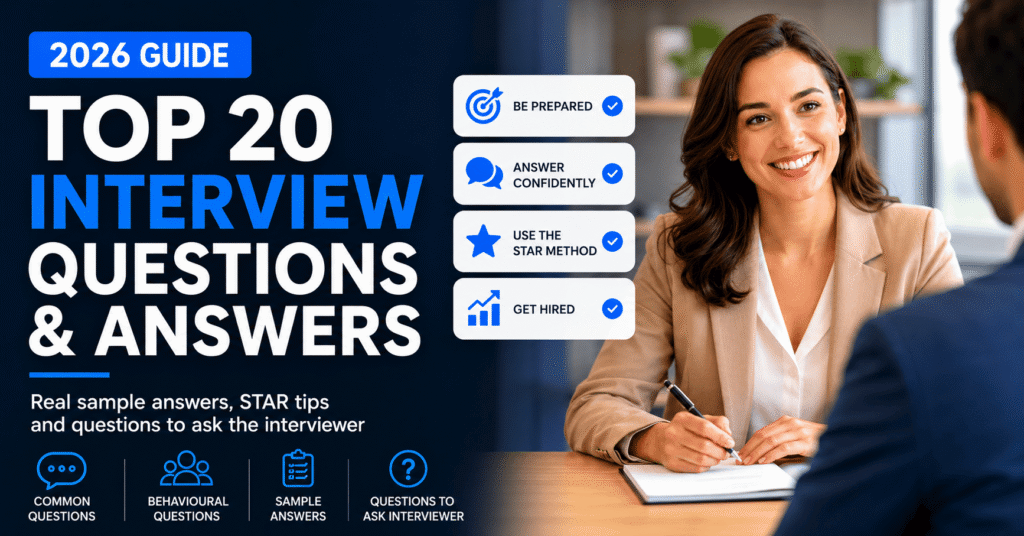
Answer the Behavioural Interview Questions Using the STAR Method
Behavioural interview questions are now used by the majority of Australian employers as a standard component of the interview process. They are questions that ask you to describe a specific past situation as evidence of a capability rather than asking you to describe what you would hypothetically do in a given scenario.
The premise behind behavioural interviewing is straightforward: past behaviour is the most reliable available predictor of future behaviour. An interviewer who wants to know how you handle conflict under pressure will learn more from a specific real example than from your description of what you would ideally do in theory.
The STAR method is the most widely used framework for structuring behavioural interview answers in Australia, the United Kingdom, Canada, and across most English-speaking professional contexts. It stands for Situation, Task, Action, and Result.
How to Use the STAR Method to Structure Your Answers?
Situation. Set the context briefly. Where were you working, what was happening, and what made this situation worth recounting? Keep this section short. One to two sentences is usually sufficient. The situation is the stage, not the story.
Task. Describe your specific responsibility within the situation. What were you accountable for? This section distinguishes your individual role from the broader context and sets up the explanation of what you actually did.
Action. This is the most important part of a STAR answer and the section most candidates underdevelop. Describe specifically and in the first person what you did, why you chose that approach, and what the key decisions or actions were. Use I rather than we. An interviewer is assessing your contribution, not your team’s. Being vague in the Action section is the most common STAR answer failure.
Result. What happened as a result of your actions? Quantify the outcome wherever possible. Numbers, percentages, timeframes, and dollar values are all more persuasive than general descriptions of positive outcomes. If the result was not entirely positive, say what you learned and what you would do differently, which demonstrates the reflective self-awareness that most interviewers value.
A complete STAR answer should take between 90 seconds and two minutes. Shorter than that and the answer lacks substance. Longer than that and you are including detail that the interviewer does not need.
Question: Tell me about a time you dealt with a difficult colleague. Situation: In my previous role as a marketing coordinator, I worked closely with a senior designer who had a different approach to feedback. He tended to deliver critical feedback bluntly in team meetings, which was creating tension and reducing participation from junior members. Task: As the team lead for our content projects, I felt responsible for maintaining a productive working environment even though this colleague was senior to me in the organisation. Action: I requested a one-on-one conversation with him, framed it around improving our collaborative output rather than as a criticism of his style, and shared specific examples of how the team dynamic was affecting our output timelines. I also suggested a process change where design feedback was shared in written form before team reviews so people could process it without the pressure of the room. Result: He was receptive. We implemented the written feedback process and within two months, meeting participation from the full team increased noticeably and our revision cycles shortened by about 30 percent. We also developed a much better working relationship personally.
Common Behavioural Interview Questions in Australia With STAR Guidance
Tell me about a time you managed a conflict at work. This question tests interpersonal skills, emotional maturity, and your ability to navigate difficult relationships professionally. The interviewer wants to see that you addressed the conflict directly rather than avoiding it and that you focused on the professional outcome rather than personal dynamics.
Tell me about a time you failed and what you learned from it. This question tests honesty and self-awareness. Choose a real failure, not a trivial one, and make sure the focus of the answer is on your reflection and the specific changes you made as a result rather than on the failure itself.
Tell me about a time you worked under significant pressure to meet a deadline. This question tests resilience, prioritisation, and performance under stress. Show the specific actions you took to manage the pressure, not just that you got through it.
Tell me about a time you showed initiative. This question tests proactivity and self-direction. The story you choose should demonstrate that you identified a problem or opportunity that was not in your formal job description and took action to address it.
Tell me about a time you had to adapt to a significant change at work. This question tests flexibility and change management capability. It is particularly common in organisations that have been through restructures, rapid growth, or significant technology or process changes.
How to Build a Bank of STAR Stories Before Your Interview?
The most efficient interview preparation activity available to any job seeker is building a bank of six prepared STAR stories before the interview. Six stories is enough to cover most behavioural question categories without being so many that preparation becomes overwhelming.
Choose stories that demonstrate leadership, problem-solving, resilience under pressure, successful collaboration, taking initiative, and a significant professional achievement. These six categories between them cover the vast majority of behavioural questions that Australian hiring managers ask.
Write each story out in full before the interview. Not because you will read from notes during the interview, but because the act of writing forces the level of specificity that STAR answers need. A story that feels clear in your head often becomes vague when you try to articulate it, and writing it out in advance reveals those gaps while you still have time to address them.
Practise each story aloud at least twice before the interview. The goal is for it to sound natural and conversational rather than recited. A STAR answer that sounds like it was memorised loses credibility even if the content is strong.
Prepare for the Specific Requirements of the Role
Preparing for common interview questions is necessary but not sufficient. The candidates who perform best in interviews are the ones who have also prepared specifically for the role they are interviewing for, which requires a different kind of preparation.
Re-read the job description carefully the evening before your interview and identify the three to five most important requirements. For each one, identify the strongest piece of evidence from your professional history that demonstrates you meet it. This gives you a prepared set of role-specific answers that go beyond generic question preparation.
Every item on your resume is a potential interview question. If you list a specific achievement, a technology platform, a project, or a qualification, be ready to discuss it in detail. Think about what questions your resume raises and prepare to answer them before you walk in.
Anticipate concerns and prepare to address them directly. If you are changing industries, prepare a concise and positive explanation of the transition. If you have a gap in your employment history, prepare a brief, confident account of what you were doing during that period. If you lack a specific qualification the role listed, prepare to acknowledge it and explain how your experience compensates. Addressing potential concerns proactively and without defensiveness turns a potential negative into a demonstration of self-awareness and confidence.
Read next: How to Write a Resume That Gets Interviews ensure your resume supports your interview performance
Prepare for Different Types of Job Interviews in Australia
Not all job interviews are structured the same way. Understanding the format you are walking into allows you to prepare specifically for it rather than arriving with a generic approach that may not suit the context.
How to Prepare for a Panel Interview?
A panel interview involves two or more interviewers simultaneously and is commonly used by Australian government agencies, large corporations, healthcare organisations, and educational institutions for professional and leadership roles. The format feels more formal than a one-on-one interview, and the presence of multiple evaluators creates a different kind of pressure.
When you are introduced to panel members at the start of the interview, write down each person’s name and their role if it is stated. Addressing people by name during the interview demonstrates attentiveness and professionalism.
When answering a question, direct your initial eye contact to the person who asked it and then make brief, natural eye contact with the other panel members before returning to the questioner for your conclusion. This ensures that all panellists feel included without creating the awkward impression that you are performing for the room.
Panel members often represent different functions and have different priorities. An HR professional on a panel is evaluating culture fit and communication. A technical specialist is evaluating domain expertise. A senior leader is evaluating strategic thinking and potential. When answering, try to address the concerns of multiple perspectives rather than speaking exclusively to the most senior person in the room.
How to Prepare for a Video Interview?
Video interviews are now standard practice for first-round screening in Australia, particularly for roles where candidates may be applying from different cities or states. Zoom and Microsoft Teams are the most commonly used platforms for Australian employer video interviews in 2026.
Technical preparation matters more than most candidates give it credit for. Test your camera, microphone, and internet connection before the interview. Set up in a location with a neutral background, consistent lighting from in front of you rather than behind, and no background noise. A bright window behind you will make your face appear dark on screen. Lamp or natural light directed toward your face produces significantly better image quality.
Eye contact in a video interview requires a deliberate adjustment. The natural instinct is to look at the interviewer’s face on the screen, but this means you are looking slightly below the camera, which reads on their end as you looking down rather than at them. Look directly at the camera lens when speaking. It feels unnatural at first but reads as direct and confident from the interviewer’s perspective.
Have a printed copy of your resume, your prepared STAR stories on a single page of notes, and a glass of water within reach but not visible on screen. These are practical tools that reduce cognitive load during the interview. You do not need to look at your notes, but knowing they are there reduces anxiety.
Dress for a video interview at the same standard as you would for an in-person interview for the same role. The half of you that is visible on screen should be professionally presented regardless of what you are wearing below the desk.
Technical backup: If technical difficulties occur during a video interview, address them calmly and immediately. Say something like I am experiencing a connection issue, can you hear me clearly? Maintaining composure during an unexpected technical problem is itself a demonstration of professional calm under pressure.
How to Prepare for a Phone Interview?
Phone interviews are typically used by Australian recruiters as an initial screening step before inviting candidates to a formal interview. They are shorter and more focused than in-person or video interviews, usually covering a handful of screening questions rather than a full competency assessment.
The specific challenges of a phone interview are worth understanding. Without visual feedback, you cannot read the interviewer’s reactions to your answers. Without body language cues, it is harder to gauge whether you are going into too much detail or not enough. And the absence of a physical shared space removes some of the social cues that make conversation feel natural.
Prepare a quiet space with no background noise, a comfortable chair, your resume visible in front of you, and your prepared STAR stories accessible. Standing up during a phone interview improves your vocal delivery and projects more confidence through the microphone than sitting slouched does. It sounds counterintuitive but makes a noticeable difference to how engaged and energetic you sound.
Speak slightly more slowly and clearly than you would in a face-to-face conversation. The interviewer has no visual context for your communication and relies entirely on what they hear. Pausing briefly before answering questions, which would feel awkward in person, is barely noticeable on the phone and gives you time to structure your answer before you speak.
What to Wear to a Job Interview in Australia in 2026?
Australian workplace culture has become significantly more casual over the past decade, particularly in technology, creative, and startup environments. This shift has created genuine uncertainty for job seekers about what level of formality is appropriate for an interview. The answer is more reliable when you follow a single guiding principle: dress one level above the standard for the workplace you are entering.
If the workplace is business casual, dress business formal for the interview. If the workplace is casual, dress smart casual. If the workplace is formal, dress formally. Arriving slightly overdressed signals that you took the interview seriously. Arriving underdressed signals that you did not.
| Industry | Typical Workplace Standard | Interview Standard |
| Corporate finance and law | Business formal | Business formal, conservative choices |
| Technology and digital | Casual to smart casual | Smart casual, polished and intentional |
| Creative and marketing | Casual, expressive | Smart casual with a personal but professional touch |
| Healthcare and community | Uniform or conservative | Conservative professional, subdued colours |
| Trades and construction | Practical workwear | Clean, practical, and industry-appropriate |
| Education | Smart casual to semi-formal | Smart professional, approachable and polished |
Regardless of industry, the practical checklist is the same. Clothing should be clean, pressed, and well-fitted. Footwear should be appropriate for the formality level and in good condition. Avoid strong fragrances, which are distracting in a closed interview room. Keep accessories minimal and non-distracting. The goal of interview attire is to communicate that you took the meeting seriously and to remove any visual distraction from what you are actually saying.
Manage Interview Nerves and Build Genuine Confidence
Interview anxiety is not a sign of weakness or lack of qualification. It is a physiological response to a high-stakes evaluative situation and it is experienced to some degree by the majority of people who walk into job interviews, including experienced professionals who have been through the process dozens of times.
Understanding the source of interview anxiety is useful because it points directly at the solution. The primary driver of interview anxiety is uncertainty: not knowing what you will be asked and not being confident that you will have something meaningful to say when you are. Preparation does not eliminate that uncertainty entirely, but it reduces it dramatically. A candidate who has researched the company, prepared specific answers to common questions, built a bank of STAR stories, and practised them aloud has fundamentally less to be uncertain about than one who has not.
The most reliable path to interview confidence is thorough preparation. Everything else is secondary.
Practical Techniques for Managing Nerves on Interview Day
Sleep and physical preparation matter more than most people give them credit for. Arriving at an interview tired, hungry, or rushed amplifies anxiety and reduces cognitive performance. Plan your morning around the interview rather than fitting the interview into your morning.
Arrive early rather than on time. Walking into an interview with two minutes to spare, having rushed across the city, raises your cortisol levels and reduces the composure that you want to bring into the room. Arriving 10 to 15 minutes early allows you to settle, review your notes briefly, and approach the interview from a state of readiness rather than stress.
Controlled breathing is one of the few evidence-based techniques for reducing acute anxiety symptoms quickly. A simple method: breathe in slowly for four counts, hold for four counts, exhale slowly for six counts. Repeat three times. This activates the parasympathetic nervous system and measurably reduces the physical symptoms of anxiety within a minute or two.
Reframe what the interview is. Most interview anxiety comes from experiencing the process as an interrogation where you are being judged and found wanting. Reframing it as a professional conversation where both parties are deciding whether there is a good fit changes the emotional dynamic significantly. The hiring manager is not trying to catch you out. They are trying to find the best person for a role they need to fill.
When your mind goes blank during an answer, the professional response is a brief pause, not a panic. Saying something like that is a good question, let me think about the best example to share with you is entirely acceptable and reads as composure rather than incompetence. Rambling to fill silence is far more damaging than a three-second pause.
What Questions Should You Ask at the End of a Job Interview?
Almost every job interview in Australia ends with the same invitation: do you have any questions for us? Saying no, I think you have covered everything is one of the most common missed opportunities in the interview process. It signals either a lack of genuine interest in the role or a lack of preparation.
Asking thoughtful questions at the end of an interview does three things. It demonstrates that you have been thinking about the role seriously. It shows genuine curiosity about the organisation and the people you would be working with. And it gives you information that actually matters for deciding whether you want to accept an offer if one comes.
Questions Worth Preparing for the End of Any Interview
What does success look like in this role in the first 90 days? This question shows that you are thinking about how to deliver results quickly and gives you genuinely useful information about the employer’s priorities and expectations.
How would you describe the team culture and typical working style?: This question gives you a realistic picture of the environment you would be entering from the perspective of someone inside it.
What are the biggest challenges the person in this role will face initially?: This question demonstrates realistic thinking and gives you advanced knowledge of what you would be walking into.
What development and progression opportunities exist for someone in this position?: This question signals that you are thinking about your long-term contribution to the organisation and are motivated by growth.
Directed at the interviewer personally: what do you enjoy most about working here?: This question invites a human response rather than a corporate one and often produces genuinely revealing answers about the workplace.
What are the next steps in your hiring process?: This question is practical, professional, and important. It tells you when you can expect to hear back, which saves you from the anxiety of waiting without a reference point.
Questions to Avoid at the End of a First Interview
Avoid asking about salary, leave entitlements, or benefits in a first interview unless the interviewer raises the topic. These questions are appropriate and important, but they belong in a conversation that happens after an offer has been indicated rather than before an employer has decided whether they want to hire you.
Avoid asking questions that are easily answered by the company website, particularly questions about what the company does. This signals that you did not research the organisation before arriving.
Avoid asking anything that suggests you were not paying attention during the interview. If a question was already answered during the conversation, asking it again sends the wrong message.
Follow Up After a Job Interview Professionally
Sending a follow-up message after a job interview is one of the most consistently underused professional practices available to Australian job seekers. The majority of candidates leave an interview and then wait passively for a response. The minority who follow up professionally and promptly consistently report that it is noticed.
A thank you email sent within 24 hours of the interview is the standard follow-up approach. It should be addressed to each interviewer individually if there were multiple, and it should reference something specific that was discussed during the interview to distinguish it from a generic thank you template.
Subject: Thank you — Senior Marketing Coordinator Interview Dear Ms. Hartley, Thank you for taking the time to speak with me today about the Senior Marketing Coordinator role. I enjoyed learning more about the team’s approach to content strategy and particularly the discussion about the upcoming product launch and how the role would contribute to it. Our conversation reinforced my interest in the position. The combination of strategic planning and hands-on content creation is exactly the kind of scope I am looking for, and I believe the experience I have built in B2B content and SEO would translate directly into the priorities you described. I would welcome the opportunity to join the team and contribute to what you are building. Please do not hesitate to reach out if there is any additional information I can provide. I look forward to hearing about the next steps. Kind regards, Sarah Chen
If you have not heard back within the timeframe the interviewer mentioned, or within two weeks if no timeframe was given, a single brief follow-up email is appropriate. Keep it to two sentences: a reference to the interview and a brief reiteration of your interest. Beyond one follow-up, continued contact becomes counterproductive.
If you receive a rejection, a brief and gracious response is worth sending. Thank them for the opportunity and express genuine openness to being considered for future roles that may be a better fit. Australian professional networks are smaller than most people assume and hiring managers remember candidates who respond to rejection with professionalism.
Common Job Interview Mistakes Australians Make (And How to Avoid Them)
The mistakes that most consistently undermine otherwise strong candidates in Australian job interviews are not dramatic failures. They are quiet, avoidable patterns that accumulate into a poor impression before the candidate realises what has happened.
Arriving Late
Lateness to a job interview is unrecoverable in most cases. It immediately raises questions about reliability and professional judgment that will colour everything that follows regardless of how well you perform once you are seated. Plan to arrive 10 to 15 minutes early, know the route in advance, and have a contingency plan for public transport delays or traffic. If an unavoidable emergency makes you late, call ahead as soon as you know rather than arriving and explaining afterwards.
Not Researching the Company
Every interviewer asks at least one question that reveals immediately whether a candidate has done any research. The candidate who cannot articulate anything specific about why they want to work for this organisation in particular has effectively signalled that the application was not genuinely serious. Thirty minutes of research before an interview is the minimum investment for a credible application.
Speaking Negatively About Previous Employers
Australian hiring managers interpret negative commentary about former employers as a warning sign about what the candidate would say about their organisation in future conversations. Even if the criticism is entirely justified, the professional standard is to describe your reasons for leaving in neutral, forward-looking language rather than in terms of the organisation’s or management’s failures.
Underselling Achievements Out of Modesty
Australian cultural norms around modesty create a particular challenge in job interviews, where the professional expectation is that you will speak directly and confidently about your own contributions and achievements. Hedging your achievements with phrases like I was just part of a team or it was nothing really signals either low confidence or a lack of individual contribution. Practice stating your achievements clearly and without qualification.
Not Asking Questions at the End
Declining to ask questions when invited to do so suggests a lack of genuine engagement with the role or the organisation. Prepare at least four questions so you have options if some are answered during the interview, and ask at least two of them regardless of how long the interview has already run.
Not Following Up Afterwards
Leaving an interview without sending any follow-up communication is a missed opportunity to reinforce your interest and distinguish yourself from the majority of candidates. A brief, professional thank you email within 24 hours costs five minutes and consistently makes a positive impression on hiring managers who receive almost none of them.
Interview Success Is Built Before You Walk in the Door
The candidates who consistently perform well in job interviews are not the ones who are naturally articulate or uncommonly confident under pressure. They are the ones who prepared specifically and thoroughly before they arrived. Every element of good interview performance, clear answers, specific examples, genuine knowledge of the company, thoughtful questions at the end, professional follow-up, is the product of preparation rather than improvisation.
The most useful thing you can do after reading this guide is to open the job description for your next interview and identify the three most important requirements. For each one, write out a STAR story from your experience that demonstrates it directly. Practise those three stories aloud until they sound natural. That preparation alone will put you ahead of the majority of candidates in any interview room in Australia.Ready to find your next interview opportunity? Browse jobs, tasks and professional roles on CloudColleague and start applying for positions that match your skills and career goals today.
Frequently Asked Questions About Job Interview Preparation
Research the company thoroughly using their website, LinkedIn, Glassdoor, and recent news. Re-read the job description and identify the three to five most important requirements. Prepare specific answers to common questions including tell me about yourself, why you want to work here, and your greatest strengths. Build a bank of six STAR stories covering leadership, problem-solving, resilience, collaboration, initiative, and achievement. Prepare four to five questions to ask at the end. Practise your answers aloud at least once. Arrive 10 to 15 minutes early on the day.
The most consistently asked questions in Australian job interviews include tell me about yourself, why do you want to work here, what are your greatest strengths, what are your weaknesses, where do you see yourself in five years, and a range of behavioural questions beginning with tell me about a time you. Each of these is covered in detail earlier in this guide.
STAR stands for Situation, Task, Action, and Result. It is a framework for structuring answers to behavioural interview questions that ask you to describe a specific past experience. Describe the Situation briefly, explain your specific Task or responsibility within it, describe in detail the Actions you took, and state the Result with quantified outcomes where possible. A complete STAR answer should take 90 seconds to two minutes.
Dress one level above the typical standard for the workplace you are interviewing with. For corporate finance and law, business formal is appropriate. For technology and creative roles, smart casual that reads as polished and intentional. For trades and construction, clean and industry-appropriate practical attire. When in doubt, it is significantly better to be slightly overdressed than underdressed.
Yes. Send a brief, personalised thank you email to each interviewer within 24 hours of the interview. Reference something specific that was discussed to distinguish it from a generic template. Reiterate your interest in the role and invite them to reach out for any additional information. It takes five minutes and is noticed by hiring managers because so few candidates do it.
Prepare thoroughly. The primary source of interview anxiety is uncertainty about what to say, and preparation directly addresses that. On the day, arrive early to give yourself time to settle. Use controlled breathing in the minutes before the interview starts. Reframe the interview as a professional conversation rather than a one-sided evaluation. If your mind goes blank during an answer, take a brief pause, which reads as composure rather than failure.