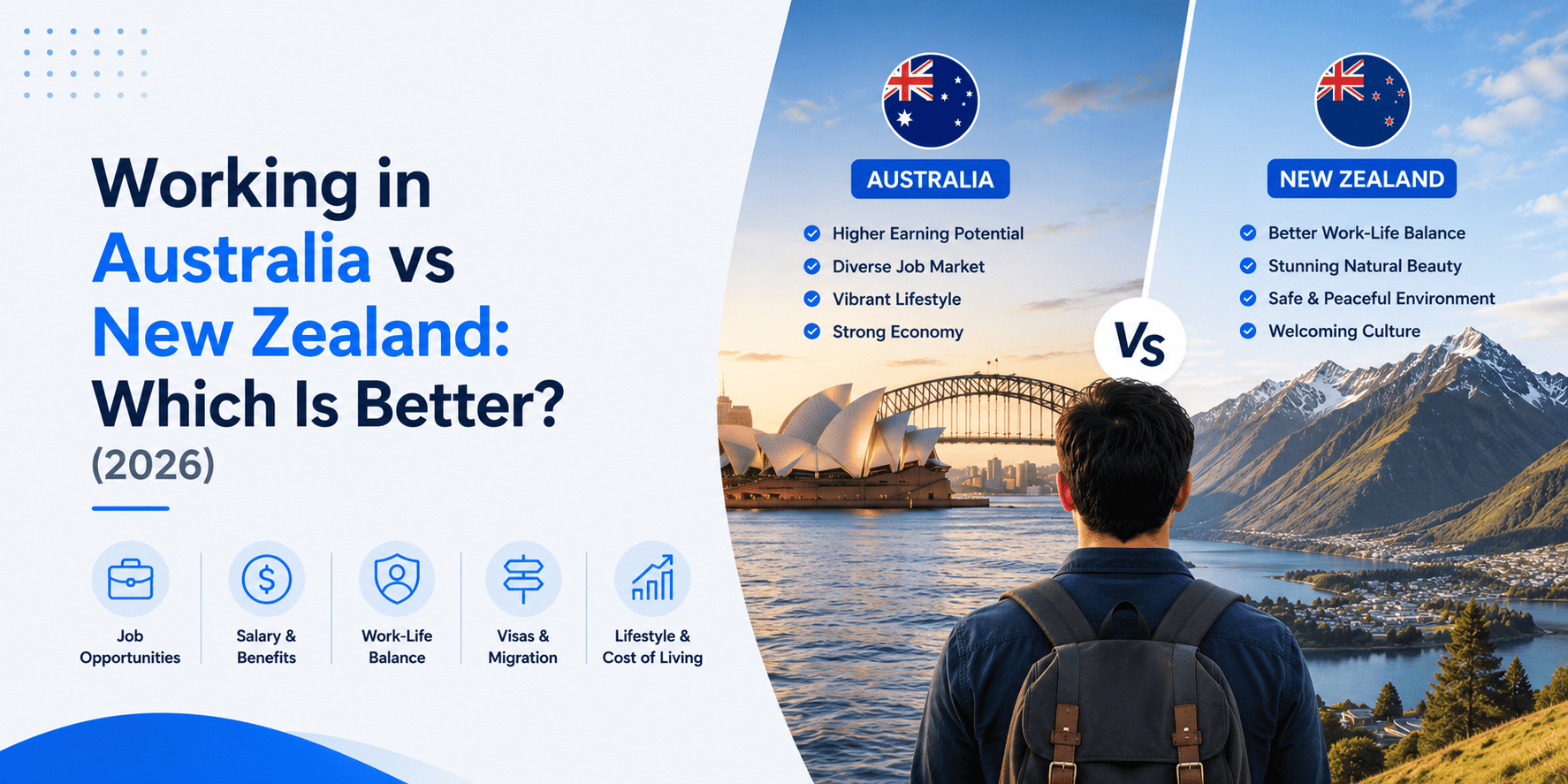
Working in Australia vs New Zealand looks like a coin flip from the outside. Three hours of flying separates two English-speaking countries with famously relaxed reputations. The pay cheques, though, are anything but identical.
Here is our position, stated honestly upfront. We are an Australian platform, and New Zealand still wins several rounds below. This comparison gives you real 2026 numbers, not destination marketing. And it covers the twist most guides bury: thanks to the Trans-Tasman arrangement, this choice may not be permanent anyway. If Australia ends up in your plan, CloudColleague can have you earning from Australian businesses before you land.
Australia vs New Zealand at a Glance
The short version runs like this. Australian salaries sit roughly 20% to 40% higher than New Zealand equivalents, depending on profession. Australia adds 12% superannuation on top of every wage. New Zealand answers with cheaper housing outside Auckland, a simpler pace, and its unique ACC injury cover.
Choose Australia when earnings, retirement savings, and market size top your list. Trades, healthcare, engineering, and tech feel the pay gap most.
Choose New Zealand when affordability, lifestyle, and smaller-scale living matter more. Many migrants happily trade income for mountains, space, and shorter commutes.
Weighing America as well? Our comparison of working in Australia vs the USA covers that decision separately. The trans-Tasman choice below has friendlier trade-offs on both sides.
Which Jobs Are in Demand in Both Countries?
Your occupation often decides this whole comparison, so check demand first.
Both countries chase the same core shortages. Nurses, doctors, IT professionals, engineers, construction workers, teachers, and aged care staff appear on both skilled lists. Holding one of these occupations gives you genuine choice between the two markets.
Australia adds demand New Zealand cannot match. Mining engineers, data scientists, and cyber security specialists earn Australian premiums with no Kiwi equivalent. Construction trades also run deeper across Australia’s bigger infrastructure pipeline.
New Zealand’s specific gaps run to agricultural workers, hospitality staff, and regional healthcare. Its Green List fast-tracks residence for the most critical shortages. Regional roles outside Auckland often qualify easier than city equivalents.
The practical move takes ten minutes. Search Australia’s Core Skills Occupation List and New Zealand’s Green List for your title. Appearing on one list simplifies your decision. Appearing on both hands you the rare luxury of choosing on lifestyle alone.
Salary Comparison: Australia vs New Zealand in 2026
Start with the wage floors, both freshly updated. Australia’s national minimum wage is $26.44 per hour from July 2026. New Zealand’s adult minimum wage is NZ$23.95 from April 2026. The gap looks modest until the exchange rate converts it, favouring Australian earnings further.
The middle of the market shows the real difference. Stats NZ puts the New Zealand median salary near NZ$70,000, with the average around NZ$81,000. Comparable Australian roles typically pay 20% to 40% more. The premium runs widest in trades, healthcare, technology, and engineering. Mining and resources roles barely exist in New Zealand at Australian pay scales.
For the Australian side in detail, see our guide to the highest paying jobs in Australia for immigrants. It maps 20 roles with verified ranges.
Superannuation vs KiwiSaver: the retirement gap
This structural difference compounds quietly for decades. Australian employers must pay 12% superannuation on top of wages. New Zealand’s KiwiSaver requires just 3% from employers.
Run the transparent maths on an $80,000 salary. Australia adds $9,600 to your retirement yearly. New Zealand adds $2,400 for the equivalent role. Over a 30-year career, that gap builds a dramatically different retirement, before investment returns widen it further. For long-term wealth, this is Australia’s strongest single card.
Cost of living: where NZ claws back
New Zealand genuinely wins ground here, so credit where due. Housing outside Auckland costs noticeably less than Australia’s big cities. Christchurch and Wellington rents undercut Sydney and Melbourne comfortably. New Zealand’s tax system is also simpler to navigate.
ACC is the quiet Kiwi advantage nobody matches. Every injury, whether at work, in sport, or on the road, is covered without fault or lawyers. Australia has no national equivalent.
Tax deserves an honest sentence each way. New Zealand’s system runs simpler, with fewer brackets and no separate state layers. Australia’s brackets climb higher at the top, but its tax-free threshold shelters low earners. At typical migrant incomes, take-home percentages land closer than people assume. The wage gap, not the tax gap, drives the final difference.
Australia answers with childcare subsidies covering up to 90% of fees for eligible families. Grocery competition also runs stronger, with more players keeping prices honest. Compare your actual city pair, not the countries. Our salary insights for Australia helps benchmark the Australian half.
Visas: Which Country Is Easier to Migrate To?
Neither country is universally easier, and anyone claiming otherwise is selling something. The honest split runs on how each system works.
Australia’s points-tested visas need no job offer for the main skilled route. You lodge through SkillSelect, score points, and control your own application. State nomination and regional visas add extra doors.
New Zealand leans employer-led. The Accredited Employer Work Visa requires a job offer from an approved employer first. The Skilled Migrant Category uses a points threshold, and new pathways open from August 2026. A wage benchmark also applies, set at NZ$35 per hour from March 2026. The Green List fast-tracks residence for critical shortage occupations. Application costs generally run cheaper than Australia’s.
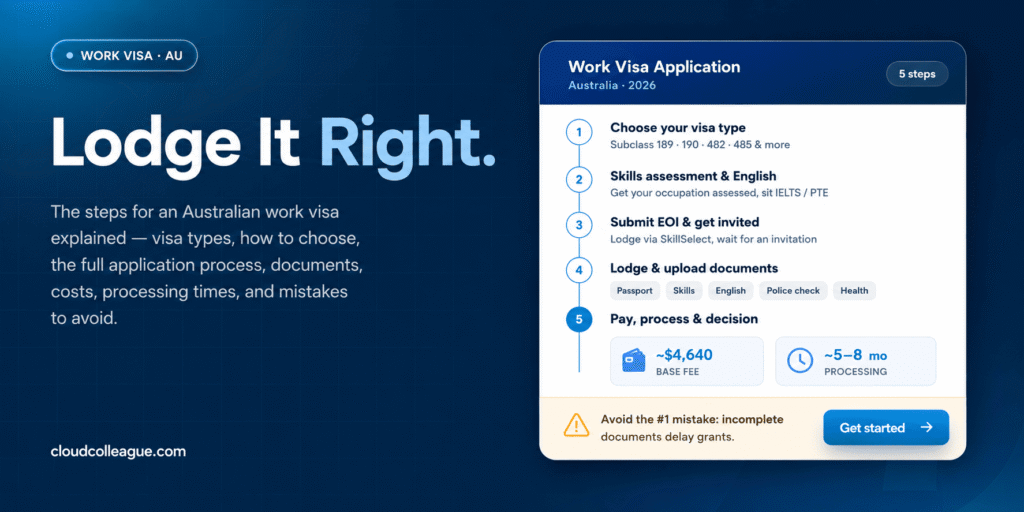
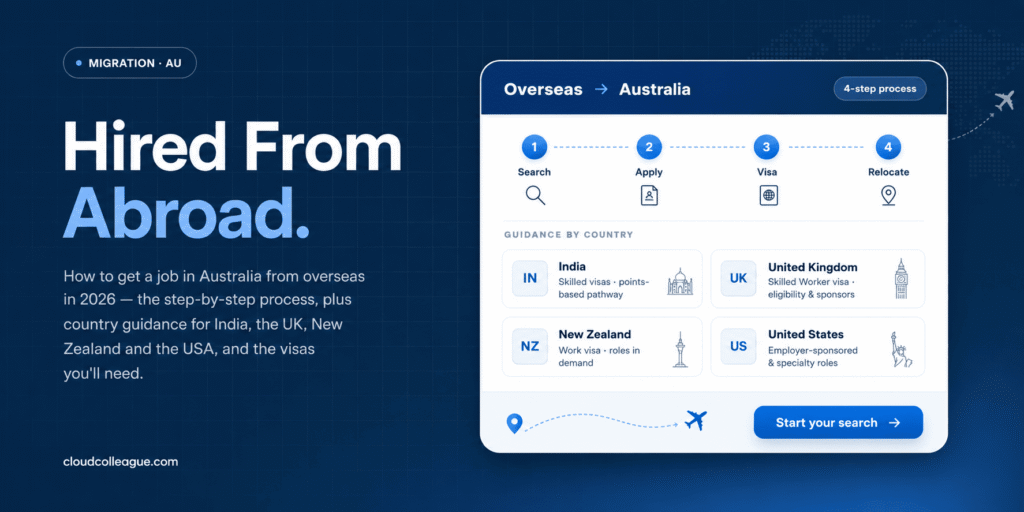
The practical answer depends on your occupation. Check both skilled lists before deciding anything. Some professions walk into New Zealand and queue for Australia, and vice versa. Our country-by-country guide on how to get a job in Australia from overseas covers the Australian process step by step.
Leaning Australian? Start before the visa does. Sign up free on CloudColleague and earn from Australian businesses from wherever you live now.
The Trans-Tasman Twist: You Might Not Have to Choose
Here is the part most comparisons bury, and it changes the whole decision.
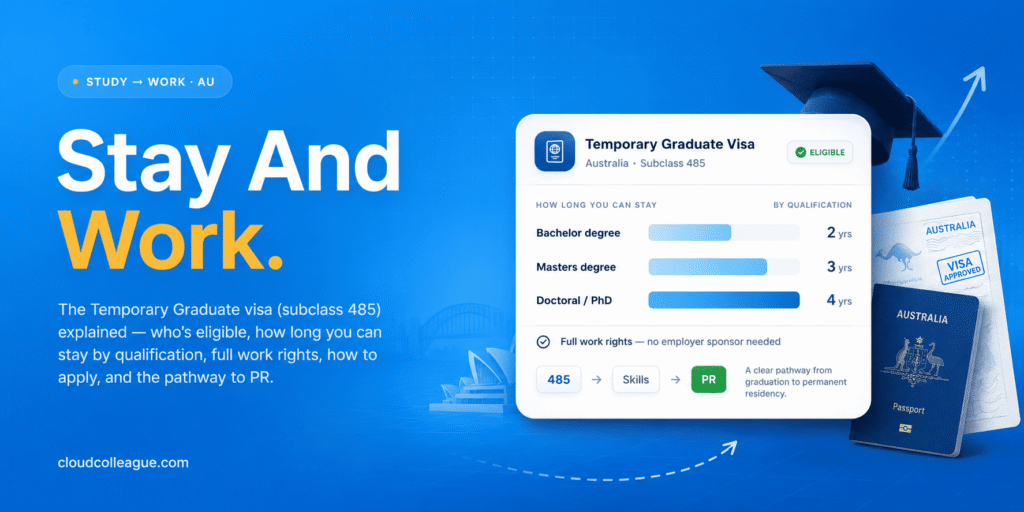
Under the Trans-Tasman arrangement, citizens of either country can live and work in the other. No visa application, no sponsorship, no points test. New Zealand citizens landing in Australia receive the Special Category Visa automatically. Australians crossing the other way get equivalent freedom.
That creates genuine long-term strategy. Some migrants enter through New Zealand’s cheaper, faster routes first. After gaining NZ citizenship, Australia’s door opens without another skilled application. Since 2023, NZ citizens living in Australia can also apply for citizenship directly after four years of residence.
Two honest caveats keep this realistic. Citizenship takes years, so the stepping-stone path is a marathon, not a shortcut. And working in Australia as an NZ citizen is not identical to holding Australian permanent residency. Some benefits require the separate application.
The strategic takeaway stays powerful. Pick the country your occupation enters faster. Residency in either eventually unlocks both labour markets. Almost no other country pair on earth offers that insurance policy.
A worked example makes it concrete. A nurse in Manila qualifies for New Zealand’s Green List fast-track this year. She gains NZ residence, works in Christchurch, and progresses towards citizenship. Years later, an Australian hospital offers Brisbane money. Her NZ passport walks her straight in, no skilled application required. Slow route, certain destination.
Lifestyle, Hours, and the Feel of Each
The working weeks differ on paper. Australia’s standard full-time week is 38 hours, New Zealand’s is 40. Both countries guarantee four weeks of annual leave, which embarrasses most of the world.
The felt difference is scale. Australia runs bigger in every direction: cities, employers, salaries, and career ladders. Sydney and Melbourne offer industries New Zealand simply cannot host. Ambitious specialists find deeper markets and faster progression across the Tasman.
New Zealand runs closer to the ground. Commutes are shorter, mountains are nearer, and workplaces skew informal even by Australian standards. Many migrants describe the pace as the whole point. Burnout refugees from bigger economies often land in Wellington deliberately.
Neither wins objectively. Sprinters tend to pick Australia. Balancers often pick New Zealand. Know which you are before the flights get booked.
City pairs sharpen the choice better than country labels. Auckland compares with Brisbane on climate and cost, minus the wage premium. Wellington mirrors Canberra: government towns with strong coffee and compact centres. Christchurch offers the cheapest quality-of-life deal across both countries. And nothing in New Zealand resembles Sydney, for better and worse. Shortlist two cities, not two countries, and the decision usually makes itself.
The Verdict: Working in Australia vs New Zealand
Here is the honest decision framework.
Pick Australia when the numbers must work hardest. Salaries run 20% to 40% higher, superannuation quadruples the Kiwi retirement contribution, and childcare support runs deeper. Market size gives your career more room to grow.
Pick New Zealand when life outside work leads the list. Housing outside Auckland costs less, ACC covers every injury, and the pace stays humane. Cheaper visa routes also suit some occupations better.
Then apply the migrant tiebreaker. Choose whichever country your occupation enters faster, because Trans-Tasman rights eventually keep both doors open. A quicker residency in Wellington can still lead to a Brisbane salary later. Few migration decisions come with that kind of insurance.
Building the Australian track? Start as a seeker on CloudColleague and browse live tasks from any country today.
Whichever Island You Pick, Start with Momentum
Working in Australia vs New Zealand ends closer than most comparisons. Australia pays more and compounds wealth faster. New Zealand costs less and breathes easier. Trans-Tasman rights mean a strong career can eventually span both.
If Australia sits anywhere in your plan, front-load the hard part. Income and local references normally take months to build after arriving. CloudColleague compresses that into your first weeks, starting from your current country. Build your free verified profile, let AI matching bring suitable tasks, and get paid same-day through Stripe. Join CloudColleague free today or browse open jobs, and cross the Tasman already working.
FAQ: Australia vs New Zealand for Migrants
Financially, Australia wins for most workers. Salaries run 20% to 40% higher, and 12% superannuation quadruples New Zealand’s 3% KiwiSaver minimum. New Zealand wins on housing affordability outside Auckland, ACC injury cover, and pace of life. Your occupation’s visa options should break any tie.
Roughly 20% to 40% more for equivalent roles, varying by profession. Australia’s minimum wage is $26.44 hourly against New Zealand’s NZ$23.95. The gap widens most in trades, healthcare, engineering, technology, and mining. Exchange rates typically amplify Australian earnings further when converted.
Australian employers must contribute 12% of wages to superannuation. New Zealand employers contribute a 3% KiwiSaver minimum. On an $80,000 salary, that means $9,600 yearly in Australia versus $2,400 in New Zealand. Over a career, the difference builds a substantially larger Australian retirement balance.
Citizens of either country can live and work in the other under the Trans-Tasman arrangement, without visas or sponsorship. NZ citizens receive Australia’s Special Category Visa automatically on arrival. Since 2023, eligible NZ citizens can apply for Australian citizenship after four years of residence.
Build a free verified profile on CloudColleague from any country. AI matching connects your skills with Australian businesses posting real tasks. Built-in video and chat interviews handle distance, and Stripe pays same-day. Every completed task builds Australian references that strengthen your eventual applications.