The post-study work visa in Australia, officially the Temporary Graduate visa (Subclass 485), is the bridge between finishing your studies and building a career in Australia. It lets international graduates stay, work, and gain valuable local experience after completing an eligible qualification, and for many it is the first step toward permanent residency. The rules tightened significantly from mid-2024, so this guide explains exactly what the visa is, who is eligible, how long it lasts, your work rights, how to apply, and the pathway to PR.
| Please note: the 485 visa rules changed substantially from mid-2024, including a lower age limit, higher English requirements, and shorter durations. This guide is general information, last reviewed for early 2026, not migration advice. Verify current requirements at the Department of Home Affairs (homeaffairs.gov.au) before applying. |
| Graduating soon and ready to work? Start as a Seeker or explore our Guides on Tasks to discover opportunities and flexible ways to earn. |
What Is the Post-Study Work Visa?
The Temporary Graduate visa (Subclass 485) is a temporary visa for international students who have recently completed an eligible Australian qualification. Its purpose is to let you remain in Australia to find work relevant to your studies and build professional experience that employers and the migration system both value. It is one of the most popular pathways for students who want to stay on after graduating.
Since the government’s Migration Strategy reforms, the visa has two main streams. The Post-Higher Education Work stream is for graduates of bachelor’s, master’s, and doctoral degrees, and is the route most students use. A separate replacement and second-visa arrangement exists for eligible regional graduates. The previous Graduate Work stream and the skill-shortage extension have been wound back, so the visa is now more tightly targeted than in earlier years.
Read Next: Top Industries Hiring Migrants in Australia
Eligibility Requirements
To qualify for the 485 visa in 2026, you must meet several conditions, and the integrity standards are stricter than they used to be. Missing any one of them can lead to refusal, so check each carefully before you lodge.
- Age: be under 35 at the time you apply, with exceptions allowing up to under 50 for Master by Research and PhD graduates, and Hong Kong and BNO passport holders.
- Study requirement: have completed a CRICOS-registered course of at least two academic years (92 weeks) in Australia, generally within the last six months.
- Visa status: hold or have recently held an eligible student visa, and be in Australia when you apply (with limited exceptions).
- English: meet the language requirement, generally IELTS overall 6.5 with no band below 5.5, or an accepted equivalent, no more than one year old.
- Health insurance: hold adequate Overseas Visitor Health Cover for everyone in your application.
- Character: provide an Australian Federal Police check and meet health and character requirements.
How Long It Lasts by Qualification Level?
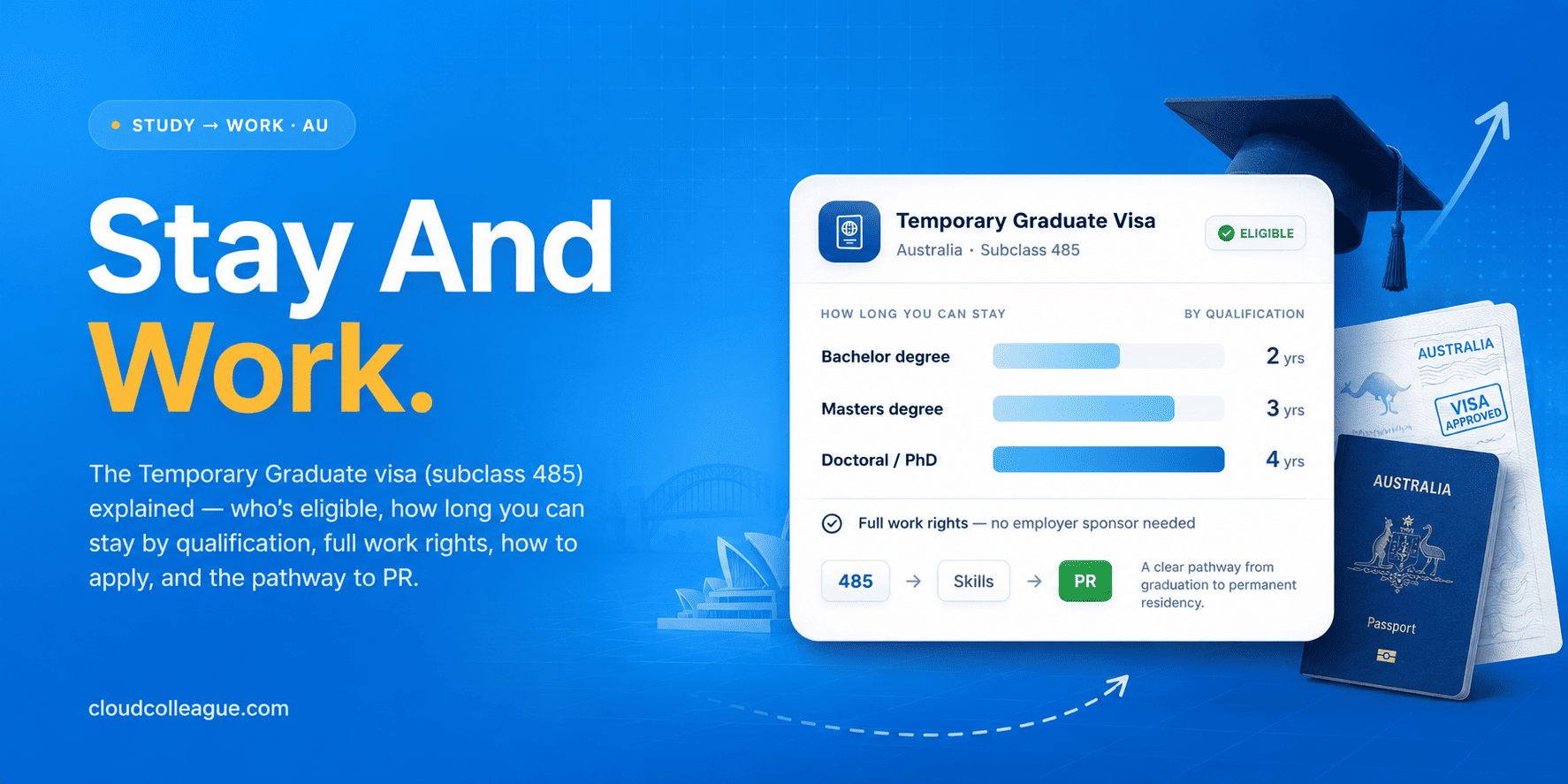
Your visa duration depends directly on the qualification you completed, and the durations were shortened in the recent reforms. The table below sets out the current periods.
| Qualification | Stream | Visa Duration |
| Bachelor’s degree | Post-Higher Education Work | 2 years |
| Master’s by coursework | Post-Higher Education Work | 2 years |
| Master’s by research | Post-Higher Education Work | 3 years |
| Doctoral degree (PhD) | Post-Higher Education Work | 3 years |
As the table shows, a bachelor’s degree or a master’s by coursework grants two years, while a research master’s or a PhD grants three. Graduates who studied and lived in an eligible regional area may, depending on current policy, access an additional period through a second visa, which is one reason regional study has become more attractive. The standalone skill-shortage extension that once added extra years has been discontinued.
| Plan ahead: because durations are shorter than before, use your time strategically from day one. The visa is a window to gain experience and build points toward PR, not an open-ended stay. |
Work Rights on the Visa
The 485 visa offers genuine flexibility. Unlike a student visa, it carries full, unrestricted work rights, so you can work as many hours as you like, in any field, for any employer, or be self-employed. There is no cap on hours and no requirement that the work relate to your degree, though working in your field is what builds the experience that helps your career and any future skilled visa.
You can also travel in and out of Australia while the visa is valid, and include eligible family members. Your full work rights are the same as any Australian worker’s, including protections on pay and conditions. If you want to understand those protections in detail, especially coming from a student visa, read our guide to work rights in Australia.
How to Apply? Steps and Documents
The application is lodged online and is broadly standardised across streams, but preparation is everything. Follow these steps.
- Confirm eligibility. Check your age, study requirement, visa status, and which stream applies to your qualification.
- Sit your English test early. Ensure your result meets the requirement and is less than a year old at lodgment.
- Gather documents. Prepare your passport, completion letter confirming your course end date, transcripts, English results, health insurance, and AFP check.
- Apply online and pay the fee. Lodge through your ImmiAccount while in Australia, and pay the visa charge, which rose to around AUD 4,600 to 4,900 in 2026.
- Hold a valid visa while you wait. You will usually be on a bridging visa during processing, which lets you stay and work lawfully until a decision.
Pathway to PR After the 485
For most graduates, the real value of the 485 is what it unlocks next. The visa itself is temporary, but the time you spend on it is when you build the qualifications, skilled work experience, and English scores that drive a permanent residency application. Australian work experience in your nominated occupation is especially valuable, since it earns dedicated points.
From the 485, common PR routes are the points-tested General Skilled Migration visas and employer sponsorship. Your Australian study and work both feed into your points total, so the 485 period is effectively your chance to climb from borderline to competitive. Estimate where you stand with our guide on how the Australia PR points system works, and because graduate salaries take time to build, plan your finances with our cost of living guide.
| Use the window wisely: the 485 does not lead to PR automatically. Treat it as a fixed window to gain skilled experience and lift your points, and start planning your PR pathway before the visa is granted, not after it expires. |
| Make your post-study years count.Search graduate-friendly roles on CloudColleague or create your free profile to build the Australian experience that strengthens your PR pathway. |
Frequently Asked Questions
It is the Temporary Graduate visa (Subclass 485), which lets international students who have completed an eligible Australian qualification stay and work temporarily after graduating. It is designed to help graduates gain professional experience in their field and, for many, build toward permanent residency.
You must generally be under 35 at the time you apply. Graduates with a Master by Research or a PhD, and Hong Kong and British National Overseas passport holders, can apply up to under 50. Your age is assessed at application, not at the decision.
Duration depends on your qualification: two years for a bachelor’s degree or master’s by coursework, and three years for a master’s by research or a PhD. The previous skill-shortage extension has been discontinued.
You generally need an IELTS overall score of 6.5 with no band below 5.5, or an accepted equivalent, and the test must be no more than one year old. Hong Kong and BNO passport holders have a lower requirement.
Yes. While the 485 itself is temporary, the Australian work experience and qualifications you gain on it can significantly strengthen a later skilled visa application, and many graduates use it as a stepping stone to PR through the points-tested or employer-sponsored pathways.