Understanding the cost of living in Australia for students is one of the most important parts of planning your studies, because money worries can derail an otherwise great experience. Australia is a rewarding but not cheap place to live, and your monthly budget will depend heavily on your city, your accommodation, and your lifestyle. This guide breaks down what to budget each month, the cost of each major category, how cities compare, how much you can earn to offset costs, and practical ways to save.
| New to Australia and looking to earn while you study? Visit First Time in Australia or Start as a Seeker to get started. |
Overview: What to Budget Monthly
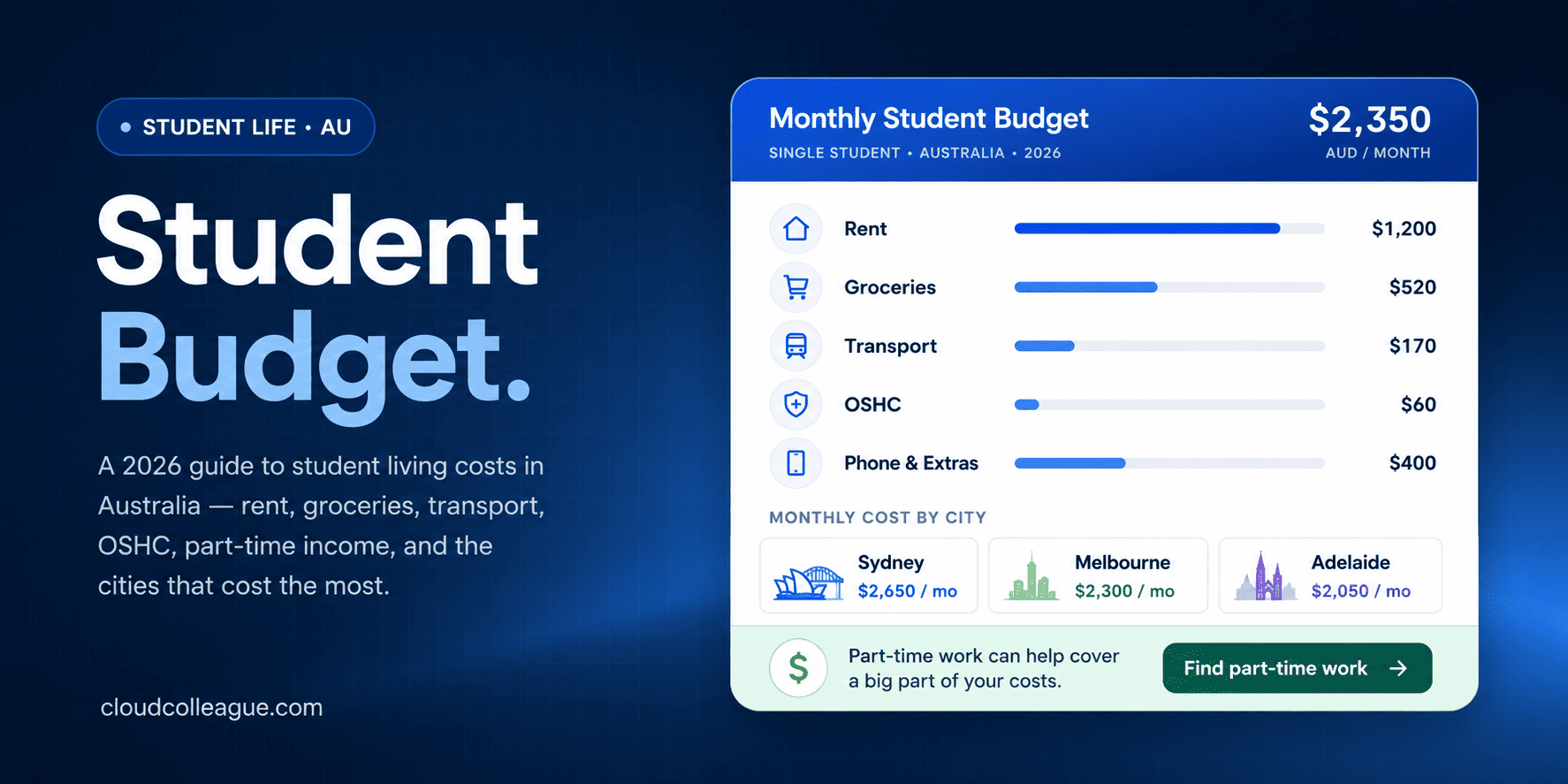
Most international students in Australia spend between AUD 2,300 and AUD 5,000 per month on living expenses, not including tuition. That is a wide range, and where you land within it depends mainly on your city and your accommodation choice. As a useful benchmark, the Department of Home Affairs requires student visa applicants to show access to about AUD 29,710 per year for living costs, which works out to roughly AUD 2,475 a month.
Treat that visa figure as a floor, not a realistic target. It is the minimum the government wants to see, but actual costs in Sydney or Melbourne often run well above it, while cheaper cities can come in close to it. A sensible approach is to budget for your specific city, then add a 5 to 10 percent buffer for rising rents and general inflation.
| Rule of thumb: budget around AUD 2,500 a month as a minimum, AUD 3,500 or more if you are in Sydney or Melbourne. Accommodation will be your single biggest expense everywhere. |
Cost Breakdown by Category
Knowing where your money goes helps you control it. The table below shows typical monthly costs for a student living in shared accommodation, which is the most common and economical setup.
| Category | Monthly (AUD) | Notes |
| Accommodation (shared) | $700 to $1,500 | Biggest expense; shared rooms save most |
| Groceries & food | $350 to $650 | Cooking at home keeps this low |
| Public transport | $100 to $200 | Student concessions in many states |
| Utilities & internet | $100 to $200 | Often shared in group housing |
| Phone plan | $20 to $50 | Prepaid plans are cheapest |
| OSHC health cover | $45 to $75 | Mandatory; usually paid yearly |
| Study materials | $50 to $100 | Buy used or borrow where possible |
Accommodation dominates every budget, which is why so many students choose shared houses or apartments over studios. Food is the next big category, and cooking at home rather than eating out makes a dramatic difference. Public transport is manageable, especially where student concessions apply, though concession eligibility varies by state, with some offering international students less than domestic students.
Health cover is non-negotiable: Overseas Student Health Cover (OSHC) is a mandatory condition of your visa for its entire duration, costing roughly AUD 550 to AUD 900 a year through providers like Medibank, Bupa, NIB, and Allianz. It covers GP visits, hospital care, and some medicines, but typically not dental or optical. Utilities, internet, a phone plan, and study materials round out the essentials, and most of these are cheaper when shared in group housing.
Cost by City
Your choice of city is the single biggest lever on your cost of living, driven mostly by rent. The table below shows estimated monthly totals for a student in shared accommodation across the major options.
| City | Est. Monthly Total | Notes |
| Sydney | $2,800 to $5,000+ | Most expensive; highest rents |
| Melbourne | $2,500 to $4,500 | Expensive but a little below Sydney |
| Brisbane | $2,200 to $3,800 | More affordable, warm climate |
| Perth | $2,200 to $3,800 | Good value, strong job market |
| Adelaide | $2,000 to $3,500 | Among the cheapest capitals |
| Hobart / regional | $1,900 to $3,300 | Lowest costs, smaller job markets |
Sydney is consistently the most expensive city, followed by Melbourne, with rent the main reason. Brisbane and Perth offer a noticeably more affordable balance of cost and opportunity, while Adelaide is the most budget-friendly major capital. Hobart and regional centres are cheaper still, though their part-time job markets are smaller. A smart tactic in any city is to live a little further from the centre, since suburbs a short train ride out can cut rent substantially.
Read Next: The 20 Highest-Paying Jobs in Australia for Immigrants (2026 Guide)
How Much Can You Earn to Offset Costs?
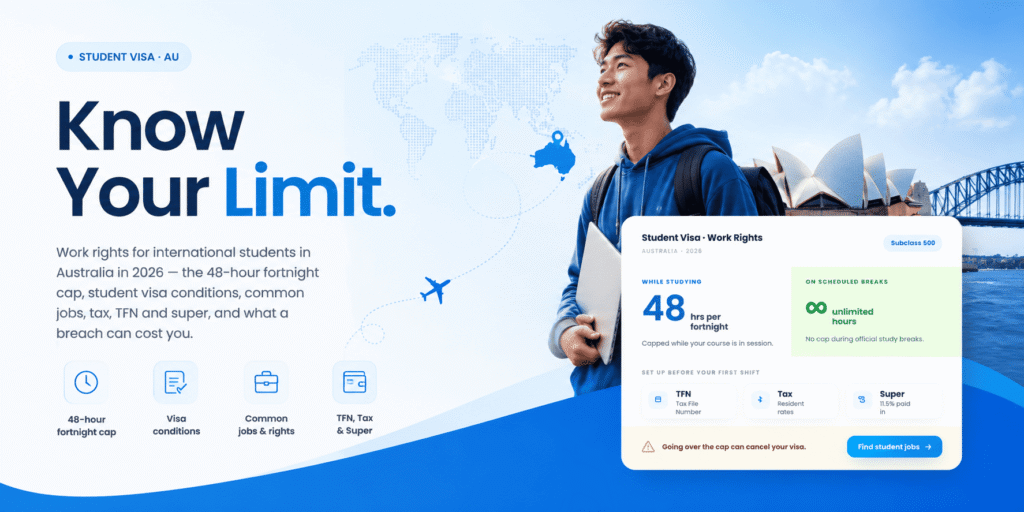
Part-time work can cover a meaningful share of your living costs, though rarely all of them. As a student, you can work up to 48 hours per fortnight while your course is in session, and unlimited hours during scheduled breaks. At the casual minimum wage of around AUD 31 an hour including loading, the maximum term-time hours translate to roughly AUD 2,300 to AUD 3,200 a month, and more if you pick up weekend or public-holiday shifts at penalty rates.
In a cheaper city like Adelaide, that can come close to covering your living costs; in Sydney, it will offset a large part but not all. The key is to respect the legal limit, since breaching it risks your visa. For the full rules, read our guide to work rights for international students in Australia. To see what different roles pay, our guide to the average salary in Australia gives useful context, and graduates planning to stay on should look at the post-study work visa, which removes the hours cap.
| Don’t over-rely on work: the 48-hour cap means part-time earnings will not fully fund an expensive city. Plan to cover the gap with savings, and never exceed your work limit to make ends meet, as it puts your visa at risk. |
Money-Saving Tips for Students
Small, consistent habits make the biggest difference to a student budget. Start with the largest costs, since saving on rent and food moves the needle far more than cutting small treats.
- Share accommodation. A room in a shared house or student housing costs far less than a studio, and bills split between housemates.
- Cook at home. Meal-prepping and shopping at budget supermarkets like Aldi can halve your food spend versus eating out.
- Use student discounts. Carry your student ID and ask everywhere; many transport systems, cinemas, gyms, and software offer concessions.
- Buy second-hand. Get textbooks, furniture, and electronics used, or borrow textbooks from the library.
- Live slightly out of the centre. Suburbs a short commute away often cut rent significantly for a small time trade-off.
- Choose a cheaper city if you can. If your course is offered in Adelaide or Brisbane, your money stretches much further than in Sydney.
| Ready to start earning toward your costs? Search part-time roles on CloudColleague or create your free profile to find work that fits around your studies. |
Frequently Asked Questions
Most international students spend between AUD 2,300 and AUD 5,000 per month, depending on the city and lifestyle, with accommodation the largest cost. The Department of Home Affairs sets a minimum financial requirement of about AUD 29,710 per year, roughly AUD 2,475 a month, for the student visa.
For the Subclass 500 student visa, you must show access to about AUD 29,710 per year for living costs, in addition to tuition and travel funds. This is a minimum benchmark, and many students in Sydney or Melbourne realistically need more.
Adelaide is generally the most affordable major capital, while Hobart and many regional centres are cheaper still. Sydney and Melbourne are the most expensive, mainly because of rent.
Yes. Overseas Student Health Cover is a compulsory condition of your student visa and must be held for the entire duration of your stay. It costs roughly AUD 550 to AUD 900 per year and covers GP visits, hospital care, and some medicines.
Partly. Working the maximum 48 hours per fortnight at casual rates can earn around AUD 2,300 to AUD 3,200 a month, which covers a large share of living costs in cheaper cities but rarely all of them in Sydney. Most students rely on a mix of savings and part-time work.