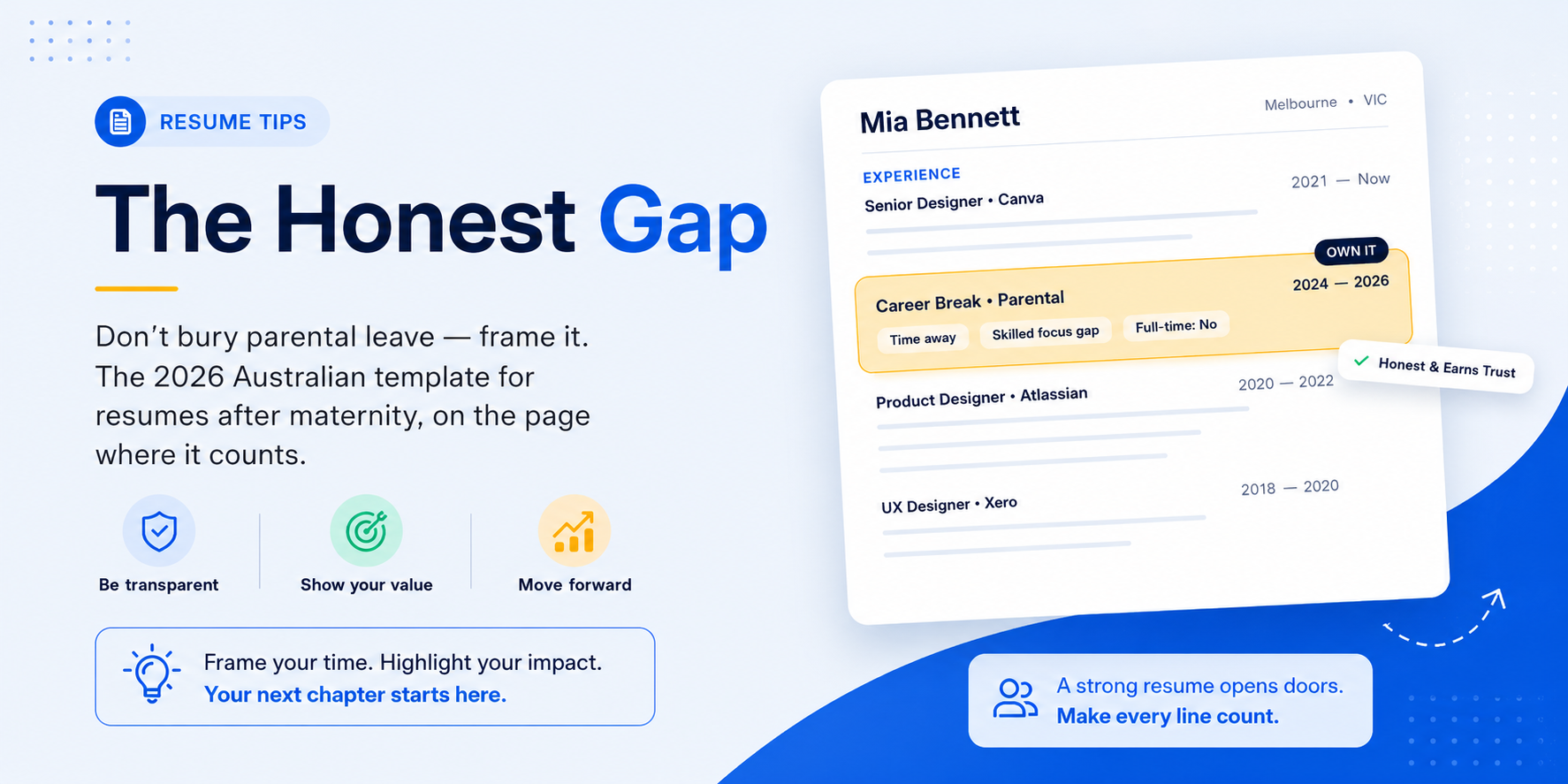
How to write a resume after maternity leave feels harder than it actually is.
Not because your skills have diminished. Not because employers will not value what you bring. But because stepping back into a professional identity after months or years of being someone’s primary carer requires a psychological shift as much as a practical one.
This guide gives you both. We cover the right resume format, the right framing for the gap, how to translate caregiving experience into professional language that resonates with Australian employers, and what returning mothers specifically need to know about their legal rights and available programs. The emotional part of this process is real. The practical part is more manageable than it feels right now.
Returning to the Australian workforce after maternity leave? Find flexible and full-time roles across every industry on CloudColleague. Browse AI-matched jobs from 18,000+ verified Australian employers right now.Browse roles on CloudColleague
The Good News: Australian Employers Have Changed
Before any practical advice, the most useful thing is to understand the current reality rather than the outdated perception.
In 2026, parental leave gaps are one of the most understood and accepted career interruptions in Australian hiring. The Fair Work Act’s parental leave provisions mean that Australian HR professionals are structurally familiar with career breaks for primary carers. Parental leave is a legal right in Australia, not an anomaly that requires explanation.
Many major Australian employers now run dedicated returner programs specifically to bring experienced professionals back after extended parental leave. These programs, which we cover in detail below, exist because Australian employers recognise the loss of institutional knowledge and capability that comes from poor retention of parents returning to work.
The perception that taking maternity leave damages your career is increasingly outdated, particularly in Australian corporate, healthcare, and public sector environments. What matters to employers is not that you took leave. It is that you are ready to return, clear about your professional value, and honest in how you present the period.
Your resume is the document that communicates all three of these things before you walk into a room.
Read Next: Resume for Switching Industries With No Direct Experience in 2026: The Australian Guide
Do Not Use a Functional Resume Format
Before the practical steps, there is a piece of advice circulating in this space that needs to be directly addressed.
Kickresume, one of the top-ranking articles for this keyword, recommends using a functional resume format after maternity leave. This advice is outdated and harmful in 2026.
A functional resume leads with grouped skill categories and pushes your employment history with dates to the bottom of the document. The intention is to draw the recruiter’s attention to your skills before they encounter the gap. In practice, recruiters associate this format with candidates who are hiding something, which raises more concern than the maternity leave gap itself ever would.
ATS systems compound the problem. ATS platforms are built to extract employment data in chronological order: job titles, employer names, dates, and bullet points under each role. A functional resume disrupts this extraction and frequently results in your resume scoring poorly before any human reads it.
The correct format for a resume after maternity leave is a hybrid (combination) format. It leads with a professional summary and skills section, then presents your work history chronologically with dates intact and a brief career break entry where the leave period appears. This approach is honest, ATS-safe, and recruiter-friendly. Read more on : Functional Resume vs Chronological Resume, to choose which resume format to choose.
The Right Resume Structure After Maternity Leave
Here is the section-by-section structure that works best for maternity leave returners in the Australian market.
Professional Summary
Your professional summary appears at the top of your resume before your work history, giving you the opportunity to frame your return on your own terms before the recruiter reaches the gap in your timeline.
A strong professional summary after maternity leave does three things. It names your professional expertise and career focus. It acknowledges the leave period briefly and positively in one sentence. And it signals your clear readiness to return and the specific target you are pursuing.
Strong example: “Marketing manager with nine years of brand strategy and campaign management experience across FMCG and retail. Following 14 months of parental leave, returning to the workforce with updated digital marketing skills and a clear focus on senior brand management roles in the Australian consumer goods sector.”
Weak example: “Experienced marketing professional who took time off to raise a family and is now ready to return to a challenging role.”
The strong version names the duration, uses confident professional language, references professional development during the leave, and states a clear target. The weak version is apologetic, vague, and focuses on the gap rather than the value.
Career Break Entry in Work History
Add a career break entry in your work history exactly where the maternity leave period sits. Include the dates and two to three brief bullet points describing the period.
This prevents an unexplained gap in your timeline, which is always worse than a briefly explained one. Unexplained periods invite assumptions. A clearly labelled career break entry with honest, brief content closes that gap professionally.
Format: Parental Leave / Career Break | [Month Year] to [Month Year]
Example bullet points:
- Primary carer for a newborn during the first 14 months of life.
- Completed Google Project Management Certificate during evenings throughout the leave period to maintain professional development.
- Maintained industry engagement through monthly marketing newsletter subscriptions and LinkedIn network activity.
Keep the career break entry brief and factual. Two to three bullet points is sufficient. You do not need to justify or over-explain the decision to take leave.
Skills Section
List your hard skills first: specific software, tools, platforms, and technical competencies relevant to your target role. Follow with any skills you maintained or actively developed during the leave.
If you completed a certification, learned a new tool, took on any freelance work, or engaged in volunteer activities during the period, include the relevant skills here and back them up in your career break entry above.
Work History
Your pre-leave work history should remain chronological and unchanged. Do not remove roles, shorten date ranges, or restructure your history to minimise the appearance of the gap. The career break entry handles the gap directly and honestly. Your work history demonstrates your professional capability before the break and should speak for itself.
Education and Certifications
Include any courses, certifications, or professional development completed during the leave in this section. Even a short online course from Coursera, LinkedIn Learning, or an industry body signals that you remained professionally engaged.
For Australian returners, include any certifications relevant to your target role alongside your formal qualifications. If you completed an industry-specific certification during leave (for example, a data analytics course, a project management certification, or a digital marketing credential), position it prominently rather than burying it.
How to Frame Your Maternity Leave as Professional Development
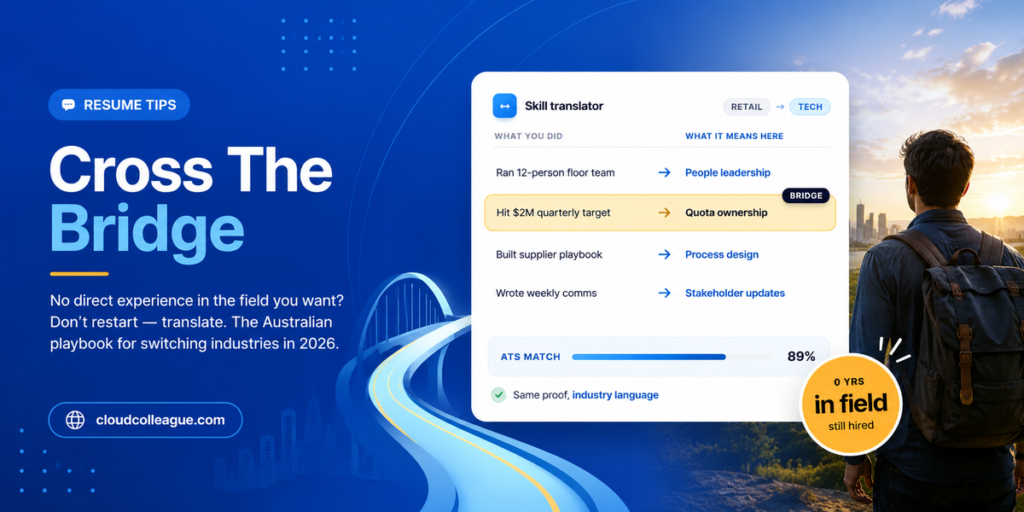
Maternity leave is not a professional void. It is a period during which most primary carers develop capabilities that are genuinely valuable in professional environments. The challenge is translating lived experience into professional language that resonates with a hiring team.
The key rule: never claim capabilities you did not actually develop. But also do not underestimate what you genuinely did develop. The following examples show how caregiving experience translates into specific professional language for different role types.
For Management and Leadership Roles
Primary caregiving at its most intense involves real-time decision-making under uncertainty, resource management with competing priorities, multi-stakeholder coordination across medical professionals and support services, and sustained performance under conditions of significant physical and cognitive demand.
Specific bullet point framing: “Developed advanced crisis response, multi-stakeholder coordination, and resource prioritisation capabilities through 14 months as a full-time primary carer, managing complex logistics across healthcare, family, and community systems simultaneously.”
Specific transferable skills to include in your skills section:
- Crisis management and real-time decision-making.
- Complex stakeholder communication across diverse professional and personal networks.
- Resource prioritisation under constrained budgets and competing demands.
- Long-horizon planning with multiple interdependent variables.
For Healthcare and Social Services Roles
If your child had any health needs, or if you engaged extensively with healthcare systems during the leave period, this experience translates directly.
- Coordination with specialist medical teams across multiple service providers.
- Advocacy for a vulnerable individual within complex systems.
- Documentation and tracking of health, development, and care milestones.
- Direct care delivery with continuous assessment and adaptation.
For Education and Training Roles
Primary caregiving during early childhood involves significant informal teaching, learning design, and progress assessment.
- Curriculum development and age-appropriate learning sequencing for a developing child.
- Individual learning needs assessment and differentiated approach.
- Adaptive communication across different learning styles and engagement levels.
- Outcome tracking and milestone-based progress documentation.
For Finance and Operations Roles
Household financial management during a period of reduced income, with the addition of significant new expenditure categories, involves real financial planning skills.
- Household budget management with zero tolerance for error across reduced income and new cost categories.
- Vendor management and procurement across childcare, healthcare, and household service providers.
- Compliance with health, safety, and regulatory requirements across multiple domains simultaneously.
- Risk assessment and contingency planning in high-stakes, time-sensitive environments.
Ready to return to the Australian workforce? Browse verified roles on CloudColleague across healthcare, corporate, education, and more. Many roles offer flexible work arrangements for returning parents. Start as a Seeker on CloudColleague
If You Did Any Professional Work During Your Maternity Leave
If you did any professional work during your leave period, even informally, include it on your resume. This applies to:
Freelance or consulting work: List as a separate role entry with dates, a brief description of the work, and any measurable outputs. Even two or three small projects during a 12-month leave demonstrate ongoing professional engagement.
Volunteer work in a professional capacity: Include if it involved skills relevant to your target role. Board membership, treasurer roles, event management, fundraising strategy, or communications work for a community organisation all qualify.
Professional development: Courses, certifications, webinars, industry conference attendance (even virtual), and professional reading programs all signal engagement. Include completion dates for any formal credentials.
Content creation or professional writing: If you wrote articles, maintained a professional blog, or contributed to industry publications during the leave, include these as evidence of ongoing expertise and professional voice.
Any professional activity during the leave period reduces the perceived gap and signals ongoing engagement. Even one certification completed in the evenings is worth including because it demonstrates that the leave was professionally active rather than professionally dormant.
Australian Returner Programs Worth Knowing About
If you are researching how to write a resume after maternity leave, Australian returner programs are worth targeting. These programs are designed for professionals returning after extended parental leave and often include paid placements, mentoring, flexible work, and pathways to permanent roles.
Deloitte Australia Career Comeback Program: A structured returner program for professionals with five or more years of experience who have taken a career break of two or more years. The program offers a paid, supported return to work across multiple practice areas.
PwC Australia Back to Business: A paid returner program offering 16-week placements across multiple service lines. Open to experienced professionals returning from parental leave or other extended career breaks.
KPMG Australia Reconnect: A returner program targeting experienced professionals across audit, tax, advisory, and technology functions. Includes mentoring, coaching, and flexible work arrangements as standard.
Commonwealth Bank Career Comeback: A paid placement program for professionals returning from parental leave or other extended career breaks. Covers roles across technology, finance, and operations.
ANZ Returning Professionals Program: A flexible work placement for experienced finance professionals returning after parental leave. Includes structured support and a pathway to permanent employment.
Search specifically for terms like “returner program,” “career comeback,” or “returning professionals” on each company’s careers page, as these opportunities are often listed separately from standard jobs.
Your resume for these programs should use the same hybrid format recommended throughout this guide. Include a clearly labelled career break entry, explain your readiness to return, and focus your professional summary on the role or function you are targeting.
Introvert and having difficult to attend program and include in your resume? Browse and read : Resume Tips for Introverts Going Into Interviews .
What Australian Mothers Returning to Work Specifically Need to Know
When learning how to write a resume after maternity leave, understanding Australian workplace protections is important. Under the Fair Work Act, employees taking up to 12 months of unpaid parental leave can return to their previous role. Longer leave still provides rights to a comparable suitable position.
Australia’s Paid Parental Leave scheme gives eligible primary carers up to 20 weeks of government-funded leave, and many employers provide additional paid parental leave. Both are legitimate career breaks and should be listed honestly on your resume with clear dates.
Parents of children under school age also have the right to request flexible work arrangements, including part-time schedules, adjusted hours, and remote work. This should influence the roles you target and how you present your availability.
SEEK is Australia’s dominant job board. Ensure your resume is ATS-safe and uploads correctly before applying to any SEEK role. The hybrid format with a career break entry parses correctly on SEEK’s system and does not create any disadvantage in ATS scoring compared to a continuous employment history.
CloudColleague lists roles across every Australian industry. The platform’s AI matching considers your full skills profile rather than just your most recent job title, which is particularly beneficial for returners. CloudColleague’s task-based opportunities also allow you to build recent, documented professional experience quickly while your full-time job search is underway.
Resume written and ready to return. Create a free verified profile on CloudColleague and get AI-matched to verified Australian employers actively hiring right now, including roles with flexible arrangements for returning parents.Get started free on CloudColleague
Hiring and open to professional returners? Post a role on CloudColleague in under five minutes. Smart matching surfaces pre-vetted professionals across every Australian industry, including experienced candidates returning from parental leave.Start hiring on CloudColleague
Frequently Asked Questions
Add a clearly labelled “Parental Leave” or “Career Break” entry with dates. Include brief details about caregiving, professional development, volunteer work, or freelance projects completed during the break. Pair this with a confident professional summary focused on your expertise and readiness to return.
Yes. Explaining the gap honestly builds recruiter trust and removes uncertainty. If you completed courses, freelance work, or volunteering during the leave, include them to show continued professional engagement. Hiding the gap usually creates more concern than transparency.
There is no fixed limit in Australia. Parental leave is widely recognised as a legitimate career break, and many employers actively hire returning professionals after extended leave. What matters most is how clearly you explain the gap and present your readiness to return.
Lead with your strongest pre-leave hard skills and achievements. Add any new tools, certifications, freelance experience, or volunteer work completed during the break. Use specific, professional language instead of vague soft-skill claims.
Australian law prohibits discrimination based on family responsibilities, and many employers now offer returner programs and family-friendly policies. Focus on employers with clear parental support initiatives and strong workplace flexibility policies.