Finding meaningful work is a right, not a privilege. Today, more jobs for people with disability exist in Australia than ever before. More than 5.5 million Australians live with disability, representing over one in five people. Many employers actively seek their skills, perspectives, and talent. This guide explains your rights, available support, and practical job-search steps. It will help you approach your job search with confidence and clarity.
Your disability does not define what you can achieve at work. The right role depends on your skills, your interests, and your goals, and a strong system of legal protections and support services exists to help you get there on equal footing.
| Ready to get started? Explore our Guides on Tasks to learn how the platform works, or start as a Seeker and discover tasks, and new opportunities. |
Disability Employment Rights
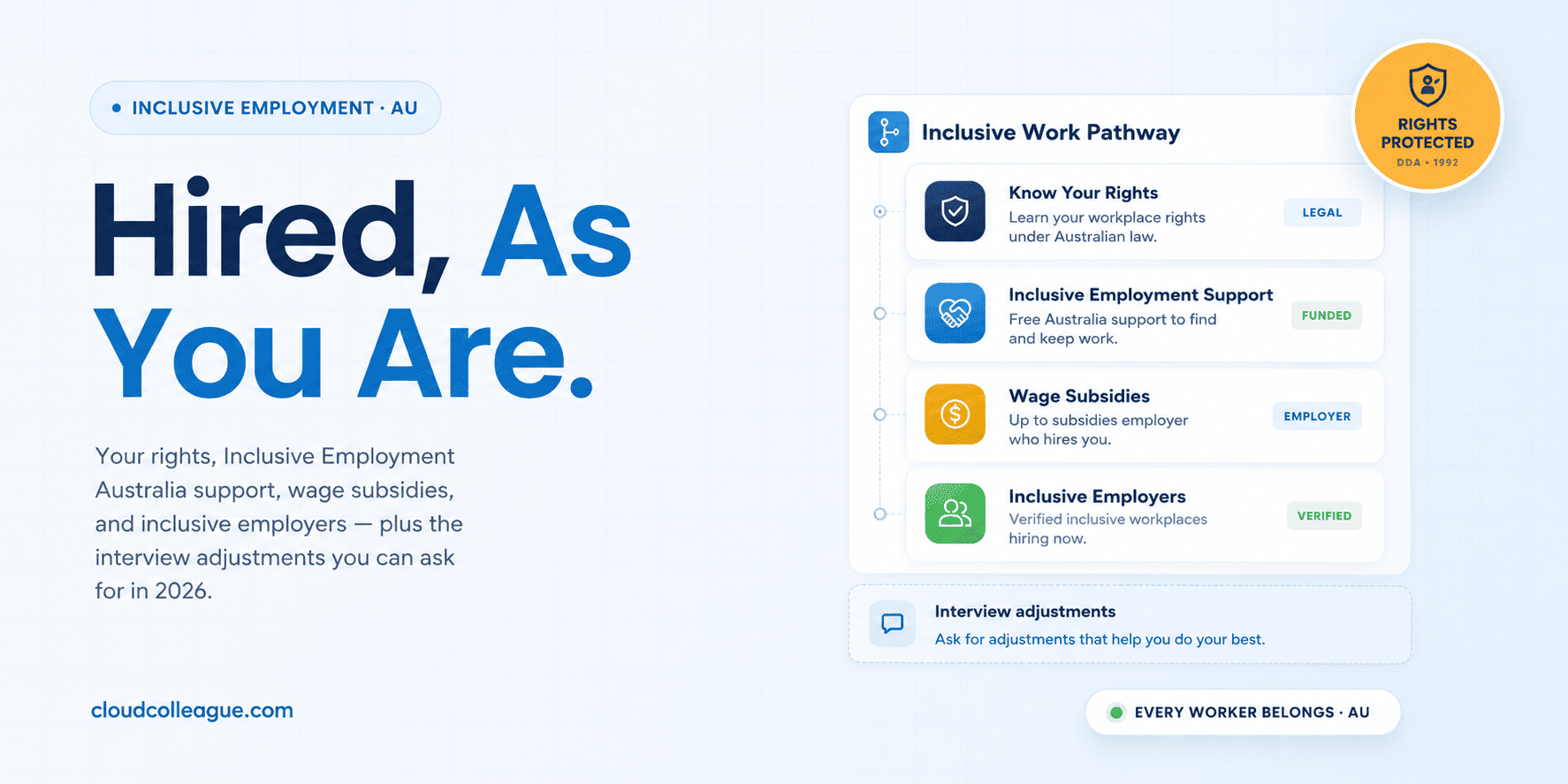
The law is firmly on your side. The Disability Discrimination Act 1992 makes it unlawful to treat someone unfairly because of disability. This protection applies throughout employment, including job advertisements, interviews, promotions, and termination. The Act covers physical, intellectual, psychiatric, sensory, neurological, and learning disabilities. It also includes conditions that are temporary, episodic, or not immediately visible to others.
You also have the right to reasonable adjustments. These are practical changes that provide equal access to work, such as flexible hours, modified equipment, accessible software, or adjusted duties. Employers are legally required to provide them unless doing so would cause unjustifiable hardship. Importantly, many workplace adjustments cost little or nothing. The Fair Work Act also protects you from discrimination, bullying, and adverse action because of disability, including during the job application process.
Read Next: FIFO Jobs in Australia: High Pay, Roster & How to Get Started.
Inclusive Employment Australia: Specialist Support
If you want help finding or keeping a job, Inclusive Employment Australia (IEA) is the national specialist program designed for that purpose. IEA replaced the Disability Employment Services program on 1 November 2025. It introduces several meaningful improvements that place you at the centre of the service.
Under IEA, there are no time limits, so you can stay with a provider for as long as you need. You can choose your provider and change it at any time. Eligibility is also broader than before. It now includes people who are not receiving Centrelink payments. It also includes those who can only work part-time. A provider can help you build skills and confidence, prepare your resume, practise interviews, arrange work experience, and provide ongoing support after you start a job. You can register directly with a provider or, if you receive a payment, be referred through Services Australia. To get started, call the National Customer Service Line on 1800 805 260.
| Good to know: you can volunteer to join Inclusive Employment Australia even if you do not receive a Centrelink payment. Support is no longer limited by time, so you can take the pace that works for you. |
Government Schemes, Wage Subsidies for Disabled Employers
It helps to know what support employers can access, because it makes hiring you easier and signals which organisations are ready to be inclusive. The Australian Government funds several practical schemes through JobAccess, the national hub for disability employment information, reachable on 1800 464 800.
Employers who hire through an Inclusive Employment Australia provider may receive a wage subsidy of up to $10,000 across the first 26 weeks, for roles of at least eight hours a week. The Employment Assistance Fund can reimburse the cost of workplace adjustments, equipment, and support, which removes a common worry for employers. The National Disability Recruitment Coordinator, also managed by JobAccess, gives larger employers free guidance on removing hiring barriers. The government has invested $227.6 million over five years into this system, with around 15,000 additional people expected to access employment services each year, so the momentum is real.
Inclusive Disabilty Employers and Where to Find Roles
More employers are publicly committing to inclusive hiring, and many now ask candidates about workplace adjustments during recruitment as a standard, welcoming practice. The public sector is a strong example, with structured, accessible recruitment and clear diversity targets that make it a reliable place to start.
To find these roles, combine a few channels. Inclusive Employment Australia providers can match you directly with disability-confident employers, while mainstream job boards let you search widely. For a full rundown of where to look, see our guide to the best job search websites in Australia. If you value structured, inclusive recruitment, also explore public service jobs in Australia, which often lead the way on accessibility.
Tips for the Application and Interview Process
Disclosure is your choice. You are not legally required to tell an employer about your disability, and you cannot be treated unfairly for having one. Many people choose to disclose only when they want a reasonable adjustment, such as extra time in an assessment or an accessible interview location. You control both whether and when you share this information.
If you do request an adjustment, be specific and practical. For example, you might ask for interview questions in advance, a support person to attend, or a quiet room. Employers are increasingly used to these requests, and research shows most people would actually prefer to work somewhere that asks about adjustments during recruitment. Focus your application on your strengths and what you bring to the role, and remember that support services can coach you through interviews if you would like the practice.
The table below lists the key services you can contact for free, confidential help at any stage of your journey.
| Service | Contact | What It Helps With |
| Inclusive Employment Australia | 1800 805 260 | Job search, employer matching, ongoing workplace support |
| JobAccess | 1800 464 800 | Workplace adjustments, Employment Assistance Fund, advice |
| Australian Human Rights Commission | 1300 656 419 | Discrimination complaints and rights information |
| Fair Work Ombudsman | 13 13 94 | Pay, entitlements, and dispute resolution |
| Take the next step at your own pace. Create your free CloudColleague profile to connect with inclusive employers, or browse current roles to see what is out there today. |
Frequently Asked Questions
People with disability work across every industry and at every level, from entry roles to senior leadership. The right job depends on your skills and interests, not your disability. Support services and reasonable adjustments exist specifically so you can pursue the same opportunities as anyone else.
Inclusive Employment Australia (IEA) replaced the DES program on 1 November 2025. It offers more personalised support, removes time limits, lets you choose and change your provider, and is open to more people, including those not on a Centrelink payment and those who can only work part-time.
No. Disclosure is your personal choice, and you cannot be treated unfairly for having a disability. You may choose to disclose if you need a reasonable adjustment during recruitment or on the job, but the decision and the timing are yours.
Reasonable adjustments are practical changes that give you equal access to work, such as flexible hours, modified equipment, accessible software, or adjusted duties. Many cost little or nothing, and the Employment Assistance Fund can help cover costs where they apply.
Yes. Employers who hire through an Inclusive Employment Australia provider may receive a wage subsidy of up to $10,000 over the first 26 weeks, plus help with workplace adjustment costs through the Employment Assistance Fund.