Fly in fly out jobs in Australia are one of the fastest routes to a six-figure income, even if you are starting with no experience. FIFO workers are flown from their home city to a remote work site, usually a mine or major project, work an intensive roster, then fly home for a block of rest. The pay is strong, employers cover your flights, accommodation, and meals, and the lifestyle suits people who like concentrated work followed by real time off. This guide explains how FIFO works, what it pays, and exactly how to get started.
| Ready to start your FIFO career? Browse FIFO and mining roles on CloudColleague or create your free profile to get noticed by resource-sector employers. |
What Is FIFO Work?
FIFO stands for fly in, fly out. Instead of relocating to a remote town, you live in your home city and your employer flies you to and from the site for each work period, known as a swing. While on site you stay in camp accommodation, eat in the mess hall, and work long shifts, then fly home for your rostered break. Everything during the swing is typically paid for, so your salary is largely yours to save.
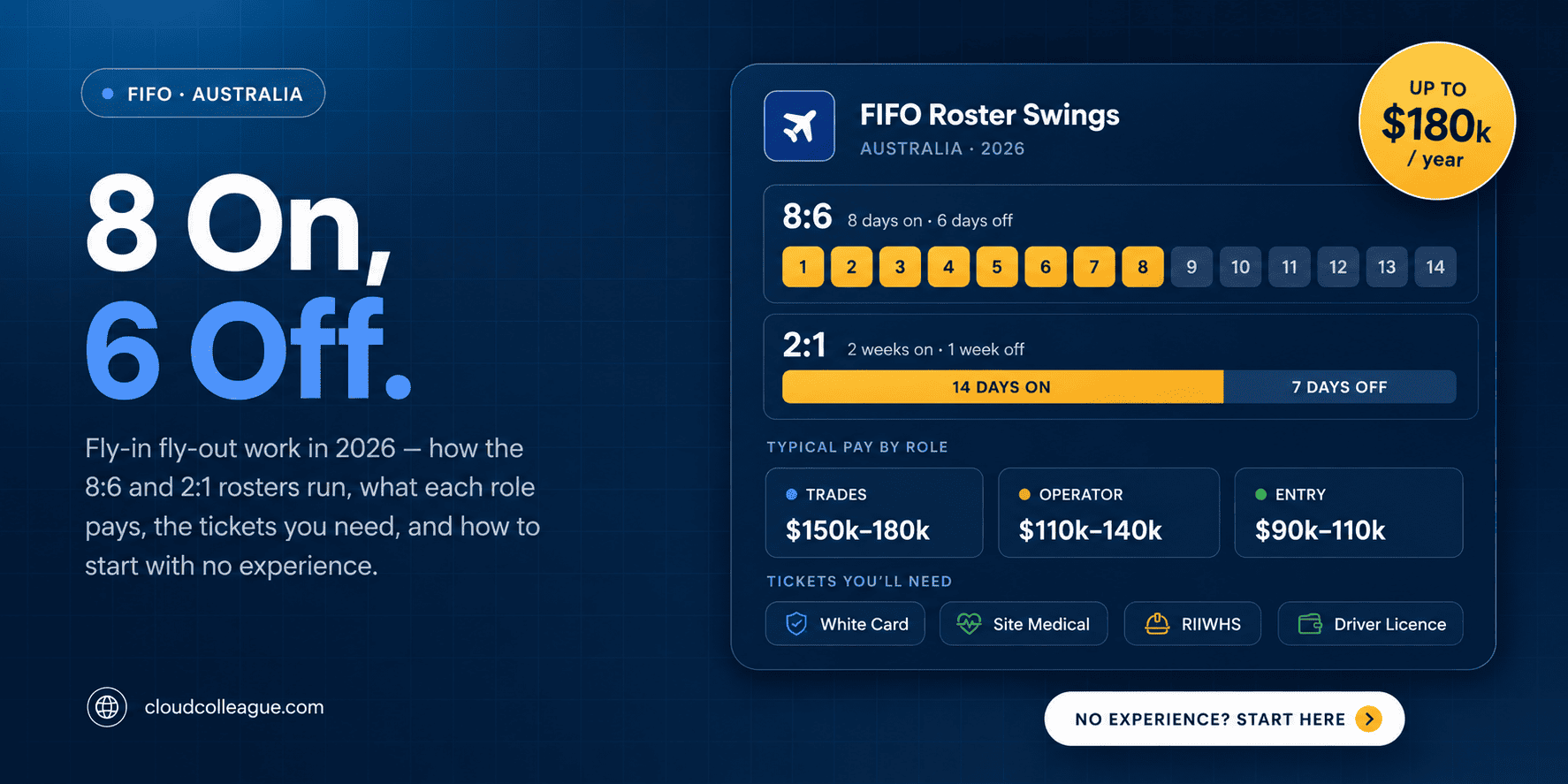
Rosters are described as days on versus days off. A 2:1 roster means two weeks on site and one week off. A 7:7 roster is seven days on and seven off, while 8:6 is eight on and six off. Most sites run 12-hour shifts, often a mix of days and nights. Even-time rosters like 7:7 give you the most home time, while longer swings like 2:1 maximize earnings, so the roster you choose shapes both your income and your lifestyle.
Read Next: How Many Hours Is Full-Time Work in Australia Currently?
Common FIFO Jobs and Salaries
FIFO covers far more than mining engineers. Remote sites function like small towns, so they need cleaners, cooks, drivers, trades, and operators alongside technical staff. The table below shows common roles from entry-level to skilled, with current pay ranges.
| Role | Entry Requirement | 2026 Salary Range |
| Mine site cleaner / camp staff | No experience needed | $65,000 to $80,000 |
| Trade assistant / offsider | White Card, willing to learn | $75,000 to $90,000 |
| Utility / general hand | No experience needed | $68,000 to $85,000 |
| Process plant operator | Site training provided | $75,000 to $92,000 |
| Haul truck operator | Tickets, often trained on site | $90,000 to $115,000 |
| Skilled trade (electrician, welder) | Trade qualification + tickets | $120,000 to $150,000 |
| Mining engineer / geologist | Relevant degree | $120,000 to $180,000 |
Entry-level roles start around $65,000 to $92,000, while skilled trades and technical roles reach $120,000 to $180,000. Mining roles average roughly $140,000, and many sit firmly among the highest-paying jobs in Australia once allowances and overtime are added. Remember that covered flights, accommodation, and meals can add $30,000 to $40,000 in real value on top of the headline figure.
Pros and Cons of FIFO Life
FIFO is rewarding, but it is not for everyone, so weigh both sides honestly before you commit. On the upside, the pay is excellent, your living costs during the swing are covered, and the long rostered breaks give you genuine blocks of free time that a standard job cannot match. Many workers use FIFO to clear debt, save for a home, or fund travel.
The trade-offs are real too. You spend long stretches away from family and friends, the shifts are physically demanding, and the isolation of remote camps can affect mental health if you are not prepared. Routine, staying connected with loved ones, and using your downtime well make a big difference. Going in with clear eyes about the lifestyle is the single best predictor of who thrives in FIFO work.
| Reality check: FIFO pays well because it asks a lot. The money is genuine, but so is the time away. Decide whether the roster fits your life before you chase the salary. |
How to Get a FIFO Job With No Experience?
Plenty of people break into FIFO with no mining background at all. The trick is to target the roles that hire for attitude and reliability rather than specific experience, such as cleaners, kitchen and camp staff, utilities, and trade assistants. These positions get you on site, build your network, and let you move into higher-paying operational roles once you have proven yourself.
Employers value candidates who hold the required tickets, submit a relevant resume, and arrive prepared for pre-employment medical and drug and alcohol testing. Flexibility helps enormously. If you can work any roster, start at short notice, and fly from a major hub, employers will hire you faster. Many operators also run traineeships, such as driller’s offsider programs, that give people with no prior drilling experience a pathway into the industry.
Required Tickets and Certifications
FIFO roles have clear baseline requirements, and meeting them before you apply puts you ahead of other candidates. The essentials for most site work are straightforward and affordable to obtain.
- White Card: the construction industry induction card, required for almost any site role and quick to complete.
- Driver’s licence: Most employers require a current driver’s licence, and some roles also require a manual or heavy-vehicle licence.
- Pre-employment medical: A medical assessment checks whether you can meet the physical demands of the role and includes a drug and alcohol screen.
- National police check: standard for site access and camp accommodation.
- Optional higher tickets: a forklift licence, high-risk work licence, confined space, or working at heights tickets open better-paid roles.
Investing in a few extra tickets early can lift your starting pay and widen the roles you qualify for, so treat them as a fast-paying investment rather than a cost.
Where to Apply for FIFO Job?
Western Australia is the heart of FIFO, with most flights leaving from Perth, followed by Queensland out of Brisbane. Major mining companies and their contractors advertise directly, and specialist labour-hire firms fill a large share of entry-level and operational roles, so registering with a few is a smart move.
Online job platforms let you scan many FIFO roles at once, including on CloudColleague. Because Perth is the main departure point, it also helps to understand the local market, so see our guide to full-time jobs in Perth, the city most FIFO workers fly from. Set up job alerts, apply quickly when roles appear, and keep your tickets current so you can start at short notice.
| Ready to make your move? Create your free account and start as a Seeker or Employer on CloudColleague. |
Frequently Asked Questions
FIFO pay ranges from about $65,000 for entry-level roles to $180,000 for skilled trades and engineers, with mining roles averaging around $140,000. On top of salary, employers usually cover flights, accommodation, and meals during your swing, which adds significant value.
A 2:1 roster means two weeks working on site followed by one week off at home. Other common patterns include 7:7 (seven days on, seven off) and 8:6 (eight on, six off), usually with 12-hour shifts each working day.
Yes. Roles such as cleaners, camp staff, utilities, and trade assistants regularly hire without prior FIFO experience. A White Card, a clean medical and drug test, and a strong work ethic can help you start a career in mining
At minimum you usually need a White Card for construction sites. Many roles also ask for a current driver’s licence, a police check, and a pre-employment medical. Extra tickets such as high-risk work licence, a forklift ticket, or machinery operation can open higher-paying roles.
Western Australia is the main hub, with most flights departing Perth, followed by Queensland. Roles also fly out of Brisbane, Adelaide, and other capitals depending on the site and employer.