If you are searching for the best paying jobs in Australia for Indians, the timing has rarely been better. Indians are now the largest migrant community in the country, with about 971,000 Indian-born residents according to the Australian Bureau of Statistics, and demand keeps climbing. Australia has confirmed 185,000 permanent residency places for 2026 to 2027, with roughly 132,240 of those reserved for skilled migration, so qualified Indian professionals sit right where the opportunity is.
The reason is simple. Australia faces a shortage of more than 350,000 skilled workers, and employers actively sponsor Indian talent in IT, healthcare, engineering, construction, and education. Indian candidates are among the most preferred, thanks to strong technical skills and English proficiency. This guide breaks down the highest-paying roles, realistic salaries, credential recognition, visa pathways, and the best cities, so you can plan with confidence.
| Already in Australia or arriving soon? Learn how the Australian job market works and start as a Seeker to explore new opportunities. |
Top High-Paying Jobs in Australia for Indian Migrants
The smartest strategy is to target roles that are both well paid and on the national shortage list, because shortage roles unlock sponsorship and faster residency. The occupations below tick both boxes for Indian migrants in 2026.
| Role | Typical 2026 Salary | Assessing Body | Why It’s Open |
| Software Engineer / Developer | $80,000 to $200,000+ | ACS | 1,800+ sponsored roles open |
| Registered Nurse | $75,000 to $110,000 | ANMAC + AHPRA | 22% workforce shortage |
| Civil / Mechanical Engineer | $80,000 to $140,000 | Engineers Australia | 65,000+ engineer shortfall |
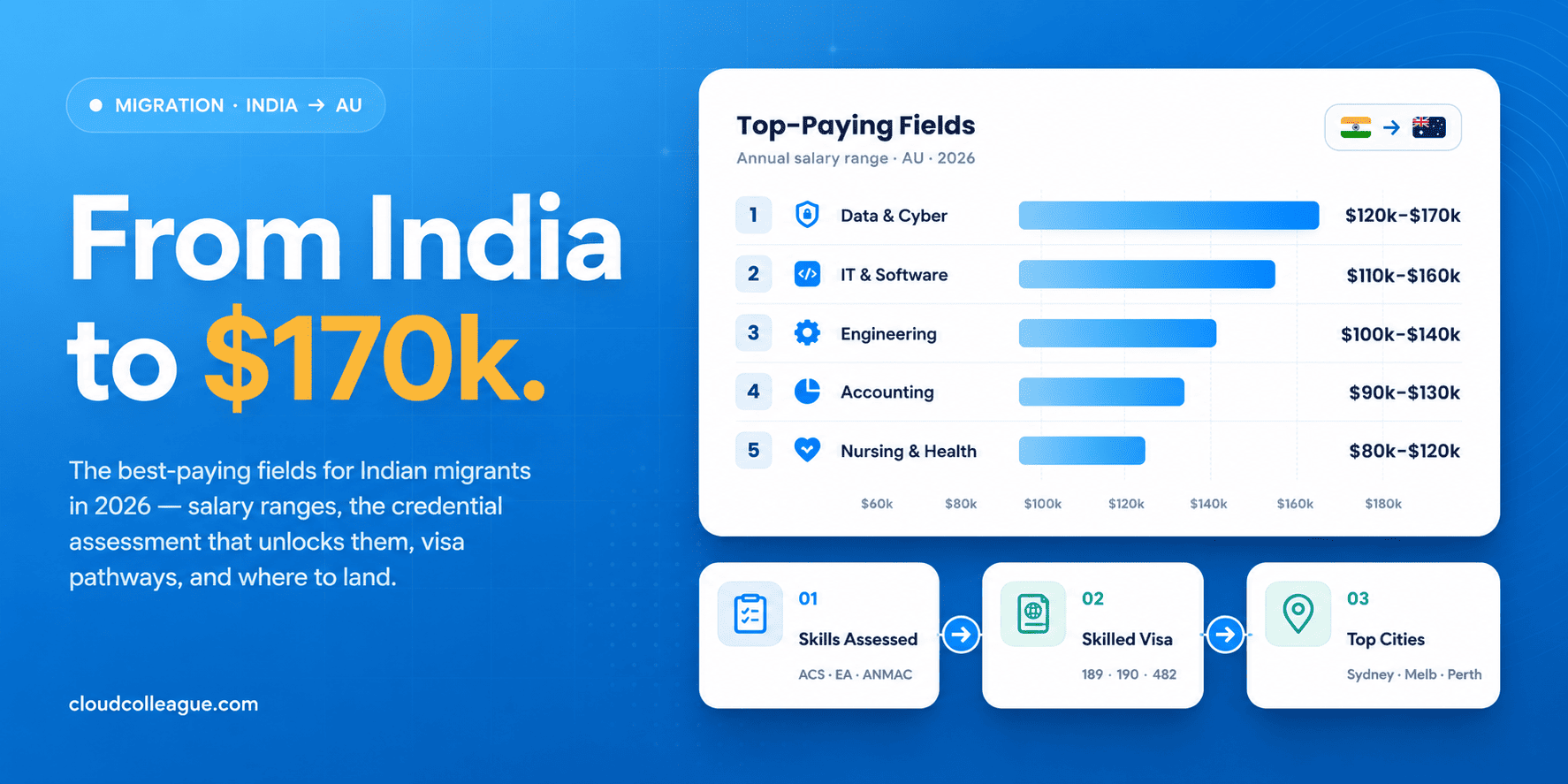
| Cyber Security / Data Engineer | $110,000 to $190,000 | ACS | Digital transformation demand |
| Accountant / Auditor | $70,000 to $150,000 | CPA Australia / CA ANZ | Steady, but competitive |
| Electrician / Skilled Trade | $80,000 to $130,000 | TRA | Trade fill rate just 54.3% |
Healthcare and technology lead the demand. Indian nurses recorded an 81 percent visa approval rate in 2025, while engineers reached 74 percent, reflecting how welcome these skills are. Software roles are especially open, with over 1,800 sponsored developer positions advertised. If you want the full picture of which occupations qualify, check the current skill shortage list before you commit to a pathway.
Read Next: Jobs in Geelong: A Guide to Work and Hiring Industries in 2026
Salary Expectations and Comparison to India
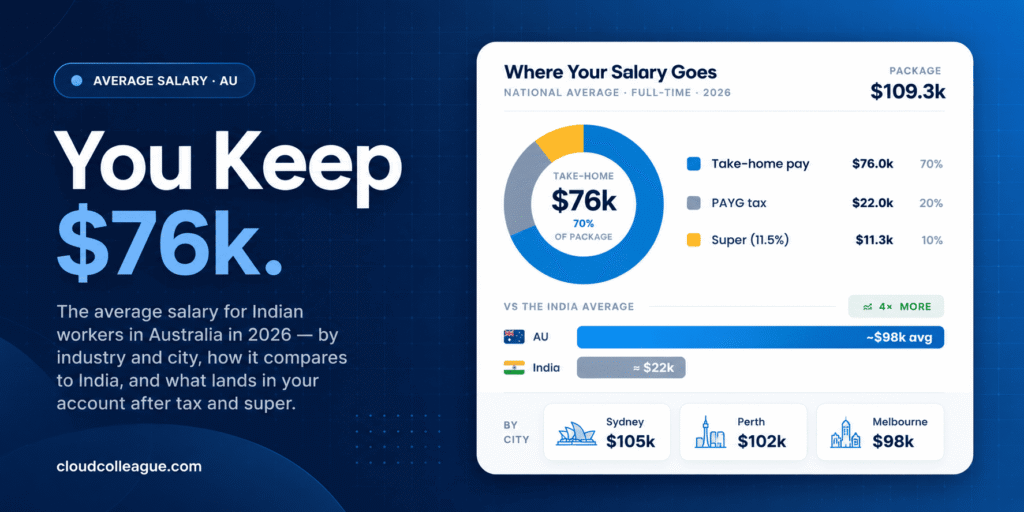
Australian salaries look dramatic next to Indian pay, but you should always compare net savings rather than gross figures. A mid-career software engineer earning around 15 lakh in Bangalore can earn roughly AUD 120,000 in Sydney, which is about 4.4 times more in absolute terms. Rent, groceries, and transport are also far higher, so the real gain depends on your city and lifestyle.
Here is what the numbers look like in 2026. Software engineers average AUD 110,000 to 150,000, with entry roles near AUD 80,000 to 95,000 and senior specialists reaching AUD 170,000 to 200,000 or more. Registered nurses earn AUD 75,000 to 110,000, civil and mechanical engineers AUD 80,000 to 140,000, and accountants AUD 70,000 to 150,000. Data and cyber security engineers sit higher, between AUD 110,000 and 190,000, because AI and cloud demand keeps pushing pay up.
For a deeper breakdown of typical take-home pay and how it compares across roles, see our guide to the average salary for Indians in Australia.
| Quick tip: a higher gross salary in Sydney can mean smaller savings than a slightly lower salary in Brisbane or Adelaide. Always factor in rent before you choose a city. |
Getting Your Indian Qualifications Recognised
Before any skilled visa is granted, you must pass a formal skills assessment that confirms your Indian qualifications meet Australian standards. Each occupation has one designated authority, and you cannot shop around. Getting this step right early saves months of delay.
For IT and software roles, the Australian Computer Society (ACS) assesses your degree and experience, usually for about AUD 530 to 550 over six to eight weeks. Be aware that ACS often deducts a number of years from your claimed experience based on your qualification, which affects your points. Engineers use Engineers Australia, and Indian degrees accredited under the Washington Accord generally enjoy a smoother path.
Nurses must clear ANMAC and then register with AHPRA, which adds eight to twelve weeks, along with an English test such as IELTS 7 or OET B. Accountants go through CPA Australia or CA ANZ, and ongoing recognition discussions with ICAI may ease the process for Indian chartered accountants. Trades are assessed by Trades Recognition Australia (TRA). Across all bodies, weak employer references are the single biggest cause of rejection, so prepare detailed, dated, duties-based letters.
| Once your assessment is underway, explore our Guides on Tasks or pick up short-term tasks to build Australian work history while you wait. |
Visa Pathways for These Jobs
Most Indian professionals enter through one of a few routes. The Skills in Demand visa (Subclass 482) is the main employer-sponsored option, covering 456 occupations on the Core Skills Occupation List. Its Core Skills income threshold is AUD 76,515, rising to AUD 79,499 from July 2026, while the Specialist Skills stream targets senior earners above AUD 135,000.
The General Skilled Migration visas, Subclass 189, 190, and 491, suit candidates without a sponsor, and regional options often need fewer points. Nurses sometimes receive invitations with as few as 65 to 75 points. To estimate your own score before you apply, work through our Australia PR points guide, and if you are still offshore, read how to get a job in Australia from overseas first.
Read Next: Average Salary in Australia for Indian Workers (2026)
Best Cities for Indian Migrants in Australia
Where you settle shapes both your pay and your job prospects. Melbourne remains the top destination for Indian migrants, thanks to a large and established Indian community, strong tech hubs, and the Victorian Big Build infrastructure program that keeps civil engineers in demand. Victoria’s state nomination streams (190 and 491) offer reliable points-tested pathways.
Sydney pays the most for technology and finance, with software salaries around AUD 140,000, but it also carries the highest living costs. Brisbane and Perth reward mining, construction, and engineering skills, often with salaries above AUD 150,000 and lower rents. Canberra punches above its size for government technology, cyber security, and data roles. Choose the city that matches your occupation, not just the biggest headline salary.
| Ready to take the next step? Create your free profile on CloudColleague and explore jobs across Australia from employers looking for skilled professionals. |
Frequently Asked Questions
High-paying, visa-friendly roles include software and data engineers ($110,000 to $190,000), specialist nurses ($75,000 to $110,000), civil and mechanical engineers ($80,000 to $140,000), and licensed trades ($80,000 to $130,000). All sit on Australia’s shortage lists.
Earnings rise sharply in absolute terms. A software engineer on around 15 lakh in Bangalore can earn roughly AUD 120,000 in Sydney, about 4.4 times more, though living costs are also far higher, so compare net savings rather than gross pay.
Yes, after a formal skills assessment. ICT professionals use ACS, engineers use Engineers Australia, nurses use ANMAC then AHPRA, accountants use CPA Australia or CA ANZ, and trades use TRA.
The Skills in Demand visa (Subclass 482) and the General Skilled Migration visas (189, 190, and 491) are the main pathways. The Core Skills income threshold is AUD 76,515, rising to AUD 79,499 from July 2026.
Melbourne is the most popular thanks to a large Indian community and strong tech and infrastructure demand. Sydney leads for tech and finance pay, while Perth and Brisbane reward mining and construction skills.