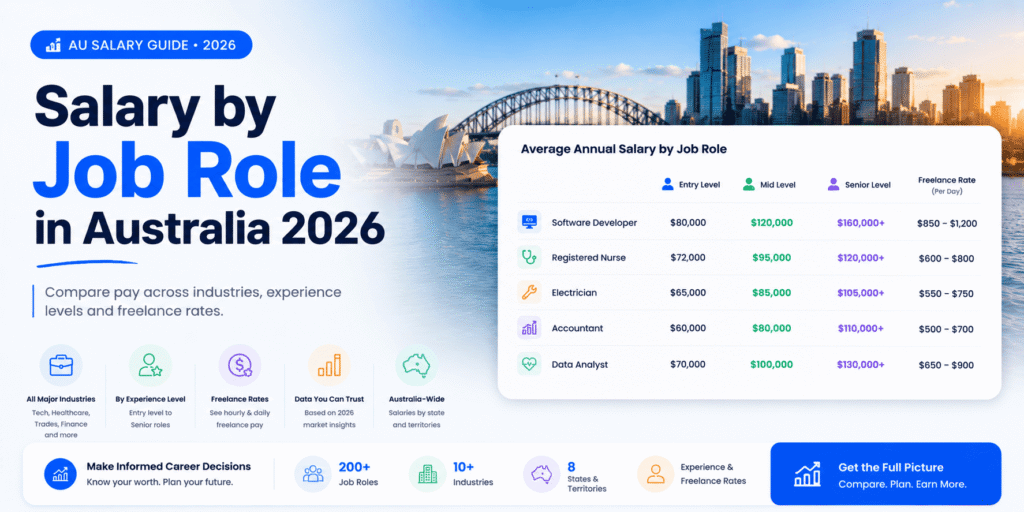
A salary increase request is one of the most financially significant conversations you will ever have with your employer, and most Australian workers avoid it. SEEK’s Salary Pulse, which surveyed 3,046 working-aged Australians in April 2026, found that 35% feel uncomfortable asking for a raise. Yet 84% of the same group expect to receive one in the next 12 months. That gap, between expecting more pay and actually asking for it, is where thousands of dollars disappear every year. This guide gives you the data, the timing, the evidence framework and the exact process to make a salary increase request that your employer cannot easily dismiss. Before any conversation with your manager, use CloudColleague’s salary insights hub to benchmark your rate against the verified market.
| Ready to put your new salary goals into action? Start as a Seeker and explore jobs that match your skills and expectations. |
Why most salary increase requests fail?
Most salary increase requests that fail do not fail because the manager said no. They fail before the conversation starts, because the person walks in unprepared.
The first failure is leading with emotion. “I feel I deserve more” and “I have been here four years” are feelings, not evidence. Managers receive these requests regularly and respond to them with sympathy and a polite no. Michael Page’s 2026 Salary Guide is direct on this point: managers respond to clear value, outcomes and evidence of impact. Not effort. Not tenure. Specifically what you delivered and what it was worth to the business.
The second failure is wrong timing. A salary increase request made during a restructure, immediately after a disappointing quarter, or at an impromptu meeting in a corridor will not receive the same consideration as one made at an annual review, after a measurable win, or in a dedicated meeting that was booked in advance.
The third failure is having no market data. Without a verified benchmark, your request has no anchor. You are asking for an unspecified amount for unspecified reasons. With a benchmark, your salary increase request becomes a business case. CloudColleague’s salary insights hub, along with the Hays FY25/26 Salary Guide and FairWorkMate’s ATO and ABS-based tool, give you that anchor in minutes.
When to make your salary increase request?
Timing a salary increase request well does not guarantee success, but poor timing can significantly reduce your chances. Four moments consistently deliver the best outcomes for Australian workers.
1. During your annual performance review: Most Australian employers review salaries on a set schedule, often tied to the financial year or your work anniversary. Arrive prepared with market data and evidence of your impact.
2. After a measurable win: If you delivered a successful project, won a major client, solved a costly problem, or exceeded targets, raise the conversation within four to six weeks while the results are still fresh.
3. When your responsibilities have grown: If you are managing more people, leading larger projects, or regularly working beyond your job description, you have a strong case for higher pay.
4. When market rates have increased: If your salary is below the market median for your role and location, use current salary benchmarks as evidence. High performers can reasonably target the 75th percentile.
According to guidance from Scotford Fennessy, requesting a pay review every 12 to 18 months is appropriate when supported by strong performance. While there is no legal entitlement to an annual increase, consistently presenting a well-supported case makes it harder to ignore.
Keep an eye on changing market rates. CloudColleague job alerts can help you track higher-paying opportunities in your field, giving you valuable leverage before any salary increase request.
Read Next: Entry-Level Salary Guide in Australia 2026
How much to ask for in your salary increase request?
The standard annual increment for Australian workers who do not negotiate is 2 to 4%, according to Altus Financial. That rate barely tracks inflation in most years and compounds against you over time. A salary increase request that aims only to match standard increments is a wasted conversation.
FairWorkMate, drawing on ATO Taxation Statistics 2022 to 2023 and ABS Employee Earnings data from May 2025, models two benchmarks for any salary increase request. The target ask is the market median for your specific role. The stretch ask is the 75th percentile, where strong performers with five or more years of experience typically sit. Your salary increase request should anchor to one of these two figures, not to your current pay or your personal expectations.
The practical approach is to benchmark your role across three sources before you sit down with your manager. Check SEEK advertised salaries for your title and city. Cross-reference with the Hays FY25/26 Salary Guide for your field. Then verify using CloudColleague’s salary insights benchmark. If all three point to a range of $105,000 to $125,000 and your current salary is $95,000, your salary increase request has a $10,000 to $30,000 verified gap to argue. For how benchmarks shift across experience levels, see our salary by experience guide.
Building the evidence case for your salary increase request
A salary increase request built on market data alone is strong. One built on market data plus a specific evidence case is almost always successful.
Your evidence case has three layers. The first is your market benchmark, which you have already built in the previous step. This shows your employer that your request is grounded in the market, not in personal preference. The second layer is your achievements since your last review. These should be specific, quantifiable and outcome-focused. Not “I worked on the new client project” but “I led the new client project, which delivered $180,000 in new revenue and came in two weeks ahead of schedule.” Michael Page’s 2026 guide is emphatic on this point: outcomes and the difference made are what move managers. Effort and hours do not.
The third layer is the evidence of scope change. If your responsibilities have grown since your salary was last reviewed, list what you were doing then and what you are doing now. More direct reports, broader accounts, additional projects, interim leadership responsibilities and cross-team contributions all represent genuine scope growth that justifies a salary increase request.
For the national salary context and how your pay compares at a market level, see our guide to the average salary in Australia. Building all three layers, benchmark plus achievements plus scope, gives your manager something concrete to take to leadership or HR when they need to approve the increase.
| Looking to boost your earnings? Find Tasks that match your skills and availability. |
How to have the salary increase request conversation?
The logistics of a salary increase request matter almost as much as the content. SEEK’s April 2026 career guidance is consistent with what research shows broadly: do not spring a salary conversation on your manager without warning.
Book a specific meeting with a clear agenda. Let your manager know in advance that you want to discuss your salary and your development. This gives them time to prepare and signals that you are treating this as a professional conversation, not an ultimatum. Asking for a dedicated meeting also means you get your manager’s full attention rather than a distracted five-minute response between other tasks.
In the meeting, open positively. Acknowledge what you value about your role and your team. Then present your case in order: market benchmark first, evidence of contribution second, and your specific ask third. Name a number. Vague requests like “I would like to be better compensated” produce vague responses. A specific figure, anchored to the 75th-percentile benchmark for your role, gives your manager something to work with.
Then stop talking. The silence after your ask is working for you. If the manager pushes back, ask what evidence or conditions would make the salary increase request achievable and set a date to revisit. This keeps the conversation open rather than closing it with a final no. For the sibling guide on negotiating a new job offer rather than an internal raise, see our negotiate salary offer guide. For the broader salary negotiation framework, see our step by step salary negotiation guide.
What to do when your salary increase request is rejected?
A no is not the end of the conversation. It is information. The right response depends on what kind of no you received.
If the employer says the timing is wrong but the case is valid, ask for a specific review date in writing. A verbal promise to revisit in three months is easily forgotten. A written commitment, even an email confirmation, creates accountability and gives you a clear point to return to.
If the employer says the budget is fixed, ask whether other elements of the package can move. A bonus structure, an extra week of leave, additional professional development funding, or a more senior title can all add real value even when base salary is constrained.
If the employer rejects your salary increase request without a clear reason, or does so repeatedly across two or more review cycles, that is important data about how the organization values your contribution. At that point, the market is the most honest feedback you can get. CloudColleague shows you what employers are actively paying for your role and experience right now. Setting up a profile and turning on job-match alerts costs nothing and takes minutes.
If your employer will not meet your market rate, CloudColleague will help you find one that will. CloudColleague connects skilled professionals with Australian and global businesses that pay competitively. Payments settle the same day through Stripe, and AI matching surfaces roles that fit your experience and salary expectations.
If you are seriously considering a move, update your professional profile and resume before you start applying. Our resume and CV writing guide covers how to position your achievements and experience for a competitive market.
Salary increase request letter or email: what to include
Some employers prefer or require a written salary increase request before a formal review. A well-structured written request supports your verbal case and creates a paper trail of your professionalism.
A salary increase request letter or email should include four elements. The first is a clear opening that states the purpose of the communication: you are formally requesting a review of your current salary. The second is your market benchmark data, attributed to specific sources such as the Hays FY25/26 guide, SEEK advertised salaries and CloudColleague’s verified benchmarks. The third is a concise summary of your key achievements since your last review, focused on outcomes and their value to the business. The fourth is your specific ask: a target salary figure aligned to the market median or 75th percentile, with a request to discuss it at the earliest convenient time.
Keep the letter professional, factual and free of emotional language. It should read like a business proposal, not a complaint. One page is sufficient. If you need a structured template to work from, the CloudColleague 2026 Salary Increase Request Template Pack gives you a ready-to-use format with a benchmarking worksheet included.
| Ready to take the next step? Create your free seeker account on CloudColleague and start exploring opportunities today. |
Salary increase request FAQ
A salary increase request is a formal or informal conversation with your employer in which you present a data-backed case for raising your current salary above the standard annual increment.
Every 12 to 18 months is appropriate if your performance and market data justify it, per verified Australian career guidance.
Anchor to the market median as your target and the 75th percentile as your stretch, using Fair Workmate’s ATO and ABS-based benchmarks as your guide.
Ask for specific feedback and a written review date. If rejected repeatedly, benchmark your role on CloudColleague and consider whether the market offers better.
Yes, when your employer requires it or when you want a clear professional record. Keep it factual, outcome-focused and benchmarked to market data.
Use SEEK advertised salaries, the Hays FY25/26 Salary Guide, Fair Workmate’s ATO-based benchmarks and CloudColleague’s salary insights tool for a multi-source, verified case.