Receptionist jobs in Sydney are plentiful, varied, and a great entry point into professional work, with roles across medical practices, corporate offices, and hotels. Reception is also one of the few professional roles you can often start without specific qualifications, since employers value attitude and people skills highly. This guide covers what the different roles involve, what they pay in Sydney, the skills employers look for, where to find vacancies, and how to make your application stand out.
| Looking for reception work now? Browse Sydney receptionist jobs on CloudColleague or create your free profile so employers can find you. |
What Receptionist Roles Involve
Receptionists are the first point of contact for an organization, so the core of every role is greeting people, answering calls, managing appointments, and handling administration. Beyond those shared basics, the work varies a lot by setting, and choosing the right type helps you target your search.
Medical receptionists work in clinics, GP practices, and hospitals, managing patient bookings, records, and billing, often using specialized practice software. Corporate receptionists staff the front desk of offices and firms, where professional presentation and polished phone manner matter most. Hotel and hospitality receptionists handle check-ins, guest services, and bookings, usually across a roster that includes evenings and weekends, which attracts penalty rates.
Typical Pay in Sydney
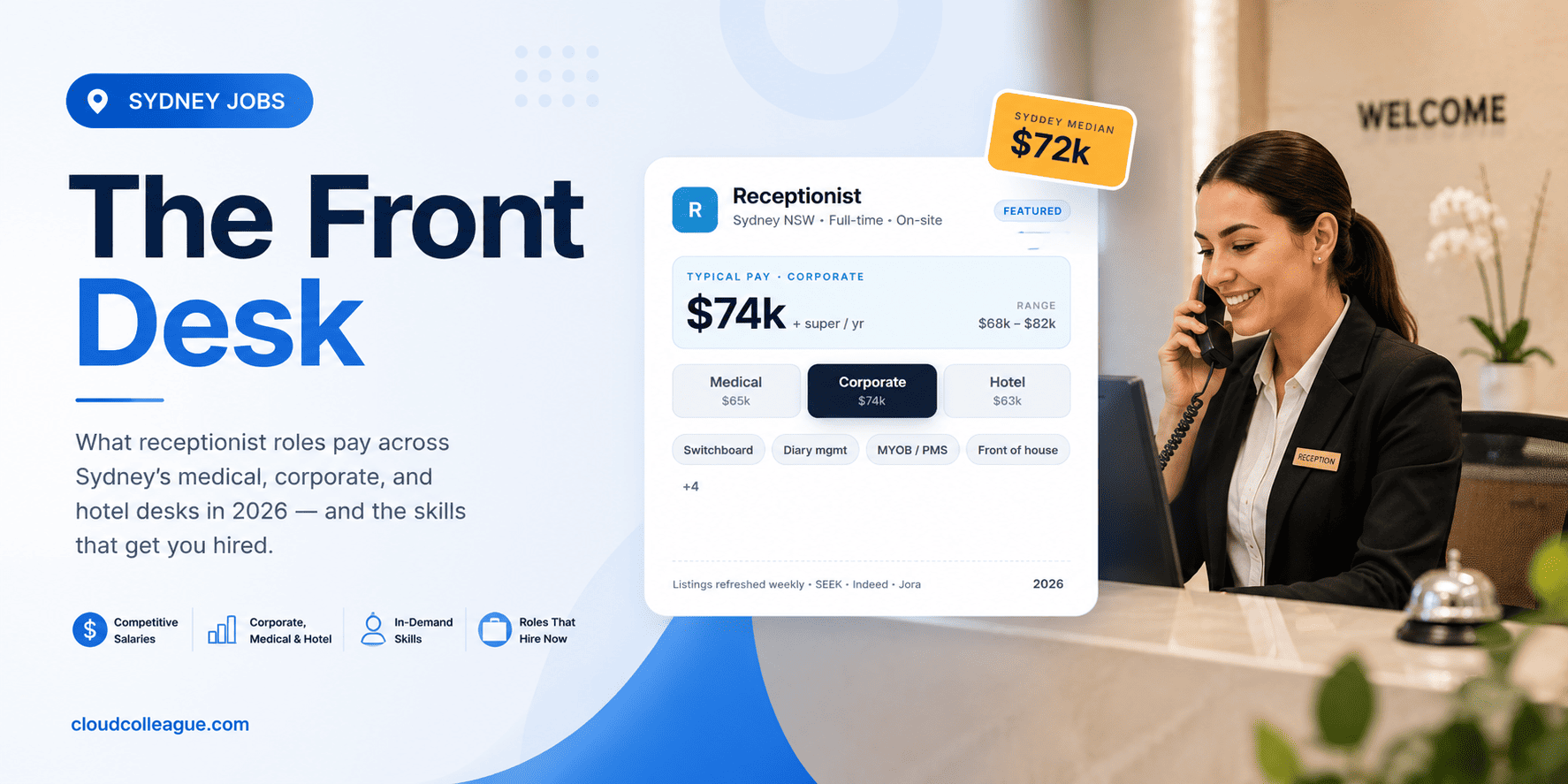
Reception pay in Sydney is modest but steady, and it varies by sector and experience. The table below gives indicative ranges for the main role types.
| Role Type | Typical Setting | Indicative Sydney Pay |
| Medical receptionist | Clinics, GP practices, hospitals | About $30 to $35 per hour |
| Corporate receptionist | Offices, firms, front desk | Around $55,000 to $70,000 |
| Hotel / hospitality | Front office, guest services | $25 to $32 per hour + penalties |
| Entry-level / casual | Various settings | From about $25 per hour |
Most Sydney receptionists earn between about $46,000 and $65,000 a year, which works out to roughly $25 to $31 an hour. Medical receptionists often sit slightly higher, around $30 to $35 an hour, while hotel roles add penalty rates for unsociable hours. Pay rises with experience and specialization, and reception is well known as a stepping stone to better-paid office roles.
| Career tip: reception has low barriers to entry but strong mobility. Many receptionists move up to office manager, executive assistant, or medical secretary roles within a few years. |
Skills and Experience Employers Want
Because receptionists represent the organisation, employers prioritise people skills above all. Warm, clear communication, a calm and professional manner, and genuine customer service instinct are the traits that win roles. Strong organisation matters too, since you will juggle calls, visitors, scheduling, and admin at once.
On the practical side, solid computer skills are essential, including email, calendars, and common office software, plus accurate typing and data entry. Medical reception rewards familiarity with practice management systems and medical terminology, while corporate roles value discretion and polish. Reassuringly, prior reception experience is often optional for entry-level roles, and transferable experience from retail or hospitality is highly valued.
Where to Find Roles
Sydney reception roles are advertised widely, so search across several channels. The major job boards carry the most listings, and recruitment agencies that specialize in office support and temporary placements are particularly useful, since many reception roles start as temp or casual positions. For the full rundown of platforms and how they compare, see our guide to the best Ai job search in Australia.
Sydney’s job market is the largest in the country, but it pays to know how it compares with other cities, especially on cost of living. Our guide to the best cities for jobs in Australia puts the Sydney market in context. Set up alerts on a couple of boards and apply quickly, as reception roles often fill fast.
Resume and Interview Tips
Your resume should lead with people and organization skills, backed by specific examples. Quantify where you can, such as the call volume you managed or the number of appointments you scheduled daily, and mention the software you know. Keep it clean and well presented, because for a reception role your resume itself is a sample of your attention to detail.
At interview, presentation and warmth count enormously, since employers are imagining you as the face of their business. Dress professionally, arrive early, and greet everyone politely from the moment you walk in. Expect scenario questions such as how you would handle an upset client or several phones ringing at once, and answer with calm, practical examples. A friendly, organized, and reliable impression is exactly what reception employers are hiring for.
| Ready to apply? Start as a Seeker on CloudColleague and browse some short term tasks to connect with Sydney medical, corporate, and hospitality employers. |
Frequently Asked Questions
Most receptionists in Sydney earn between about $46,000 and $65,000 a year, roughly $25 to $31 an hour. Medical receptionists often sit a little higher at around $30 to $35 an hour, and hotel roles add penalty rates for evenings and weekends.
Not always. Many entry-level and casual reception roles welcome candidates with strong customer service and communication skills rather than prior reception experience. Retail or hospitality experience transfers well.
Most roles require a high school certificate plus good computer and communication skills. Medical reception can favour a certificate in medical administration or familiarity with practice software, while corporate roles value professional presentation and phone manner.
Use the major job boards such as Seek, Indeed, and Jora, plus recruitment agencies that specialise in office support and temporary roles. CloudColleague also lists current Sydney reception vacancies.
Reception is a strong springboard. Many people progress to office manager, executive assistant, personal assistant, or medical secretary roles as they gain experience and build relationships.