If you are looking for full-time work in Perth, you have picked one of Australia’s strongest job markets. Western Australia is enjoying record-low unemployment, around 3.5 percent, the lowest since 1974, which means employers are competing for staff across mining, healthcare, construction, and more. For skilled workers, tradespeople, and newcomers alike, Perth offers genuine opportunity and competitive pay. This guide covers the Perth job market, the roles most in demand, where to find full-time work, and what to know if you are relocating.
| Ready to find full-time work in Perth?Browse Perth jobs on CloudColleague or create your free profile so WA employers can find you. |
Perth Job Market Overview
Perth’s economy is powered by Western Australia’s resources wealth, but it has diversified well beyond a single industry. Mining and energy remain the backbone, driven by global demand for iron ore, lithium, gas, and the critical minerals behind renewable energy. Around this core sit strong healthcare, construction, engineering, and technology sectors, giving the city a broader job market than its mining reputation suggests.
The standout feature is how tight the labour market is. With unemployment at roughly 3.5 percent and steady wage growth, WA faces real skills shortages, and that works in a job seeker’s favour. Employers are hiring actively, though they increasingly look for candidates who can show job readiness and measurable impact, not just qualifications on paper.
Read Next: Mental Health Job Vacancies in Australia
Full-Time vs Other Arrangements
Most professional and skilled roles in Perth are full-time, which means a standard 38-hour week with paid leave and other entitlements, though part-time, casual, and contract options exist too. You can also work as a contract based freelance tasks. The resources sector also offers fly-in fly-out rosters that work differently from a city-based role. If you want a clear refresher on what full-time actually means and how it compares with other arrangements, see our guide to how many hours are in a full-time job.
In-Demand Full-Time Roles in WA
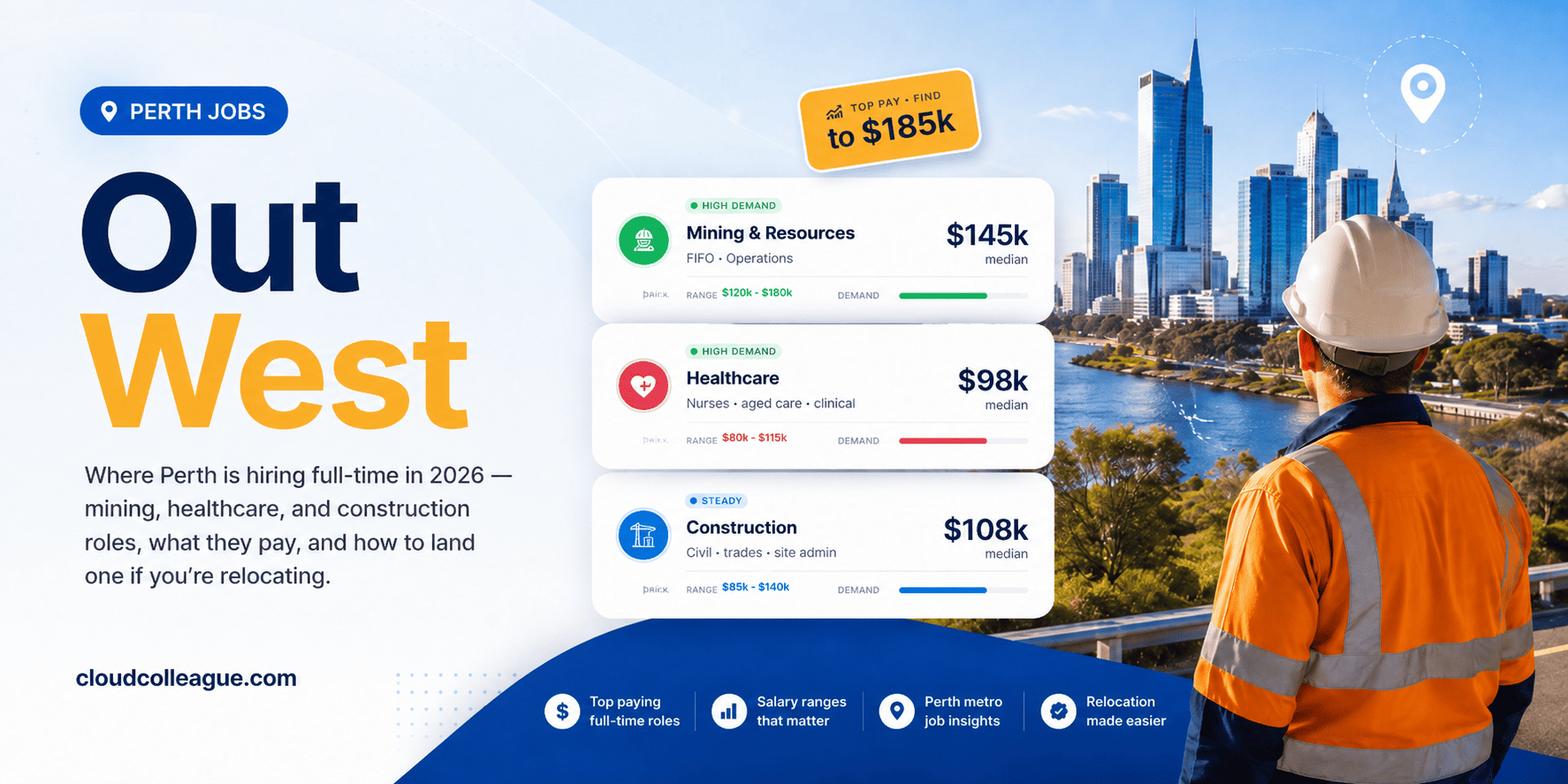
Western Australia’s skilled occupation list (WASMOL) identifies more than 350 high-priority roles, concentrated in a few clear sectors. The table below shows some of the most in-demand full-time roles and their indicative pay.
| In-Demand Role | Main Sector | Indicative Salary |
| Registered nurse | Healthcare, aged care | $85,000 to $110,000+ |
| Electrician / trades | Construction, resources | $80,000 to $130,000 |
| Mining engineer | Resources sector | $150,000 to $200,000 |
| Construction project manager | Infrastructure, building | $150,000 to $220,000+ |
| Software / IT professional | Tech, digital | $110,000 to $160,000 |
| Aged care worker | Community, residential care | $60,000 to $75,000 |
Healthcare is the most resilient sector, with strong demand for registered nurses and aged care workers as the population ages and new facilities open. Construction and trades are booming on the back of infrastructure investment, and engineering and mining roles command the highest pay. Many of the best-paid resources roles are FIFO jobs, flying workers from Perth to remote sites on a roster, which is worth considering if income is your priority.
Where to Find Full-Time Work in Perth?
Perth roles are advertised across the usual channels, so search broadly. The major job boards carry the highest volume, and recruitment agencies are especially active in resources, healthcare, and trades, where employers rely on them to fill roles quickly. State government health and public-sector portals list large numbers of full-time positions, particularly in healthcare and community services.
Industry-specific sources matter in Perth more than most cities. Mining and resources companies and their contractors advertise directly and through specialist labour-hire firms, so registering with a few is a smart move. CloudColleague lets you search current Perth vacancies and be matched directly with employers, and setting up alerts ensures you see new roles early in a fast-moving market.
| Local insight: in Perth, recruitment agencies and labour-hire firms fill a large share of resources, trades, and healthcare roles. Registering with two or three can open doors that are never advertised publicly. |
Tips for Relocating to Perth for Work
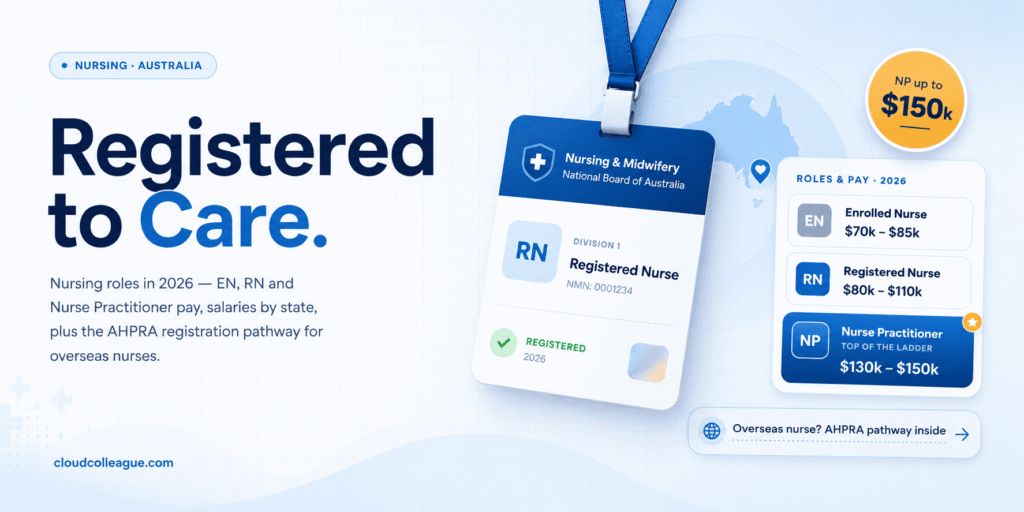
Relocating to Perth pays off with preparation. Line up your essentials first, including any licensing or registration your occupation requires, such as AHPRA for nurses or trade tickets and a White Card for site work, since these are often prerequisites to even being shortlisted. Having them ready signals you can start quickly. Consider the migration angle if you are coming from overseas. All of WA, including Perth, counts as regional for migration, so you can access the Subclass 491 visa for extra residency points, and the state nominates from its own occupation list. Factor in cost of living too, which is generally lower than Sydney, so a comparable salary can stretch further. To weigh Perth against other locations, see our guide to the best paying jobs in Australia. Finally, tailor your resume to show local job readiness and apply promptly, as Perth’s tight market rewards fast, well-prepared candidates.
| Make your move today. Start as a Seeker or Bid on tasks to connect with employers across WA’s strongest sectors. |
Frequently Asked Questions
Yes, relatively. Western Australia has one of the lowest unemployment rates in the country, around 3.5 percent, which signals a tight labour market and genuine skills shortages. Employers are actively hiring, especially in healthcare, trades, construction, engineering, and mining.
Mining and resources lead the economy, supported by energy, healthcare, construction, engineering, and a growing technology sector. This mix gives Perth a deeper, more diverse job market than its mining reputation suggests.
Healthcare roles such as registered nurses and aged care workers, skilled trades like electricians, engineers, construction project managers, and IT professionals are all in strong demand across WA.
Yes. All of Western Australia, including Perth, is classified as regional for migration, so applicants can access the Subclass 491 visa for extra points, and the state runs its own skilled occupation list (WASMOL).
Perth pay is strong, especially in resources and construction, often with a premium for technical roles. Living costs are generally lower than Sydney, which can mean better savings on a comparable salary.