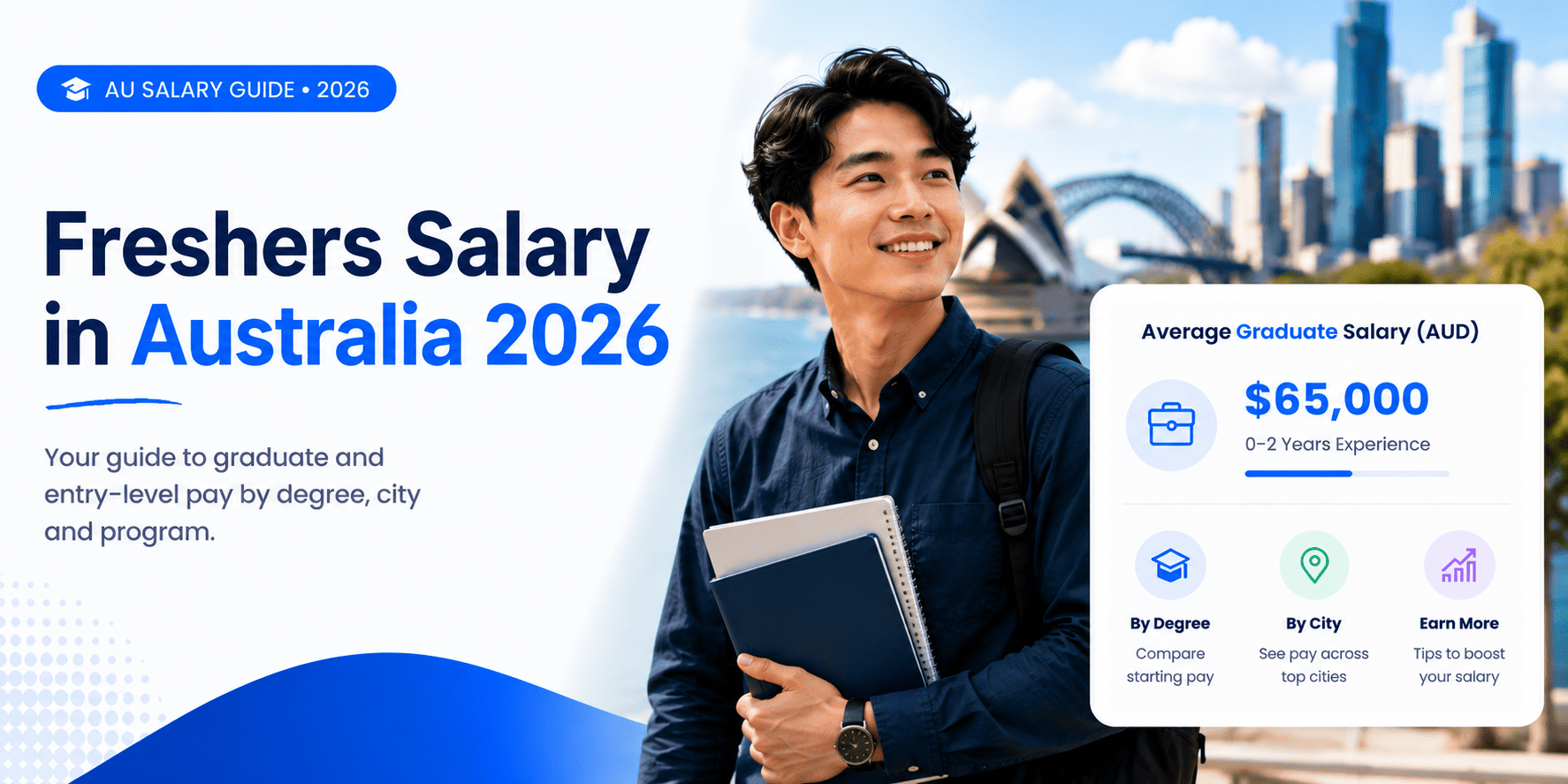
The freshers salary in Australia sits around $75,000 a year for most new graduates in 2026. In Australia, the word “freshers” simply means graduates, entry-level workers or school leavers. Yet your starting pay can swing widely, depending on your degree, city and the type of employer. So this guide breaks down what freshers really earn, by field and program, and shows how to start higher. New to the country? Our first-time-in-Australia guide covers the basics too.
| Taking your first step into the workforce? Start as a Seeker and explore entry-level opportunities across Australia. |
What is the average freshers salary in Australia in 2026?
According to Fair Work and Jobs and Skills Australia, most new graduates earn a median of about $75,000 a year. That figure comes from the QILT Graduate Outcomes Survey, measured four to six months after finishing study.
Graduate programs sit slightly lower on average, near $72,000, with a typical range of $67,000 to $81,000. For the national picture across all jobs, see our average salary in Australia guide, which tracks the full-time figure near $107,000.
Freshers salary by degree and field
Your degree shapes your starting pay more than almost anything else. Here are the 2026 medians for bachelor graduates.
| Degree / field | Median starting salary (AUD) |
| Dentistry | $103,300 |
| Medicine | $86,800 |
| Social work | $82,000 |
| Engineering | $75,000+ |
| Psychology | $71,000 |
| Humanities & social sciences | $69,400 |
| Business & management | $69,200 |
| Science & maths | $69,000 |
| Pharmacy | $55,500 |
As the table shows, dentistry and medicine lead the field. Meanwhile, pharmacy and many generalist degrees start lower. So your study choice has a real and lasting pay effect. To see where these careers head later, explore our guide to salary by job role.
Read Next: Accountant Salary in Australia 2026
Freshers salary in graduate programs
Structured graduate programs offer strong, predictable starting pay. Government programs stand out, partly because they pay higher superannuation.
- ATO graduate program: starts at $75,431 plus 15.4% super, then rises to an APS4 salary of $84,028.
- Services Australia National Graduate Program: pays $71,170 for an undergraduate degree, or $79,322 for a double or higher degree.
- Big 4 and corporate programs: typically pay around $60,000 to $75,000, with clear promotion paths.
In short, graduate programs trade a slightly lower headline figure for training, security and fast progression.
Freshers salary by city
Location shapes pay through industry mix and living costs. Melbourne and Sydney lead the graduate market, driven by large employers and professional services.
| City | Graduate market |
| Melbourne | Highest, broad employer base |
| Sydney | High, finance and tech |
| Canberra | Strong public-sector programs |
| Perth | Resources-driven demand |
| Brisbane | Growing, lower living costs |
| Adelaide and regional | Lower pay, lower costs |
However, a bigger pay packet in a costly city does not always stretch further. Smaller cities often pay a little less, yet leave more in your pocket after rent. Remote and hybrid graduate roles also let you earn city rates from a cheaper region, which widens your options.
Freshers salary for international graduates
International graduates are a big part of the fresher market, and many search for pay in these exact terms. Generally, you earn the same advertised rates as domestic graduates for the same role, since pay follows the job, not your background.
Some fields, however, treat overseas qualifications differently, so recognition and registration can affect your first salary. So research your field early, and benchmark every offer against the medians above.
Bachelor vs postgraduate: how qualifications affect freshers salary
Your qualification level lifts pay sharply. Postgraduate coursework graduates earn a median near $100,000, well above the bachelor figure.
In fact, master’s graduates earn roughly 35% more than bachelor’s graduates. So further study can pay off, especially in business, engineering and computing.
Part-time and casual pay for students
Many freshers start working while they study. Casual roles pay an hourly rate plus a 25% loading, which lifts the headline figure but excludes paid leave.
This is a common first step into the workforce. To compare casual and salaried pay properly, read our guide to salary vs hourly pay.
| Looking beyond traditional employment? Explore our Guides on Tasks, understand How Bidding Works, and Explore Tasks to get started. |
What affects a fresher’s starting salary in 2026?
Six factors decide your fresher’s salary in these ranges.
- Degree and field. Dentistry, medicine and engineering pay the most.
- Qualification level. A master’s adds around 35% over a bachelor’s.
- Employer type. Government and corporate programs pay reliably.
- City. Melbourne and Sydney lead, balanced by living costs.
- Sector demand. Health, tech and trades reward new talent.
- Experience. Internships and part-time work lift your first offer.
See exactly where you stand. Download our free 2026 Graduate Salary Report, plus a first-offer checklist. It shows pay by degree, city and program.
Freshers salary vs take-home pay
Your advertised salary is a gross, pre-tax figure. On a $75,000 salary, take-home pay lands near $60,000 after PAYG tax and the Medicare levy.
Super is paid on top, at 12% in most jobs and 15.4% in many public-sector graduate programs. For how base pay, super and benefits fit together, see our salary structure guide.
How to land a higher freshers salary?
If you want to start above the average freshers salary, you have clear moves in 2026. You can choose a high-demand field, target a graduate program, or gain experience early.
Internships, part-time roles and freelance projects all strengthen your first offer. To find that work, you can browse graduate and entry-level roles and apply in minutes.
Launch your career with the right tools. Join the 18,000-plus Australian businesses and professionals on CloudColleague, rated 4.7 out of 5. You get a free verified profile, AI-matched job recommendations, and same-day payouts via Stripe.
To strengthen your applications, polish your resume and prepare with our interview tips.
| Join CloudColleague for free. Create your seeker account and start exploring jobs, tasks, and opportunities. |
Freshers salary FAQ
Most new graduates earn a median of about $75,000 a year, four to six months after finishing study. Graduate programs average closer to $72,000.
Dentistry leads at about $103,300, followed by medicine near $86,800 and social work at $82,000. Pharmacy sits at the lower end, around $55,500.
Government programs pay strongly, with the ATO starting graduates at $75,431 plus 15.4% super. Corporate and Big 4 programs typically pay $60,000 to $75,000.
Yes. Postgraduate coursework graduates earn a median near $100,000, and master’s graduates earn roughly 35% more than bachelor’s graduates.
A starting salary around $70,000 to $75,000 is strong for most bachelor graduates. High-demand fields like dentistry and engineering pay more.
Choose a high-demand field, target a graduate program, and gain experience through internships or part-time work. Each step lifts your first offer.