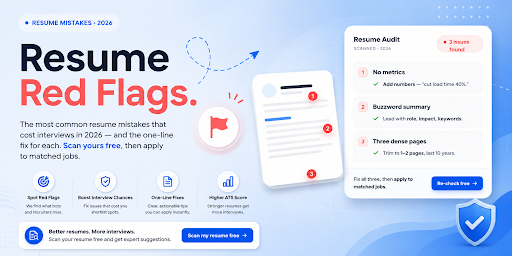
If your applications keep disappearing, the cause is rarely your experience. More often, it is a handful of small resume mistakes that quietly cost you interviews. In 2026, many recruiters make a yes-or-no call within about a minute, and most resumes never get a proper read.
So the margin for error is thin. The good news is that these mistakes are easy to spot once you know them, and even easier to fix. This guide walks through the most common resume mistakes of 2026, explains why each one hurts, and shows you exactly how to fix it.
| Not sure if your resume has these problems? Create a free profile on CloudColleague, get a free resume review on CloudColleague and find out in seconds. |
Why Small Resume Mistakes Cost You Interviews?
Your resume is a marketing document, not a record. Its only job is to prove, fast, that you fit the role. When it contains errors or vague claims, that proof gets harder to see.
Recruiters also move quickly. Most studies suggest they skim for only six to eight seconds before deciding whether to keep reading. As a result, the most common resume mistakes usually fall into a few buckets: writing quality, relevance, structure, and presentation. Fix those buckets, and your callback rate climbs.
Read Next: How to Create an ATS-Friendly Resume?
Mistake 1: Sending a Generic, Untailored Resume
This is the biggest resume mistake of all. With hundreds of applicants per role, a one-size-fits-all resume reads as irrelevant and ranks low in screening.
Why it hurts: A generic resume signals that you did not study the job. Recruiters notice instantly, and the software punishes missing keywords.
How to fix it: Treat the job ad like a brief. Mirror its language, then customize the top third of your resume, your headline, summary, and skills, for every single role. Even small edits make a big difference
Mistake 2: Listing Duties Instead of Achievements
Duties tell. Achievements sell. This single shift separates resumes that get interviews from resumes that get ignored.
Why it hurts: a line like “responsible for managing social media” describes a task, not a result. Most hiring managers prefer measurable achievements, and quantified results noticeably lift callback rates.
How to fix it: use a simple formula, action verb plus task plus quantified result. For example, replace “managed social media” with “grew Instagram engagement 180 percent in a year, driving 220,000 dollars in revenue.” Numbers prove impact at a glance
Mistake 3: A Weak or Vague Summary
Your summary is the first thing a recruiter reads, so a weak one loses them immediately. Yet many candidates are still open with filler.
Why it hurts: A line like “hardworking individual seeking a challenging position” tells an employer nothing useful. It wastes your most valuable space.
How to fix it: Write three to five tailored lines. State who you are, what you do, your key wins, and the value you bring to this specific role. Then adjust it for each application.
Mistake 4: Typos and Grammar Errors
Few resume mistakes do more damage for less reason. A single slip can sink an otherwise strong application.
Why it hurts: A large majority of recruiters reject resumes with spelling or grammar errors, because they read them as careless. Worryingly, a high share of resumes still contain at least one typo.
How to fix it: Proofread in several passes. Read your resume aloud, then read it backwards to catch what your eye skips. Run it through a tool like Grammarly, and finally ask a friend to review it. Aim for zero errors.
Mistake 5: Making It Too Long or Irrelevant
More pages do not mean more impact. Padding simply buries your strongest evidence.
Why it hurts: Recruiters expect a focused document. Old roles, unrelated hobbies, and filler distract from what matters and make you look unfocused.
How to fix it: Keep it to one page if you have under ten years of experience, and two pages at most. Cut anything that does not support the target job. For the full length and structure rules, see our guide to the best resume format.
Mistake 6: Outdated Resume Habits
Some lines instantly date a resume, and they are easy to remove. Cleaning them up signals that you understand modern hiring.
Why it hurts: Phrases like “references available upon request” waste space, since employers assume it. An old objective statement does the same. Controversial interests can also create unnecessary bias risk.
How to fix it: Drop the references line, replace any objective with a value-led summary, and leave off topics like politics or religion. Add a clean link to your LinkedIn profile instead.
Mistake 7: A Resume That Conflicts With Your LinkedIn
In 2026, your resume does not stand alone. Recruiters routinely cross-check it against your online profile.
Why it hurts: If your LinkedIn shows different dates or titles, that mismatch creates doubt. Inconsistency reads as carelessness, or worse.
How to fix it: Align your resume and LinkedIn so dates, titles, and key achievements match. Then keep both current, even when you are not actively searching.
Formatting Mistakes (Quick Note)
Layout errors also cause rejections. Tables, columns, graphics, and contact details hidden in headers all confuse screening software. However, those are technical issues, so we cover them fully in how to create an ATS-friendly resume.
Read Next: Best Resume Format in 2026 (Examples Included)
How to Catch Resume Mistakes Before You Apply?
Here is the hard truth: You cannot reliably spot your own errors. After hours of editing, your eye glides past the very mistakes a recruiter will catch in seconds. So get a second opinion before you send.
CloudColleague makes that simple. You upload your resume for a free review that flags weak bullets, missing keywords, and formatting issues. Then you see live Australian roles that already match your skills, so you can apply with confidence rather than guesswork. For a full walkthrough, read how to use CloudColleague to find jobs.
| Stop losing interviews to avoidable errors. Start as a Seeker on CloudColleague, and start applying for jobs and freelance tasks. |
Journey After Resume
Most resume mistakes are small, common, and completely fixable. Tailor every application, prove your impact with numbers, tighten your summary, and proofread until it is clean. Then align your resume with your LinkedIn and keep it current. So before your next application, audit your resume against this list and fix the red flags.
Explore features on CloudColleague, join us and start your new dream job.
Frequently Asked Questions
Sending the same generic resume to every role, packed with duties instead of results. It reads as irrelevant to recruiters and scores poorly in screening software. Tailor each resume and lead with quantified achievements.
Start by tailoring it to each job and replacing duties with measurable results. Then proofread carefully and align it with your LinkedIn. Finally, run it through a free review to catch what you missed.
One page if you have under ten years of experience, and two pages at most. Cut old roles and anything that does not support the job you want.
Yes. A large majority of recruiters reject resumes with spelling or grammar errors, because they signal carelessness. Proofread in several passes and have someone else check it.
You can get a free resume review on CloudColleague. It flags common mistakes, suggests fixes, and shows you live roles that match your skills.