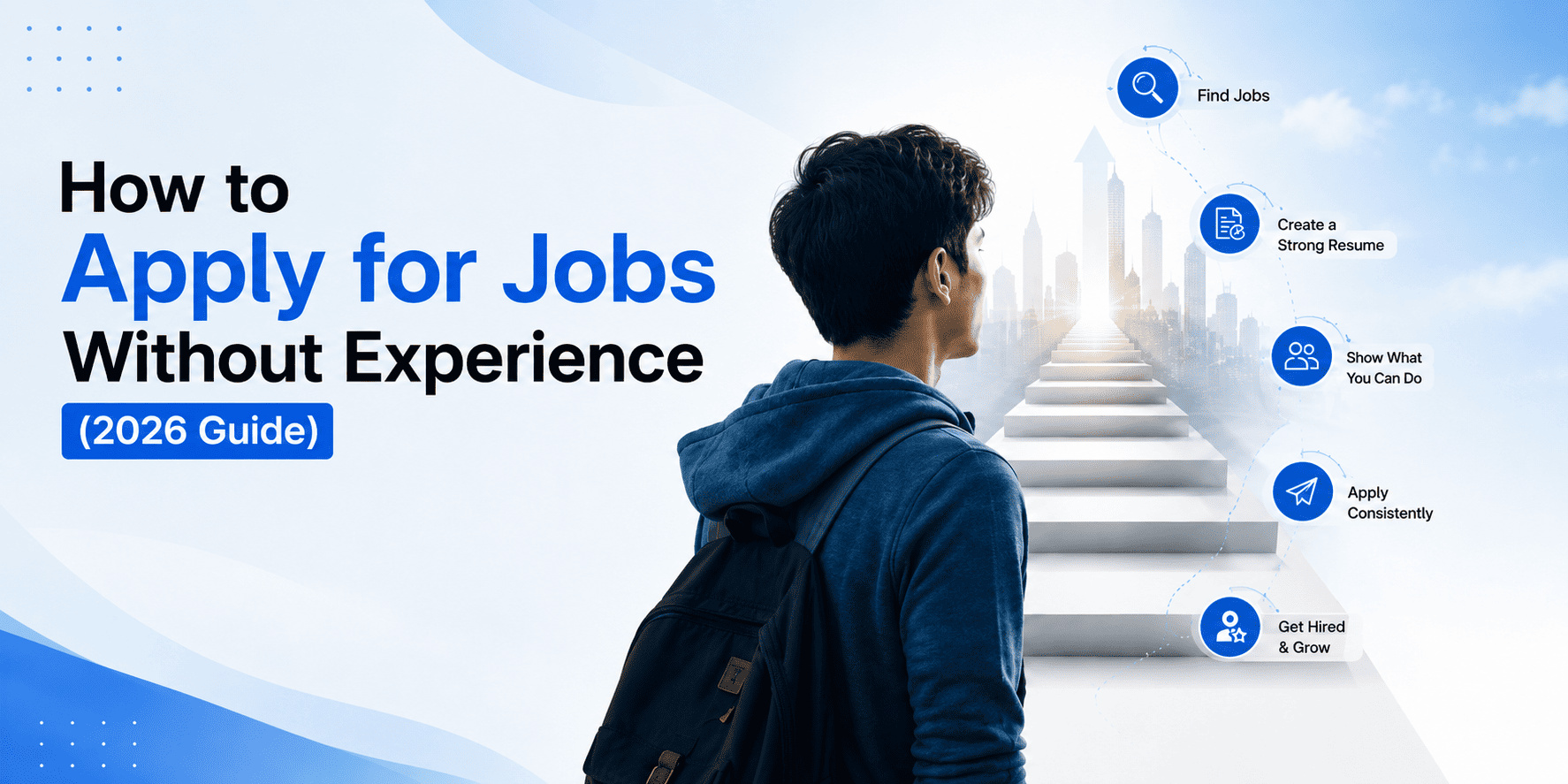
Applying for jobs without experience is not the impossible task it feels like. In May 2026, the Australian Bureau of Statistics recorded youth unemployment at 10.4%, more than double the national rate of 4.4%. The gap is real, but so is the demand: Jobs and Skills Australia reports that 139 occupations have been in persistent shortage every year from 2021 to 2025, and many of those roles have genuine entry pathways.
This guide walks through the exact strategy that gets no-experience candidates hired in Australia in 2026. It works for school leavers, career changers, migrants entering the Australian workforce for the first time, and workers returning after a break.
| Quick answer: To apply for jobs without experience in 2026, reframe your education, projects, volunteer work, and side hustles as transferable skills, build a skills-first resume, and target entry-friendly employers, apprenticeships, and task-based work on platforms such as CloudColleague. Complete two or three paid tasks first to build a verifiable track record, then apply to junior roles with proof of capability. |
| Want to gain experience from doing short tasks? Explore our Guides on Tasks to learn how task postings, how bidding works, payments, and successful applications work before you take on your first job. |
Why “no experience” does not mean “no chance” in 2026
Employers in 2026 hire on demonstrable capability, not on years listed at the top of a resume. Skills-based hiring has replaced pedigree-based hiring across most professional and skilled trade sectors in Australia, driven by shortage-list pressure and the availability of AI-verifiable work samples.
This means three things for a candidate without formal experience. First, work you have done outside paid employment now matters more than it used to. Second, a verifiable work sample often beats a claim on a resume. Finally, because employers need people who can contribute quickly, those hiring into shortage roles may choose a candidate who can prove capability today over someone with a stronger degree but a weaker portfolio.
What actually counts as “experience” in 2026?
Most no-experience candidates undercount their own resume by 60 to 80%. Before you write a single application, audit what you have across these six categories.
The six-category audit
- Education: degree, diploma, certificate, high school subjects, capstone projects, major assignments with measurable outputs.
- Volunteer work: community organisations, sports clubs, religious groups, event committees, tutoring, mentoring.
- Side projects: a blog you ran, a small online shop, a YouTube channel, a portfolio, code on GitHub, a personal website.
- Care and household responsibilities: running a household budget, coordinating care for family members, managing appointments and logistics for others.
- Sport and hobby leadership: captain of a team, treasurer of a club, coach of a junior side, organiser of a group.
- Learning: online courses (Coursera, LinkedIn Learning, TAFE short courses), certifications, self-taught skills with proof.
Every one of these produces bullet points a hiring manager will accept. Write them out first, then decide which resume section they belong under.
Types of jobs that hire without prior work experience in Australia
Not all jobs are equally accessible without experience. Focus your search on the categories below, where employers routinely hire people with no direct work history.
| Category | Examples | Typical pay range |
| Task-based work | Data entry, delivery, admin support, virtual assistant, content moderation | $28 to $45 per hour |
| Entry-level retail and hospitality | Sales assistant, cafe staff, kitchen hand, stockroom | $25 to $32 per hour |
| Traineeships and apprenticeships | Trades, hospitality, business admin, IT support | $16 to $28 per hour plus training |
| Junior office roles | Administration, customer service, junior marketing, junior sales | $55,000 to $70,000 per year |
| Shortage-list entry roles | Aged care worker, disability support, early childhood educator, healthcare assistant | $27 to $35 per hour |
| Government graduate programs | APS graduate program, state government intakes | $68,000 to $85,000 plus super |
As a result, roles on the shortage list can be the highest-leverage option for candidates without experience, because employers often struggle to fill them with experienced hires.
Step 1: Build a skills-first resume, not a chronological one
A traditional chronological resume that leads with an empty Experience section is a losing structure when you have no experience. Use a skills-first format instead.
The skills-first resume order
- 1. Contact block (name, phone, email, LinkedIn URL, city or region).
- 2. Professional summary (three lines, target role + top three transferable skills + goal).
- 3. Skills section (six to eight tags: technical, communication, tools, languages).
- 4. Projects or capstone work (two to four items with measurable outputs).
- 5. Education (degree, diploma, major subjects, GPA if strong).
- 6. Volunteer and community work (framed with the same bullet structure as paid work).
- 7. Certifications and short courses.
Worked example: a volunteer bullet reframed
Weak: Volunteered at local charity op shop.
Strong: Coordinated 12 volunteers across two weekend shifts at St Vincent de Paul op shop for eight months, reorganised stock layout to lift average weekly takings by 22%, and trained three new volunteers in point-of-sale processes.
The strong version answers what you owned, what changed because of you, and over what period. Every bullet on a no-experience resume can and should hit those three.
Step 2: Build a track record with tasks before you apply for jobs
The single most effective move a candidate with no experience can make in 2026 is to complete two or three paid tasks in their target area first. This gives you three assets a resume claim cannot: a verifiable client, a measurable outcome, and a rating or reference.
On CloudColleague tasks, short tasks in admin support, data entry, content, delivery, and skilled trades are posted every day across Australia. A tasker who completes three tasks in their target area walks into a job interview with a real portfolio, not an aspirational one. The 7% flat completion fee is the only cost, and it applies only after a task is completed and paid.
Task-to-job progression example
A candidate targeting a junior digital marketing role takes three CloudColleague tasks over four weeks: a simple website audit for a local cafe, two social media post batches, and a Google Business Profile optimisation for a tradie. Total earnings: $340. Total portfolio items: three named clients with before-and-after outcomes. Resume upgrade: significant.
Step 3: Target entry-friendly employers, not aspirational logos
Large corporate employers with brand-name recruitment pipelines rarely hire candidates without experience outside of formal graduate programs. Small and medium enterprises hire on capability and fit, and are far more accessible.
Where to focus your search
- Small and medium businesses in your local area. Between 6 and 199 employees is the sweet spot for entry-level hiring.
- Employers with active traineeship or apprenticeship programs (search “traineeship” and “apprenticeship” filters on job boards).
- Government graduate programs and state government intakes for degree holders.
- Shortage-list employers actively recruiting from non-traditional pathways (aged care providers, early childhood centres, disability support providers, healthcare assistants).
- Employers who explicitly say “no experience required” or “training provided” in the ad.
Step 4: Write a cover letter that closes the experience gap
Your cover letter has one job when you lack experience: to make the hiring manager believe you can do the work. That belief comes from specifics, not enthusiasm.
The three-paragraph structure that works
- Paragraph 1: one sentence stating the role and where you saw it, one sentence on why this company specifically, one line naming your strongest fit signal (a project, a course, a task, a certificate).
- Paragraph 2: three specific pieces of evidence you can do the work. A completed project, a course grade, a task outcome, a volunteer result. Numbers where possible.
- Paragraph 3: one sentence on what you will bring to the team, one sentence asking for a conversation, sign-off with contact.
Keep it to 200 words. A shorter, specific letter beats a longer, generic one every time.
Step 5: Prepare for interviews using STAR without work stories
The STAR method (Situation, Task, Action, Result) works fine without paid work experience. Substitute the work situation with a project, a volunteer role, a sport, or a household responsibility. Interviewers care about the pattern, not the setting.
Common questions and how to answer them without work experience
- “Tell me about a time you led a team.” Sports captain, group project leader, event committee, volunteer coordinator.
- “Tell me about a time you handled a difficult person.” Group project conflict, customer complaint at a volunteer event, family or housemate conflict resolved constructively.
- “Tell me about a project you are proud of.” Capstone assignment, side project, volunteer initiative, task you completed on CloudColleague or similar.
- “Where do you see yourself in five years?” A clear answer showing you have thought about the trajectory of this role and this industry.
| Build your track record with paid tasks CloudColleague tasks are the fastest way to earn real income, real references, and real portfolio items when you have no work history. Free to sign up, no listing fees, 7% flat fee only on completed tasks. Browse tasks on CloudColleague → |
Australian pathways for candidates without experience
Traineeships and apprenticeships
Australian Apprenticeships combine paid work with structured training. School-leavers, mature-age workers, and career changers are all eligible. Traineeships typically run 12 to 24 months, apprenticeships three to four years. The federal Key Apprentice Program launched in July 2025 offers up to AUD $10,000 in incentive payments to housing construction apprentices over the life of their apprenticeship, and additional incentives apply to regional placements.
Government graduate programs
The Australian Public Service (APS) graduate program and every state government run structured intake programs for degree holders with no formal work experience. Applications generally open in March to April for the following calendar year. Salary ranges from $68,000 to $85,000 plus super, with rotation across departments in the first 12 to 18 months.
Shortage-list entry roles
Aged care, disability support, early childhood, and healthcare assistant roles have some of the lowest experience barriers in Australia in 2026. Many providers offer paid training, Certificate III sponsorship, and structured career pathways into higher-skilled roles.
Read Next: How to Apply for Jobs Online? Step-by-Step Guide (2026)
Common mistakes candidates without experience make
1. Hiding the lack of experience
Recruiters spot it in five seconds. Better to lead with capability signals (projects, certifications, tasks completed) than to obscure the absence.
2. Applying only to “no experience required” listings
Ninety percent of ads that could accept you do not use that phrase. Apply for roles that ask for one to two years of experience if you have equivalent project, volunteer, or task-based evidence.
3. Ignoring smaller employers
SMEs hire on fit and capability. Corporate graduate programs are competitive lotteries with 200 applicants per seat. The math favours SMEs for a first role.
4. Waiting for the perfect first job
Your first role does not have to be your dream role. Six months of paid work history opens doors that were closed on day one.
5. Not asking for feedback
After rejection, a short polite email asking for one piece of feedback often gets a useful reply. That feedback is worth more than another 20 applications.
| Ready to start real verified tasks? Create a free profile on CloudColleague, start as a seeker and start building your earnings from day one. |
Frequently asked questions
Yes. Entry-level roles in retail, hospitality, aged care, disability support, early childhood, and government graduate programs routinely hire candidates without prior work history. Traineeships and apprenticeships combine paid work with structured training, and task-based platforms let you build verifiable experience in weeks.
Complete two or three paid tasks in your target area on a platform like CloudColleague. Tasks give you real clients, measurable outcomes, and references in weeks rather than months. This is significantly faster than volunteer work or unpaid internships.
Yes. Use a skills-first resume that leads with your summary, skills, and projects rather than a Work Experience section. Include education, volunteer work, projects, and certifications with quantified outcomes in the same bullet structure a paid job would use.
For entry-level roles in in-demand sectors (aged care, disability support, retail, hospitality) two to eight weeks is typical. For junior professional roles requiring a degree, four to twelve weeks with an active search and a strong network. Traineeships and apprenticeships intake at specific times of year.
Focus on government graduate programs, industry graduate intakes, and small to medium employers. Reframe your capstone project, major assignments, and any research work as project experience with measurable outputs. Complete two or three tasks in your target industry to demonstrate applied skill.