Here is a number worth remembering. Candidates who prepare thoroughly are roughly three times more likely to receive a job offer. Yet most people still wing it. They skim the company’s About page, rehearse a few lines, and hope for the best. Hope, however, is not a strategy.
Strong interview preparation is a skill, and like any skill, you can learn it. The stakes have also risen in 2026. Between AI screening, virtual rounds, and skills-based hiring, preparation now goes well beyond rehearsing answers. This complete guide walks you through everything to do before, during, and after your interview, so you walk in confident and walk out memorable.
| Want a head start? Start as a seeker on CloudColleague, browse various interview guides and start applying for jobs today. |
Why Interview Preparation Matters More in 2026?
The hiring process has changed, so your preparation must change with it. Interviews move faster and use more technology than ever. As a result, the candidates who prepare deliberately stand out from those who improvise.
There is also a mindset shift worth understanding. The strongest candidates do not memorize perfect scripts. Instead, they build a flexible bank of stories they can adapt to any question. So preparation in 2026 is about flexibility, not memorization. That single change makes you calmer and more convincing under pressure.
Read Next: How to Create a Cover Letter Online for Free (Templates Included)
How to Research the Company and Role?
Research is the foundation of good interview preparation, so start here. In 2026, skimming the About page is not enough. Employers expect you to reference real, specific details about their work.
Go deeper than the homepage. Read recent news, company milestones, and any earnings or growth updates. Check their LinkedIn page and employee reviews to understand the culture. Then study the job description closely, line by line.
Once you have that picture, connect it to yourself. Map your skills and achievements to the company’s goals and challenges. This shows you understand their needs, not just your own. While you are at it, make sure your resume is tailored too, using our guides to resume writing and an ATS-friendly resume.
Know Your Own Story (Build a Story Bank)
Most candidates over-prepare facts about the company and under-prepare facts about themselves. That is a mistake. Interviewers are ultimately trying to understand you.
So build a story bank before the interview. Prepare six to eight specific examples from your career, covering achievements, challenges, conflicts, and lessons learned. Keep each one flexible, so you can adapt it to different questions. With a strong story bank, you never freeze, because you simply pick the closest example and shape it to the question.
How to Answer Interview Questions With the STAR Method?
The STAR method is the clearest way to structure an answer, so learn it well. STAR stands for Situation, Task, Action, and Result. It keeps your responses focused and easy to follow.
Here is how it works in practice. First, set the Situation briefly. Next, explain the Task you faced. Then describe the Action you took, and finish with the measurable Result. For example, “Our team missed deadlines, so I built a new tracking system, which cut late deliveries by 40 percent.”
This structure matters even more in 2026. Many AI evaluators score for clear, organised responses, so a well-structured answer helps with both human and automated reviewers. So practise shaping your stories into the STAR format until it feels natural.
Read Next: STAR Method Answer Template for Behavioral Interviews in 2026.
Common Interview Questions and How to Prepare?
You cannot predict every question, but you can prepare for the common ones. Most interviews draw from a few familiar categories. So rehearse a flexible answer for each.
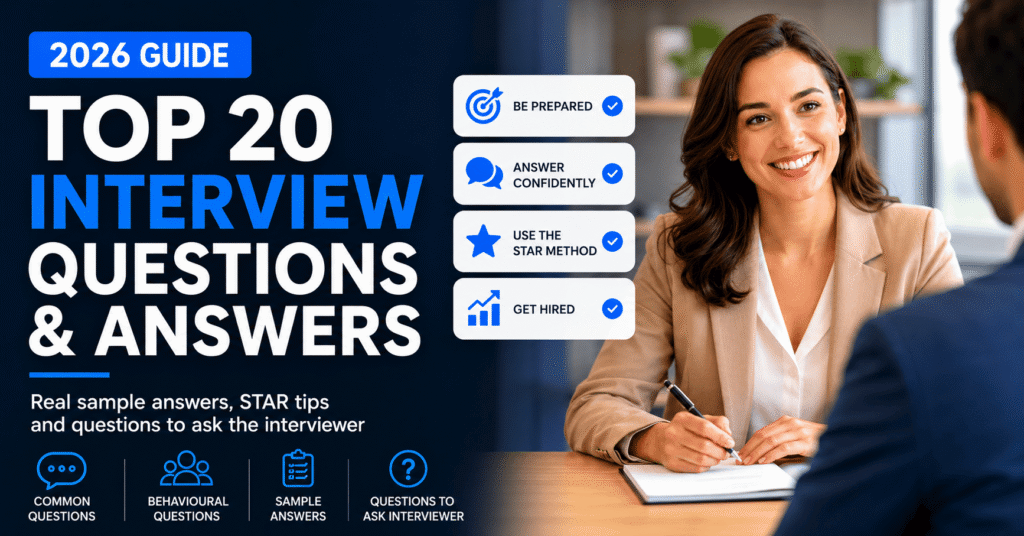
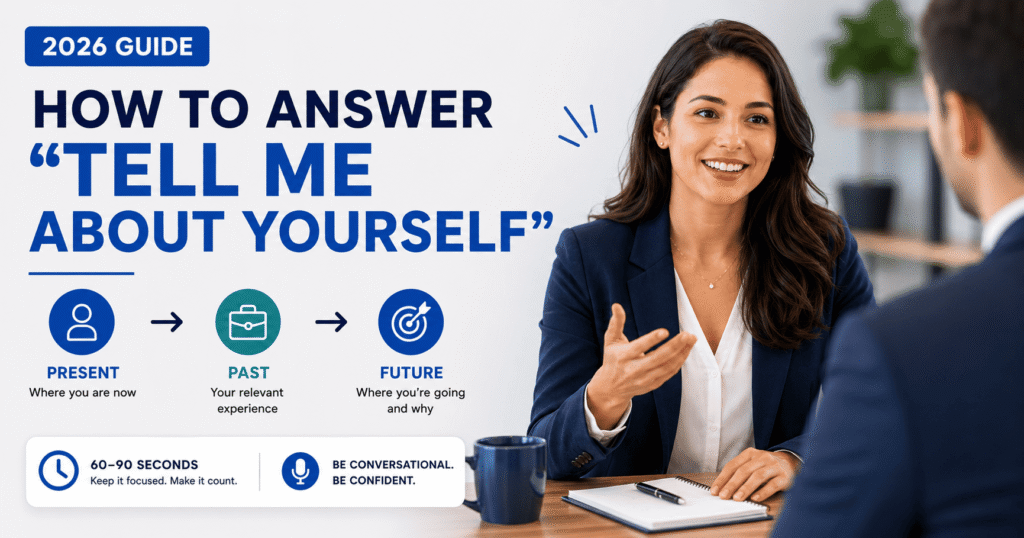
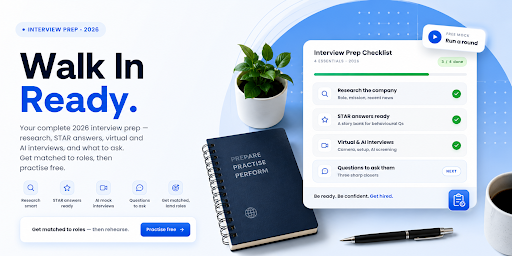
Start with the classics. For “tell me about yourself,” prepare a focused 90-second summary, not your life story. For strengths and weaknesses, be honest and show growth. Then prepare for behavioural questions, which ask about past situations, using your STAR stories. Finally, get ready for pressure questions about gaps, conflict, or failure, and answer them calmly and briefly. For 30 ready-to-practise questions, grab the checklist above.
Read Next: How to Prepare for a Job Interview in Australia?.
How to Prepare for a Virtual Interview?
Many interviews in 2026 happen on video, which changes how you present yourself. So treat your setup as part of your preparation. Small details now carry real weight.
Test your technology well ahead of time. Check your camera, lighting, and audio, and fix any issues before the day. Choose a quiet, tidy space where you will not be interrupted. During the call, look into the lens to simulate eye contact, and mind your posture and expressions. Above all, remember that a virtual interview demands the same professionalism as an in-person one.
How to Prepare for an AI or Asynchronous Video Interview?
A growing number of companies now use one-way video interviews as a first round. In these, you record answers to set questions, often with limited time and no live interviewer. Platforms like HireVue are common for this stage. So prepare for them specifically.
Start by practising on camera alone. Record yourself answering common questions, then watch the playback. Notice your filler words, your pacing, and whether you look at the lens. Set up your environment intentionally, just as you would for a live video call.
When you record, keep your answers clear and structured. Use the STAR method, and include relevant keywords from the role, since some systems analyse your terminology. However, do not try to game the system. Focus on giving genuinely strong answers rather than guessing what an algorithm wants.
Questions to Ask the Interviewer
Strong candidates do not just answer questions. They ask thoughtful ones too. This shows curiosity, preparation, and genuine interest in the role. So prepare three or four questions in advance.
Ask about the team, what success looks like in the role, and opportunities to grow. These questions shift the conversation from simply getting hired to contributing meaningfully. You can also research pay before you go, so you discuss it with confidence. Our salary insights for Australia can help you set realistic expectations.
What to Do Before, During, and After?
Great interview preparation covers the whole journey, not just the questions. So plan for all three stages. Each one shapes the impression you leave.
Before
Confirm the time, format, and location or video link in advance. Prepare your materials, lay out your outfit, and get a good night’s rest. Arriving calm and organised sets the tone.
During
Listen carefully, and do not rush your answers. Keep your responses concise and structured, and show genuine energy. In panel interviews, take a breath and address each part of a multi-part question in turn.
After
Send a short thank-you note within a day. Reflect on what went well and what you would improve. Finally, never burn a bridge, because even a “no” today can become a “yes” later.
Interview Preparation for No Experience
Limited experience is not a barrier, so prepare differently rather than less. Lean on study, projects, internships, and volunteering for your examples. Focus on transferable skills and a genuine eagerness to learn. If you are new to the country or local market, our guide for those starting their first job in Australia can help you prepare.
Practise, Get Matched, and Land the Interview
Here is the part that ties it all together. Interview preparation works best when you have real interviews to prepare for. Otherwise, you are practising in a vacuum. The goal is to turn preparation into offers.
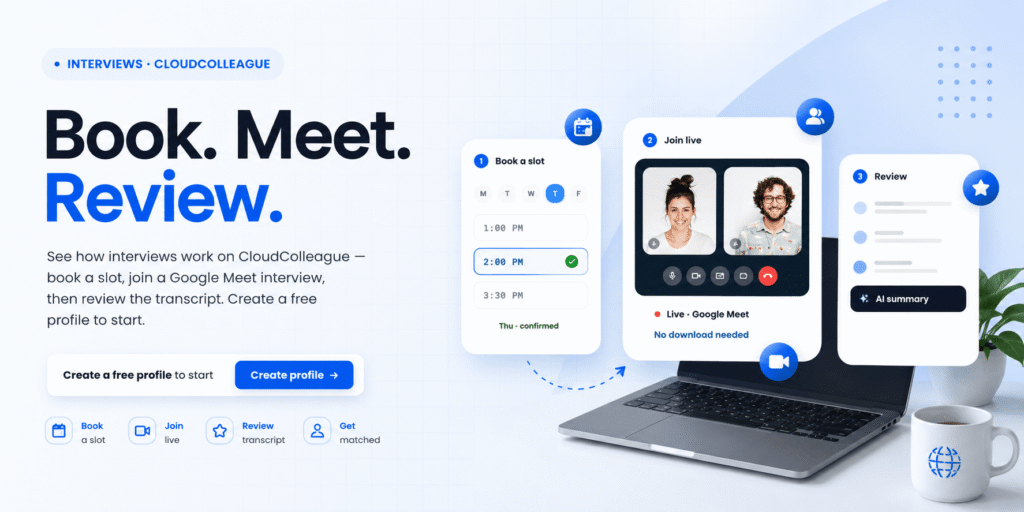
CloudColleague helps you do exactly that. You build your profile, get AI-matched to Australian roles, and connect with employers through built-in video and chat interviews. There is no endless email back-and-forth, so the process stays fast and direct. Explore how the platform works, or browse freelance tasks and browse live jobs today.
Strong interview preparation is the difference between hoping and knowing. Research the company, build a flexible story bank, and practice STAR answers. Then prepare for virtual and AI formats, ready thoughtful questions, and follow up with care.
| Are you actively hiring? Start as a employer on CloudColleague, and start hiring desired employees from today. |
| Ready to put your preparation to work? Create your free CloudColleague profile and start getting matched. |
Frequently Asked Questions
Research the company and role deeply, build a flexible story bank, and practise STAR-structured answers. Prepare thoughtful questions to ask, and test your setup for virtual or AI interviews. Then refine your delivery with mock practice.
STAR stands for Situation, Task, Action, and Result. It is a simple structure for answering behavioral questions clearly, by setting the scene, explaining your role, describing what you did, and sharing the measurable outcome.
Test your camera, lighting, and audio in advance, and choose a quiet space. Look into the lens, structure answers with STAR, and speak clearly. For recorded interviews, practice on camera and review the playback.
Ask about the team, what success looks like in the role, and growth opportunities. These show curiosity and genuine interest. You can also research pay beforehand to discuss expectations with confidence.
You can create a free CloudColleague profile, get matched to live Australian roles, and interview with employers through the platform’s built-in video and chat tools.