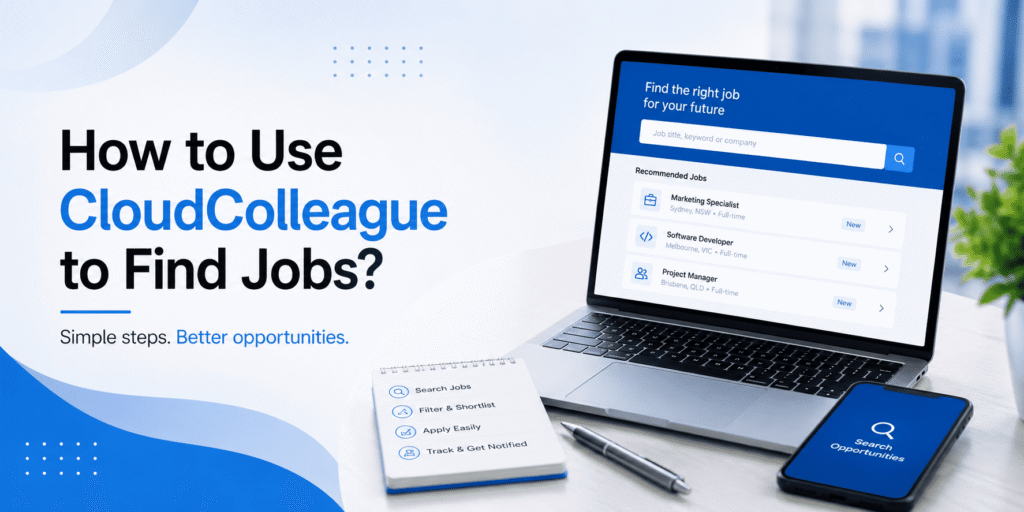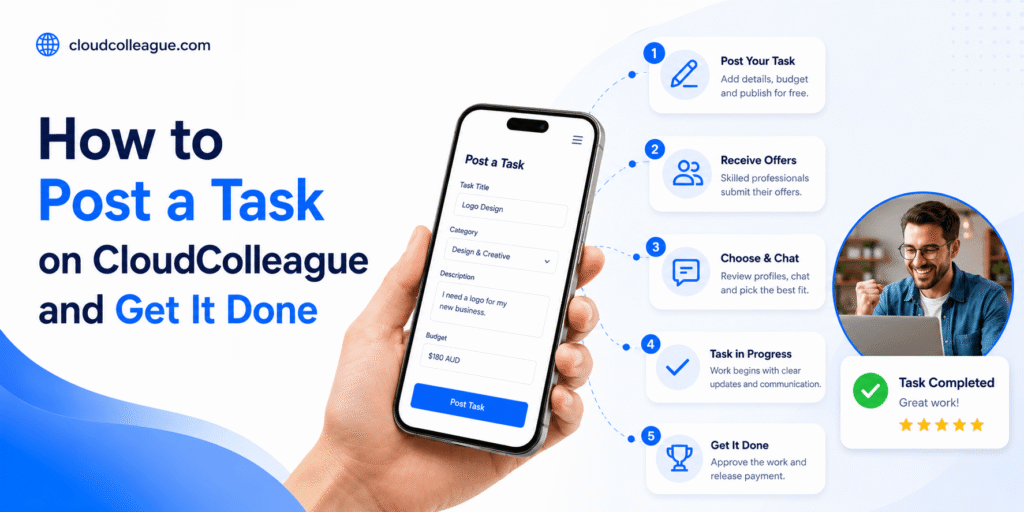
To apply for tasks on CloudColleague, find a task that suits you, write a short personalised offer, set a fair price, and submit it quickly. A strong application names the task, proves you can do it, and stands out from generic bids. This guide shows you how to apply well and lift your acceptance rate, so you get hired faster.
Applying is free, and the quality of your offer decides whether you win. The difference between a tasker who wins one job in ten and one who wins one in three usually comes down to the offer, not the price. Follow the steps below to make every application count.
| QUICK ANSWER: To apply for tasks on CloudColleague, find a task that suits you, write a short personalised offer that names the task and proves you can do it, set a fair price, and submit quickly. Applying is free. A tailored, fast offer wins far more often than a generic or delayed one, and you only pay a flat 7 percent fee on completion. |
How to Apply for Tasks on CloudColleague? (Step by Step)
Four steps take you from a promising task to a submitted offer. Speed and personalisation matter at every stage, so treat each one deliberately.
- Step 1: Find a suitable task that matches your skills and schedule.
- Step 2: Write a standout offer with a personalised first line.
- Step 3: Set a fair price that reflects your value.
- Step 4: Submit quickly and follow up politely if needed.
Find a suitable task
Filter by category, location, and pay, then read the brief carefully. Apply only to tasks you can deliver confidently and on time. Targeting the right tasks lifts both your win rate and your reviews, since a good fit reads as lower risk to the client.
Write a standout offer
Open with the client’s specific need, not a generic greeting. Confirm you understand the task, state how you will do it, and keep it short. A tailored offer beats a polished but generic one almost every time, because it proves you actually read the brief.
Set a fair price
Quote to your value, supported by your skills and reviews. Avoid racing to the lowest price, which signals low quality and attracts difficult clients. A confident, fair quote attracts the clients worth working for and protects your effective rate.
Submit and follow up
Send your offer fast, because posters often hire the first credible applicant. If you do not hear back, a single polite follow-up is fine. Persistence beyond that can hurt more than it helps, so move on to the next task instead.
Read Next: How to Find Tasks on CloudColleague?
What Makes a Winning Task Application?
Winning offers share two traits: they feel personal, and they prove capability. The side-by-side example shows the difference at a glance.
| Winning offer | Weak offer |
| Names the exact task and need | Generic ‘I can help with this’ |
| Shows relevant proof or experience | No evidence of capability |
| States a clear, fair price | Vague or lowball price |
| Confirms availability and timing | No timing detail |
| Friendly, professional tone | Rushed or careless wording |
Personalised first line
Your first line should mention the task by name and the client’s specific need. This proves you read the brief and instantly separates you from copy-paste bids. A strong opening earns the rest of your offer a read, which is half the battle.
Proof you can do it
Back your offer with a quick example, a relevant skill, or a portfolio link. Proof lowers the client’s risk in choosing you, and the tasker who feels safest to hire usually wins. Even a single line of relevant experience does the job.
How to Write an Offer That Gets Accepted?
A great offer has a simple anatomy. It opens with the client’s need, confirms you can deliver, states a clear price and time, and closes with an easy next step. Keep it to a few sentences, because clients skim offers quickly and reward clarity.
Avoid walls of text and generic praise. Instead, be specific about what you will do and when. The template below works across most task types, and you can adapt it in seconds before sending.
| Copy-ready template: Hi [name], I can help with your [task] in [suburb]. I have done [similar task] before and can complete it by [day]. My price is [AUD amount], all in. Happy to confirm any details before I start. |
How to Improve Your Acceptance Rate?
Raising your acceptance rate is about speed, relevance, and trust. Apply quickly, personalise every offer, and keep your profile complete and well-rated. Target tasks you can clearly deliver, since a strong fit reads as lower risk to the client.
Small, consistent improvements here compound into far more work won. A tasker who lifts their acceptance rate from one in ten to one in four effectively triples their income for the same number of applications, without touching their price.
Common Application Mistakes That Lose Tasks
A few avoidable errors quietly sink applications. Fix these and your win rate climbs.
- Sending the same generic message to every task.
- Applying slowly, after stronger applicants have bid.
- Quoting a vague range instead of a clear price.
- Ignoring the brief and missing what the client actually asked for.
- Underpricing so heavily that you signal low quality.
| Ready to make task-based work easier? Explore our Guides on Tasks to learn how task postings, how bidding works, payments, and successful applications work before you take on your first job. |
After You Apply: Getting Hired and Paid
Once a client accepts your offer, the task is assigned and their payment is secured up front. Complete the work to a high standard, submit it, and the client releases payment. Funds reach your account within one to three business days, and a five-star review sets up your next win.
A Winning Application Example
Consider two taskers applying for the same end-of-lease clean in Adelaide. The first writes, “Hi, I can do this, please pick me.” The second writes, “Hi Sarah, I can handle your end-of-lease clean in Norwood this Friday. I have done several bond cleans with full checklists, and I will make sure it passes inspection. My price is $260, all in.”
The second tasker names the suburb, the day, the specific job, and offers proof and a clear price. Even at the same rate, that offer wins almost every time, because it removes the client’s doubt. That is the entire skill of applying well, distilled into a few sentences.
New to the platform? Start with how to start doing tasks, or browse live tasks.
How to Win Higher-Paying Tasks?
Once you have a few strong reviews, you can target the better-paid tasks that beginners cannot reach. The approach is the same, but your proof matters more. Lead with directly relevant experience, address the client’s biggest concern up front, and show you understand what a quality result looks like for that specific job.
For skilled or higher-value tasks, a short portfolio link or a clear example of similar work does most of the selling. Clients paying more want reassurance, not the lowest price, so confidence and evidence win these jobs. As your rating climbs, raise your quotes in step, because your track record now justifies the higher figure.
| Ready to start real verified tasks? Create a free profile on CloudColleague, start as a seeker and start building your earnings from day one. |
Frequently Asked Questions
Find a task that matches your skills, then write a short personalised offer that names the task and proves you can do it. Set a fair price and submit quickly. Applying is free, and a tailored, fast offer wins far more often than a generic or delayed one.
Apply quickly, personalise every offer, and target tasks you can clearly deliver. Keep your profile complete and well-rated, since a strong reputation lowers perceived risk. Consistent speed, relevance, and proof of capability steadily lift your acceptance rate and win you more tasks over time.
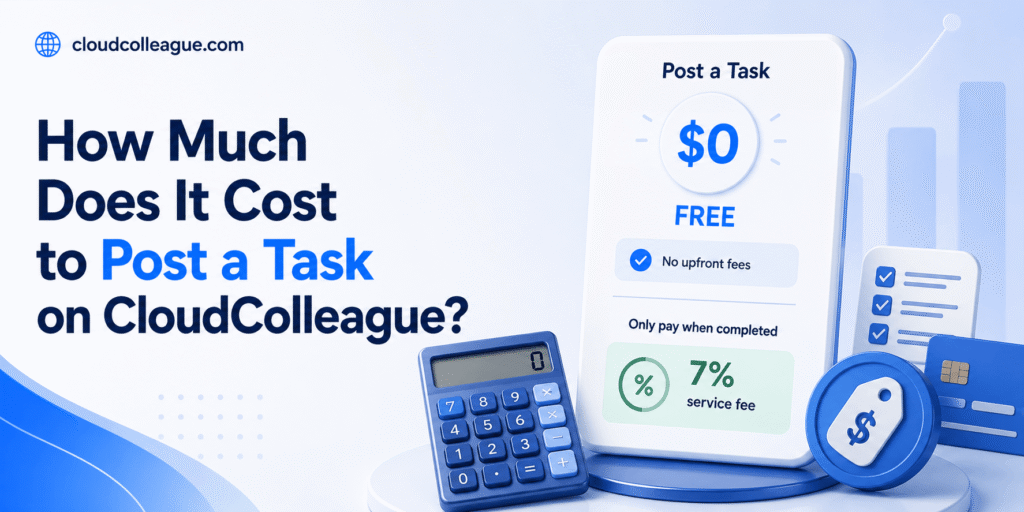
Yes, applying for tasks on CloudColleague is completely free. You only pay a flat 7 percent fee on completion once you have earned from a task. There is no cost to browse, filter, or submit offers, so you can apply for as many suitable tasks as you like.
Common reasons include generic messages, slow replies, vague pricing, or ignoring the brief. An incomplete or low-rated profile also lowers trust. Fix these by personalising each offer, applying fast, quoting clearly, and completing your profile. Small improvements often turn rejected applications into accepted ones.
Apply for several suitable tasks each day, especially when you are starting out and building reviews. Quality matters more than volume, so personalise each offer rather than spraying generic ones. A steady stream of well-targeted, fast applications wins more work than a flood of careless ones.