So, what is a remote job, exactly? You have probably noticed the word “remote” stamped on every second listing lately. The catch is that it does not always mean the same thing. One “remote” role lets you work from Bali. Another expects you in a Sydney office twice a week. Picking the wrong one can cost you months of frustration.
This blog clears it up in plain English. We will cover the remote job meaning, the types you will see on listings, real examples, and what these roles actually pay in Australia. By the end, you will know exactly which remote path fits you and where to find it.
What is a Remote Job?
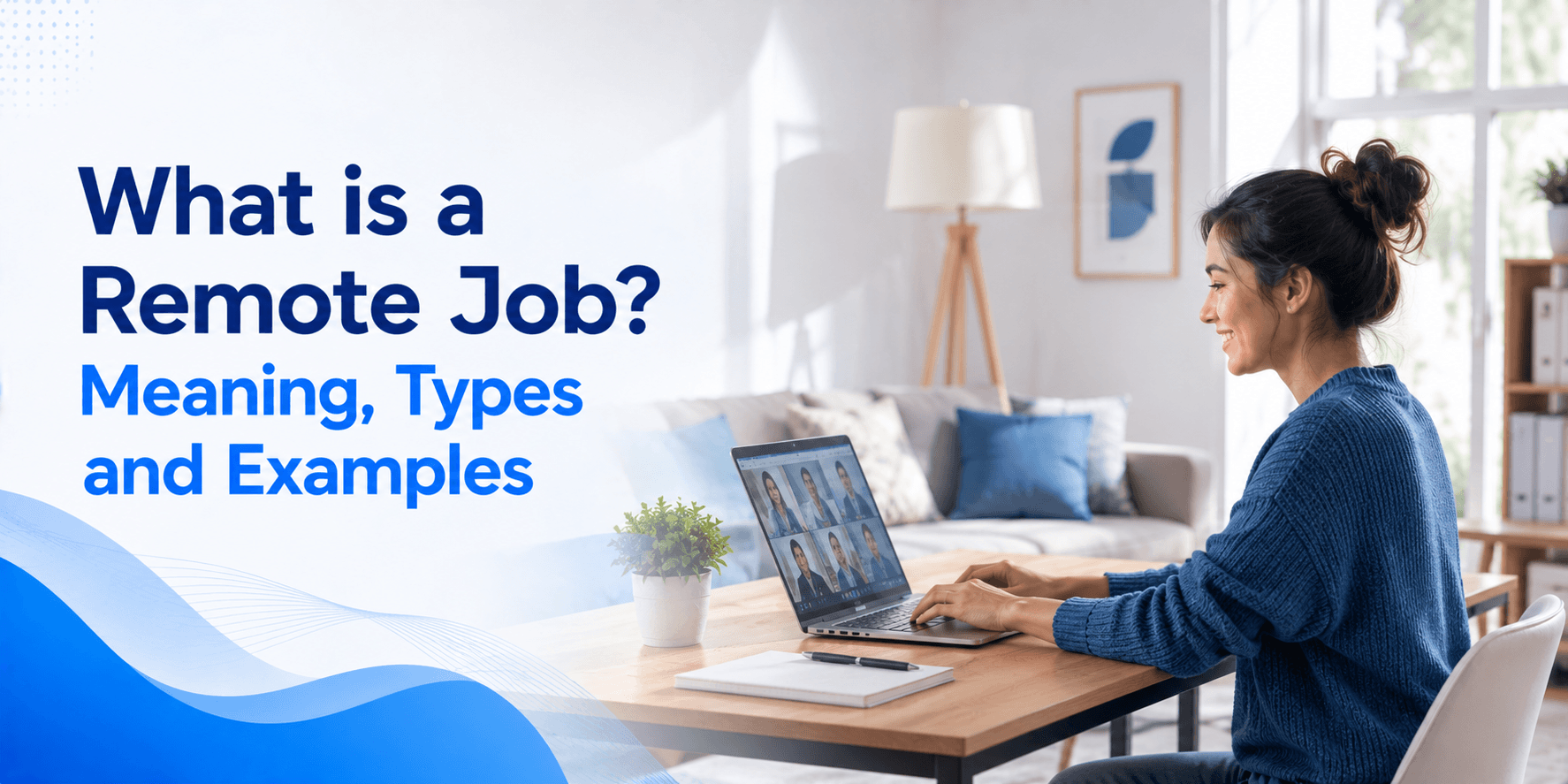
A remote job is a paid role you perform away from your employer’s physical workplace, usually from home or anywhere with reliable internet. Instead of commuting, you complete tasks and communicate through digital tools. Remote jobs can be full-time, part-time, or contract-based, across almost every industry.
That is the short answer. In practice, remote positions run on tools like Zoom, Slack and Google Workspace. Your manager measures output, not hours at a desk. As a result, employers can hire the best person for the role, not just the closest one.
Remote work is no longer a pandemic leftover, either. Australian Bureau of Statistics data shows more than a third of employed Australians regularly work from home. Consequently, remote listings now sit alongside on-site roles as a permanent feature of the job market. If you are an international student and you want the bigger picture of how this way of working functions day to day, our complete guide to remote work covers routines, home office setup and long-term sustainability.
| Want a head start? Create a free profile on CloudColleague. Learn from our guide on freelance and remote work, and start early. |
Types of Remote Jobs You’ll See on Listings
Here is where most job seekers get caught out. “Remote” is an umbrella term, and listings use it loosely. Before you apply, check which of these five types the employer actually means.
| Type | What it means for you |
| Fully remote | You never need to attend an office. Work from anywhere the employer allows. |
| Hybrid | You split your week between home and the office on set days. |
| Remote-first | The company operates remotely by default. An office may exist, but attendance is optional. |
| Remote-friendly | The role is office-based, but occasional remote days are allowed. |
| Temporary or contract remote | The role is remote for a fixed project or season, then ends or changes. |
Fully Remote vs Hybrid Job: Which Suits You?
Fully remote suits self-starters who want location freedom and can manage their own day. However, it demands discipline and strong written communication. Hybrid suits people who want flexibility without losing face-to-face connection. It also keeps you visible to managers, which can matter for promotions.
Neither is better. The right choice depends on your personality, your home setup and your career stage. The mistake is applying without checking which type the listing really offers.
| Ready to see real remote roles instead of guessing? CloudColleague lists verified remote jobs and tasks across Australia, with free profiles and AI-matched recommendations. Explore jobs now or start as a seeker in minutes. |
Remote Job Examples in 2026
Definitions only get you so far. What is a remote job in practice? Here are real roles being hired remotely across Australia right now, grouped by experience level. Figures are typical advertised ranges from SEEK and Jobs and Skills Australia data, not guarantees.
Entry level:
- Customer support representative, around $55,000 to $65,000
- Data entry officer, around $50,000 to $60,000
- Virtual assistant, around $30 to $45 per hour on contract
Mid level:
- Content writer, around $65,000 to $85,000
- Digital marketing specialist, around $75,000 to $95,000
- Remote bookkeeper, around $65,000 to $80,000
Skilled and specialist:
- Software developer, around $95,000 to $130,000
- UX or web designer, around $85,000 to $110,000
- Project manager, around $100,000 to $130,000
Notice the pattern. Every role above runs on a computer and an internet connection. Therefore, if your skills produce digital output, a remote version of your job almost certainly exists.
Entry Level Remote Jobs with No Experience
No experience yet? You still have realistic starting points. Customer support, data entry and online tasks such as data labelling or content review all hire beginners regularly. These roles value reliability and communication over credentials. For a full strategy, read our guide on how to find and apply jobs without experience.
Remote Job vs Freelancing: What’s the Difference?
People mix these up constantly, and the difference matters for your money. A remote employee works for one employer, receives PAYG wages, superannuation and paid leave, and follows set responsibilities. A remote freelancer works independently, usually under an ABN, serves multiple clients, sets their own hours and invoices for each project.
In other words, a remote job gives you stability and benefits. Freelancing gives you control and variety, but no leave and no employer super. Plenty of Australians blend both, holding a part-time remote role while freelancing on the side. We compare the two paths in depth in Freelancing vs Jobs.
Here is the good news: you do not have to choose blind. CloudColleague is built for both sides of this fork. You can apply for remote jobs as an employee or pick up paid tasks as an independent worker, all from one free verified profile.
| Not sure which path is yours? Test both. Browse Tasks for flexibility and browse job for stability, and let real experience decide. |
How Do Remote Jobs Pay in Australia?
Remote employees are covered by the same Fair Work protections as on-site staff. That means award rates, minimum wage and superannuation still apply, wherever you log in from. Pay for remote positions generally matches equivalent office roles, though ranges vary by industry and experience. For detailed benchmarks by role, see our Australian salary guide.
Contract and task-based remote work pays per project or per task instead. Rates vary widely, so always confirm the scope and payment terms in writing before you start.
How to Spot a Legitimate Remote Job
Sadly, scammers love the word “remote”. Watch for these four red flags:
- Any request for upfront fees, equipment payments or “training costs”
- Pay-to-start schemes or vague roles promising unrealistic income
- Job offers made instantly, with no interview or verification
- Requests to move payment or chat off the official platform
Scamwatch, run by the ACCC, tracks these schemes and they cost Australians millions every year. Stick to platforms that verify both sides. Our full guide on avoiding online job scams shows exactly how to vet any listing.
Start Your First Remote Job with CloudColleague
Now you know what a remote job is, the types on offer and what they pay. The next step is landing one, and this is where CloudColleague makes the process genuinely simple for Australians.
Create a free verified profile once, and the platform’s AI matches you with remote jobs and tasks that fit your skills. You can interview through built-in video and chat, so there is no awkward email tennis. When you complete paid tasks, same-day Stripe payouts mean your money arrives fast. Businesses on the platform are verified too, which removes the scam guesswork entirely.
| Are you actively hiring? Start as an employer on CloudColleague and start hiring today. |
Frequently Asked Questions
A remote job means a paid role performed outside the employer’s physical workplace, typically from home. You complete your duties using digital tools like video calls, chat and cloud software. Remote jobs can be full-time, part-time or contract-based, and they exist across most industries in Australia.
Generally, no. Remote roles in Australia typically pay the same as equivalent office positions, because Fair Work protections, awards and minimum wage apply regardless of location. Pay depends far more on your industry, skills and experience than on where you work. Always compare listings against current salary benchmarks.
Yes. Entry level remote roles like customer support, data entry and online tasks hire beginners regularly. Employers in these roles value reliability, communication and basic computer skills over formal experience. Starting with small paid tasks on platforms like CloudColleague also builds reviews that strengthen future applications.
Most remote jobs are legitimate, but scams do target remote job seekers. Legitimate roles never ask for upfront fees, and they always involve a real interview or verification step. Using platforms with verified businesses, and checking Scamwatch alerts, keeps your remote job search safe.