The 2026 layoffs have already passed 150,000 jobs across the technology sector alone, and the year is barely half done. Oracle, Amazon, Meta, Citigroup and dozens of others have cut staff at a faster pace than 2025, and a single explanation keeps surfacing in nearly every announcement: artificial intelligence. This is a running list of the major companies that announced layoffs in 2026, the numbers behind each cut, and why the Australian job market is reading very differently from the headlines coming out of Silicon Valley.
How Big the 2026 Layoffs Really Are
Start with the scale, because the aggregate numbers tell a sharper story than any single headline.
The layoff tracker at TrueUp records nearly 153,000 people cut from technology companies so far in 2026, running at roughly 900 job losses per day. That pace already outruns 2025, when about 246,000 tech workers lost their jobs across the full twelve months.
The outplacement firm Challenger, Gray & Christmas reported that tech employers shed 38,242 roles in May alone, the steepest single month in almost two years. By their count, more than 123,000 technology jobs have disappeared this year.
One figure matters more than the rest for anyone trying to understand the trend. Across the layoff events that disclosed a reason, about 56 percent named artificial intelligence, automation, or machine learning as a contributing factor. The machines are not just a talking point anymore. They are the reason on the memo.
The Largest 2026 Layoffs: Oracle, Citigroup, Amazon and Dell
The biggest cuts of the year came from enterprise technology, banking, and hardware, not from struggling startups.
Oracle delivered the single largest layoff of 2026. Analysts put the figure between 20,000 and 30,000 employees, roughly 18 percent of the workforce, as the company redirected cash toward an aggressive AI infrastructure buildout to clear a backlog of orders worth hundreds of billions of dollars.
Citigroup continued a multi-year restructuring aimed at removing about 20,000 roles, close to 10 percent of its global headcount. The bank framed the reductions as an effort to align staffing with current business needs.
Amazon announced around 16,000 corporate job cuts in January, following roughly 14,000 reductions late in 2025. The retailer also trimmed its Selling Partner Services team and moved to close a Florida warehouse later in the year.
Dell confirmed its workforce fell by about 11,000 people, near 10 percent, as it reined in hiring and shifted investment toward AI server demand.
Here is how the heaviest cuts compare.
| Company | Jobs cut | Share of workforce | Stated driver |
| Oracle | 20,000 to 30,000 | ~18% | AI infrastructure buildout |
| Citigroup | ~20,000 | ~10% | Cost and structure realignment |
| Amazon | ~16,000 corporate | n/a | Restructuring and automation |
| Dell | ~11,000 | ~10% | Shift to AI server business |
| Meta | ~8,000 | n/a | AI investment redirect |
| Telefonica | up to 5,000 | n/a | Operational efficiency |
| Takeda | ~4,500 | n/a | Corporate centralisation |
| Cisco | ~4,000 | <5% | AI and growth refocus |
Meta Layoffs 2026 and the AI Restructuring Story
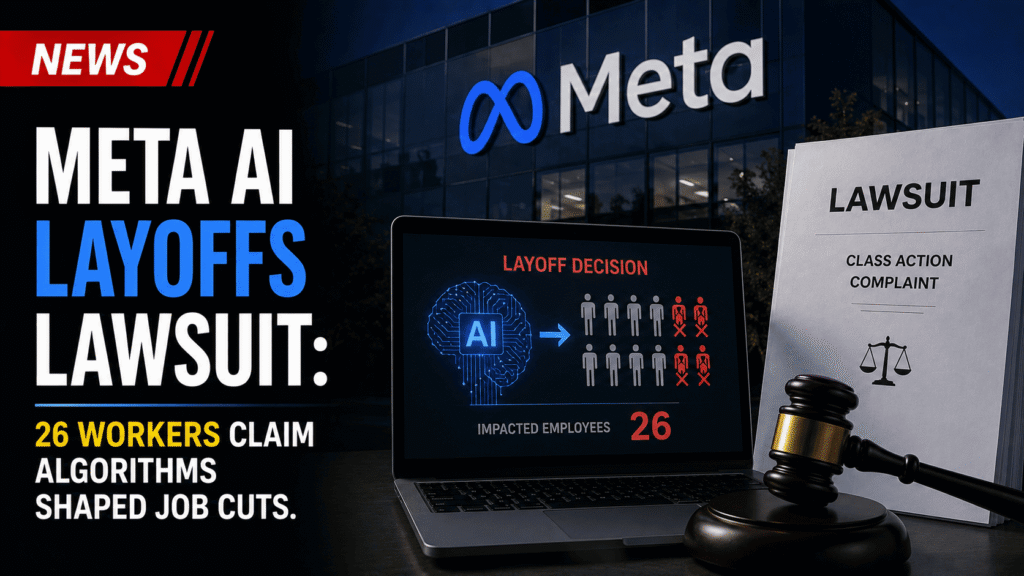
Meta sits at the centre of the year’s most discussed layoff. The company began cutting around 8,000 jobs in May after announcing the move in April, and reduced roughly 1,500 roles from its Reality Labs division earlier in the year.
The confusion worth correcting is this. Meta cut staff while simultaneously moving thousands of workers into new artificial intelligence teams, which produced a noisy public debate over whether the company was shrinking or simply reshaping. We unpacked that distinction in our earlier coverage of the Meta layoffs and AI restructuring, and it remains the cleanest example of the wider pattern: cut in one place, hire in another, and call the net result efficiency.
Tech Layoffs 2026: Cisco, Intuit, LinkedIn and the Mid-Sized Cuts
Below the giants, a long list of well-known technology names reduced headcount through the first half of the year.
Cisco confirmed just under 4,000 job cuts in the fourth quarter, its fourth significant reduction since 2024, while reporting record quarterly revenue and pointing investment toward silicon, optics, and security.
Intuit laid off around 3,000 workers. LinkedIn cut about 875 roles, near 5 percent of staff, citing a reorganisation toward growth areas. Microsoft opened a first-ever buyout program for up to 7 percent of eligible senior employees.
Wix removed about 1,000 positions, close to 20 percent of its workforce and its largest reduction to date, after a steep stock decline and rising AI-related costs. Coinbase cut roughly 700 jobs, about 14 percent, as chief executive Brian Armstrong pushed the company toward an AI-native operating model.
Smaller but symbolically loud cuts piled up too. Groupon reduced up to 400 roles while rebuilding as an AI-native business. ClickUp cut 22 percent of staff. Webflow ran a round that one employee described as severe, with leadership pointing directly at AI reshaping marketing work. Salesforce trimmed 86 people across MuleSoft and Marketing Cloud, and ServiceNow let go of hundreds as it leaned harder into automation.
Layoffs Beyond Tech: Banking, Retail, Media and Manufacturing
The 2026 layoffs reached well past software, which is part of why they feel different from earlier cycles.
In media, the BBC moved to cut hundreds of roles in its UK news division, and European broadcaster RTL planned up to 1,000 reductions in Germany. In retail and consumer brands, Target eliminated about 500 corporate and distribution roles, Nike cut roughly 1,400 positions weighted toward technology, and Papa Johns shut nearly 50 locations alongside a 7 percent corporate reduction.
Manufacturing and resources were not spared. Glencore cut about 1,000 jobs in a copper-focused restructuring, Algoma Steel issued 1,000 layoff notices tied to a blast furnace closure, and Takeda Pharmaceutical planned about 4,500 reductions to centralise corporate functions.
The breadth matters for one reason. When job cuts cluster only in tech, the story is a sector correction. When they spread into banking, retail, media, and heavy industry at the same time, the story becomes structural, and structural shifts reshape how every business thinks about hiring.
Why AI Keeps Getting the Blame for 2026 Layoffs
Artificial intelligence appears in the majority of this year’s layoff announcements, but the relationship is more layered than a simple machines-replace-people headline.
Some roles are being automated directly. Content production, customer support, data entry, and routine coding are the functions most often named when companies cite AI. At the same time, AI is creating demand for machine learning operations, prompt engineering, AI safety, and AI-human workflow design.
A survey of 1,000 US hiring managers by Resume.org found that 55 percent expected layoffs in 2026, and 44 percent anticipated AI would be a leading cause. That expectation becomes self-reinforcing. When leadership believes AI justifies a leaner team, the cut follows the belief.
There is also a financing angle that gets less attention. Building and running large AI systems is extraordinarily expensive, and several companies are funding that spend by reducing payroll elsewhere. The layoff is not always because AI replaced the worker. Sometimes it is because the company needed the salary line to pay for the GPUs.
The Australian Job Market Is Reading a Different Script
Here is where the global headline and the local reality diverge, and it matters for anyone hiring or job hunting in Australia.
While US and UK technology employment contracted, Australian job vacancies rose 2.7 percent in the February quarter, according to the Australian Bureau of Statistics. Demand held firmest in healthcare, construction, professional services, and skilled trades, areas far less exposed to the automation pressures driving Silicon Valley cuts.
This split creates a clear opening. Australian businesses still need to hire, but the global mood has made them more cost-conscious and more cautious about long-term headcount. That is precisely the gap that flexible, task-based and contract hiring fills. You can read the full breakdown in our analysis of how Australian job vacancies bucked the global slowdown.
For Australian employers, the lesson from the 2026 layoffs is not to freeze hiring. It is to hire in a way that matches uncertain demand. Posting a task or a short-term contract lets a business get work done without committing to a permanent role it may need to unwind later. CloudColleague connects Australian businesses with verified professionals for permanent jobs, contracts, and one-off tasks from a single platform, which is exactly the flexibility this market rewards.
For professionals, the same shift is an opportunity. Workers who build AI literacy and stay adaptable across tools are better positioned than those tied to a single role or platform. You can list your skills, set your rate, and find work that fits your experience by creating a free profile or browsing open roles across Australia.
AI, Global Layoffs, and the Future of Hiring in Australia
The 2026 layoffs are large, broad, and faster than last year, and artificial intelligence sits in the middle of almost every announcement, sometimes as the cause and sometimes as the bill that payroll is being cut to pay. The global picture is genuinely tough.
The Australian picture is more nuanced. Demand is holding in the sectors that machines cannot easily automate, and the businesses adapting best are the ones hiring flexibly rather than freezing. In a year defined by uncertainty, the smartest move is not to stop hiring. It is to hire in a way you can adjust.