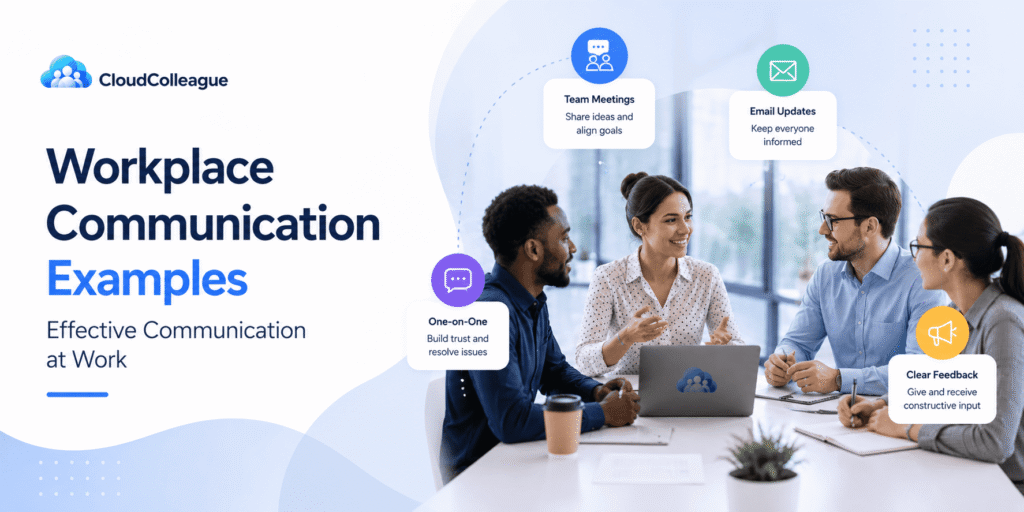
Communication skills at work are the abilities you use to share information clearly and understand others. These skills include speaking, writing, listening, giving feedback, and messaging in a professional way. They matter because nearly every job depends on passing information to someone else. As a result, strong communication helps teams avoid confusion, solve problems faster, and work together more effectively. In Australia, employers rank them among the most valuable skills you can have.
This guide covers the full communication stack: the types, why they matter for your career, and how to improve them fast. It is the pillar for the topic, so it links to the deeper how-to and examples guides where you need detail. Read it to map the whole skill, then branch out to practise.
| QUICK ANSWER: Communication skills at work are the abilities you use to share information clearly and listen effectively, across verbal, written, non-verbal, and digital channels. They are among the most valued workplace skills in Australia, because clear communication prevents costly errors, builds trust, and speeds up almost every task. Strong communicators are consistently rated as stronger performers. |
What Are Communication Skills at Work?
Communication skills at work are the abilities that let you express ideas clearly and understand what others mean. They include speaking, writing, listening, and reading the unspoken signals in a conversation. Strong communicators are not just talkers, they are clear, concise, and good at listening.
Verbal, written, non-verbal, and digital
Communication runs across four channels. Verbal is what you say in meetings and calls. Written covers emails, reports, and messages. Non-verbal is your tone, body language, and presence. Digital is how you communicate through tools like chat and video, which now carry much of modern work. Strong professionals adapt across all four.
Why Communication Skills Matter for Your Career
Communication is the skill that multiplies every other skill. A brilliant idea poorly explained goes nowhere, while a clear, well-timed message moves work forward. Employers consistently rank communication at the top of their wish list, and Jobs and Skills Australia notes that gaps in employability skills like communication often cost otherwise qualified candidates the role.
Beyond getting hired, communication shapes how far you go. Clear communicators win trust, avoid costly misunderstandings, and get noticed for leadership. It is the quiet skill behind most promotions.
Read Next:
Types of Workplace Communication
Different situations call for different communication. The table below maps the main types to a workplace example and the skill each one rewards.
| Type | Workplace example | Skill it rewards |
| One-to-one | A check-in with your manager | Active listening, clarity |
| Team | A stand-up or group discussion | Concise updates, turn-taking |
| Client-facing | A call or email with a customer | Tone, professionalism |
| Written | Reports, emails, documentation | Structure, brevity |
| Digital | Chat and video collaboration | Etiquette, responsiveness |
One-to-one, team, client, and written
One-to-one communication rewards listening and clarity. Team communication rewards concise updates and good turn-taking. Client communication rewards tone and professionalism. Written communication rewards structure and brevity. Knowing which mode a moment calls for is half of communicating well.
| Want to find short-term tasks that match your skills? CloudColleague also provides professionals with an option for freelance tasks. Go through guides on tasks and how bidding works to learn more about online and freelance tasks. |
How to Improve Communication at Work
Communication improves with a few high-leverage habits, then deeper practice over time. Start with quick wins, then build the harder skills like active listening and feedback.
Quick wins, then deeper practice
Quick wins include listening fully before replying, getting to the point faster, and proofreading messages before you send. Deeper practice means mastering active listening and giving feedback well. Active listening is simple to describe and hard to do: focus fully, reflect back what you heard, then respond.
| Feedback framework: Use the situation, behaviour, impact model. Name the situation, describe the specific behaviour, then explain its impact. For example: in today’s meeting, you summarised the client’s concern clearly, which helped the team agree a plan fast. |
For a step-by-step plan, see how to improve communication skill, and for real scripts, see our communication examples.
Common Communication Breakdowns and How to Fix Them
Most workplace friction traces back to a handful of communication failures. Spot them early and they are easy to fix.
| Breakdown | What it looks like | The fix |
| Assuming, not confirming | Acting on an unclear brief | Confirm scope in writing |
| Information overload | Long, rambling messages | Lead with the point, keep it short |
| Poor listening | Talking over, missing detail | Listen fully, then reflect back |
| Wrong channel | A complex issue over chat | Match channel to complexity |
| No follow-up | Decisions that get lost | Summarise actions and owners |
Put These Skills to Work on CloudColleague
Knowing about communication skills is only useful when it earns you something. CloudColleague turns that knowledge into income two ways: roles that need the skill, and tasks you can complete for pay. Here is how to bridge from learning to earning.
| Ready to take the next step in your career? Create your Seeker’s account for free and explore opportunities across Australia. |
Frequently Asked Questions
Communication skills at work are the abilities you use to share information clearly and understand others, across verbal, written, non-verbal, and digital channels. They include speaking, writing, listening, and reading tone. Strong communicators are clear, concise, and good listeners, which makes them valuable in almost every role.
Communication skills multiply every other skill, because work depends on passing information clearly. They prevent costly misunderstandings, build trust, and get you noticed for leadership. Employers rank them among the most valuable skills, and gaps in communication often cost qualified candidates a job or a promotion.
The main types are one-to-one, team, client-facing, written, and digital communication. Each rewards a different skill, from active listening in one-to-ones to structure in written reports. Knowing which type a situation calls for, and adapting your style, is a core part of communicating well at work.
Active listening means focusing fully on the speaker, understanding their meaning, and reflecting it back before you respond. It involves not interrupting, asking clarifying questions, and confirming what you heard. It builds trust and prevents misunderstandings, which makes it one of the most valuable communication habits at work.
Quick wins like clearer messages and better listening can show results within days. Deeper habits like active listening and confident speaking develop over weeks to months of deliberate practice. Consistent effort in real situations, with feedback, produces noticeable improvement within a single quarter for most people.