Your interview outfit speaks before you say a single word. In fact, interviewers form a first impression within about seven seconds, and roughly 55 percent of it is visual. So what you wear can open the door or quietly close it. The good news is that dressing well is simple once you know the rules.
This complete guide covers exactly what to wear to a job interview in 2026. You will learn the dress codes, outfit ideas for men, women, and everyone in between, and what to wear on camera. You will also see the common mistakes to avoid. By the end, you will dress with total confidence for any interview.
| Want a head start? Start as a seeker on CloudColleague, go through our guide on interview tips. |
The One Rule That Always Works: Dress One Level Up
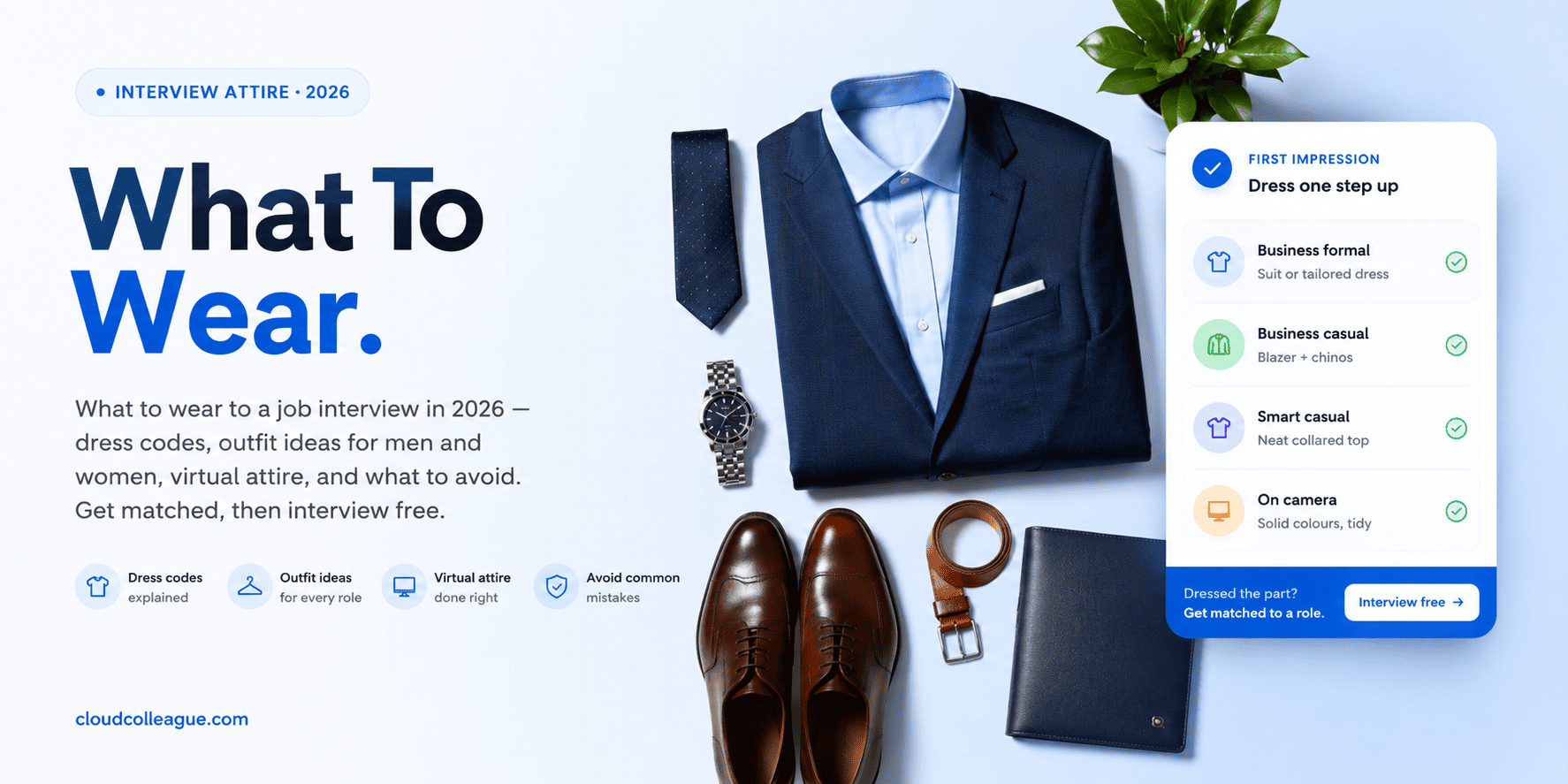
If you remember nothing else, remember this rule. Dress one level above the company’s daily dress code for your interview. This shows respect for the process without looking out of place.
The ladder is easy to follow. If the team wears jeans and t-shirts, you wear smart casual. If they wear smart casual, you wear business casual. And if they wear suits, you wear a well-fitted suit. When in doubt, it is always safer to be slightly overdressed than underdressed.
Interview Dress Codes Explained
Understanding the four main dress codes makes every choice easier. So learn them first, then match your outfit to the role. Each tier has a clear purpose.
Business Formal
This is the most formal level, common in finance, law, and executive roles. It means a tailored suit in a conservative colour, with polished shoes. The goal is authority and professionalism.
Business Professional
This standard corporate level is slightly less strict. A blazer with dress pants or a skirt works well, paired with a professional top. It suits most office and client-facing roles.
Business Casual
Business casual is polished but without a full suit. Think dress pants or a skirt with a blouse or collared shirt. This is your safest default whenever you are unsure of the dress code.
Smart Casual
Smart casual refines everyday pieces into a put-together look. The clothes should be clean, well-fitted, and free of wear. It works for relaxed offices, startups, and creative roles.
Read Next: How Interviews Work on CloudColleague?
What to Wear to an Interview: Men
For men, the right interview outfit depends on the dress code. So adjust these templates to the role. Keep everything clean, pressed, and well-fitted.
For formal settings, wear a navy or charcoal suit with a white or light blue shirt. Add a conservative tie, leather dress shoes, and a belt that matches your shoes. For business casual or smart casual roles, choose tailored chinos with a crisp button-down, and add a blazer if you want to elevate the look. Clean leather shoes or smart loafers finish it well.
What to Wear to an Interview: Women
For women, there is more variety, but the principles stay the same. So centre your choice on confidence, comfort, and a professional image. Adjust these templates to the dress code.
For formal interviews, a tailored pant or skirt suit works beautifully, with a neutral blouse and closed-toe heels or flats. A sheath dress with a blazer is another strong option. For business casual roles, pair tailored pants or a midi skirt with a blouse or structured top, and keep jewellery minimal. Comfortable, polished shoes complete the outfit.
Gender-Neutral and Modern Options
In 2026, gender-neutral and modern tailored looks are widely accepted and increasingly popular. So choose the cut and style that fits you best, whether that is a classic suit, a softer silhouette, or a unisex design. The only rule is that it must be polished and well-fitted. Confidence in what you wear always shows.
| Want to skip interviews? CloudColleague also provides professionals with an option for freelance tasks. Go through guides on tasks and how bidding works to learn more about online and freelance tasks. |
Interview Outfit by Industry
Dress codes vary dramatically between industries. So research the company before you choose. These quick templates cover the most common fields.
In corporate and finance, go conservative and formal with a neutral suit. In tech and startups, choose smart casual, but never a hoodie. Whereas, in creative industries, stay polished while adding one tasteful statement piece. In healthcare, keep it clean and conservative with minimal fragrance. In retail and hospitality, neat and presentable business casual works well. When unsure, default to business casual.
What to Wear to a Virtual Interview?
Your outfit matters just as much on camera. So treat a video interview like an in-person one. A few extra rules apply for the screen.
First, dress fully from head to toe, even though only your upper half shows. This prevents awkward moments and boosts your confidence. Next, choose solid, muted colours and jewel tones such as navy, charcoal, teal, or burgundy, which photograph well. Avoid bright white, which glares, plain black, which can look stark, and busy patterns, which distort on camera. Also avoid a colour that blends into your background.
Many CloudColleague interviews run on Google Meet, so this advice applies directly. To get your full setup right, including lighting and tech, see our virtual interview tips, and explore the built-in interview features.
Interview Outfit Colours and What They Signal?
Colour sends a subtle message, so use it to your advantage. Navy blue is the universal winner, signalling trust and reliability. Grey communicates professionalism and balance.
Neutral tones keep the focus on you, which is usually the goal. If you want a touch of personality, add one considered accent rather than a bold, distracting outfit. In short, let your colours support your message, not compete with it.
Grooming, Accessories, and the Small Details
The finishing touches separate a good outfit from a great one. So do not overlook them. Small details signal professionalism and care.
Start with grooming: neat hair, clean nails, and subtle or no fragrance, since strong scents overwhelm in close quarters. Make sure your clothes are pressed and spotless, with no wrinkles or stains. Keep accessories minimal and tasteful, and carry a tidy bag or portfolio. These quiet details quietly build trust.
What Not to Wear to an Interview?
Knowing what to avoid is just as important as knowing what to wear. So steer clear of anything that distracts from your qualifications. The following are common, costly mistakes.
- Wrinkled, stained, or ill-fitting clothes.
- Ripped, faded, or overly casual denim.
- Hoodies, sportswear, or beachwear.
- Overly revealing or flashy items.
- Loud patterns or distracting accessories.
- Strong perfume or cologne.
What to Bring to an Interview?
A polished outfit pairs well with being prepared. So bring a few essentials with you. They show organisation and attention to detail.
Pack a few copies of your resume, a notepad and pen, and the interviewer’s contact details. Bring any work samples or a portfolio if they are relevant to the role. For the full list in one place, grab the checklist linked above.
| Are you actively hiring? Start as an employer on CloudColleague and start hiring today. |
Look the Part, Then Get the Interview
Here is the part that ties it all together. The perfect interview outfit only matters once you have interviews to attend. So the next step is landing those opportunities.
CloudColleague helps you do exactly that. You build your profile, get matched to suitable Australian roles, and interview with confidence, whether on video or in person. You can browse live matched jobs to find roles that fit your skills. If you are new to the country and unsure of local dress norms, our guide for those starting their first job in Australia can help. For overall readiness, see our guides to interview preparation and the best interview tips.
Choosing the right interview outfit comes down to a few simple principles. Dress one level above the company’s daily code, match your industry, and keep everything clean and well-fitted. On camera, favor solid, muted colors and dress fully.
So plan your outfit, sweat the small details, and walk in looking the part. Then get matched to roles and put that confidence to work in your next interview.
| Ready to make a great impression? Create your free CloudColleague profile and start interviewing. |
Frequently Asked Questions
Dress one level above the company’s daily dress code. For formal workplaces, wear a suit. For casual ones, smart or business casual works. Keep everything clean, pressed, and well-fitted.
Business casual is the safest default. Pair dress pants or a skirt with a blouse or collared shirt, and add a blazer. It looks professional almost everywhere without risking being overdressed.
Dress fully, head to toe, and choose solid, muted colours or jewel tones like navy or burgundy. Avoid bright white, plain black, and busy patterns, which can distort or glare on camera.
Only in relaxed settings like tech or creative roles. If you do, choose dark, well-fitted jeans with a blazer or button-down, and avoid ripped or faded styles. For corporate roles, stick to formal attire.
You can create a free CloudColleague profile, get matched to suitable roles, and start interviewing with employers across Australia.