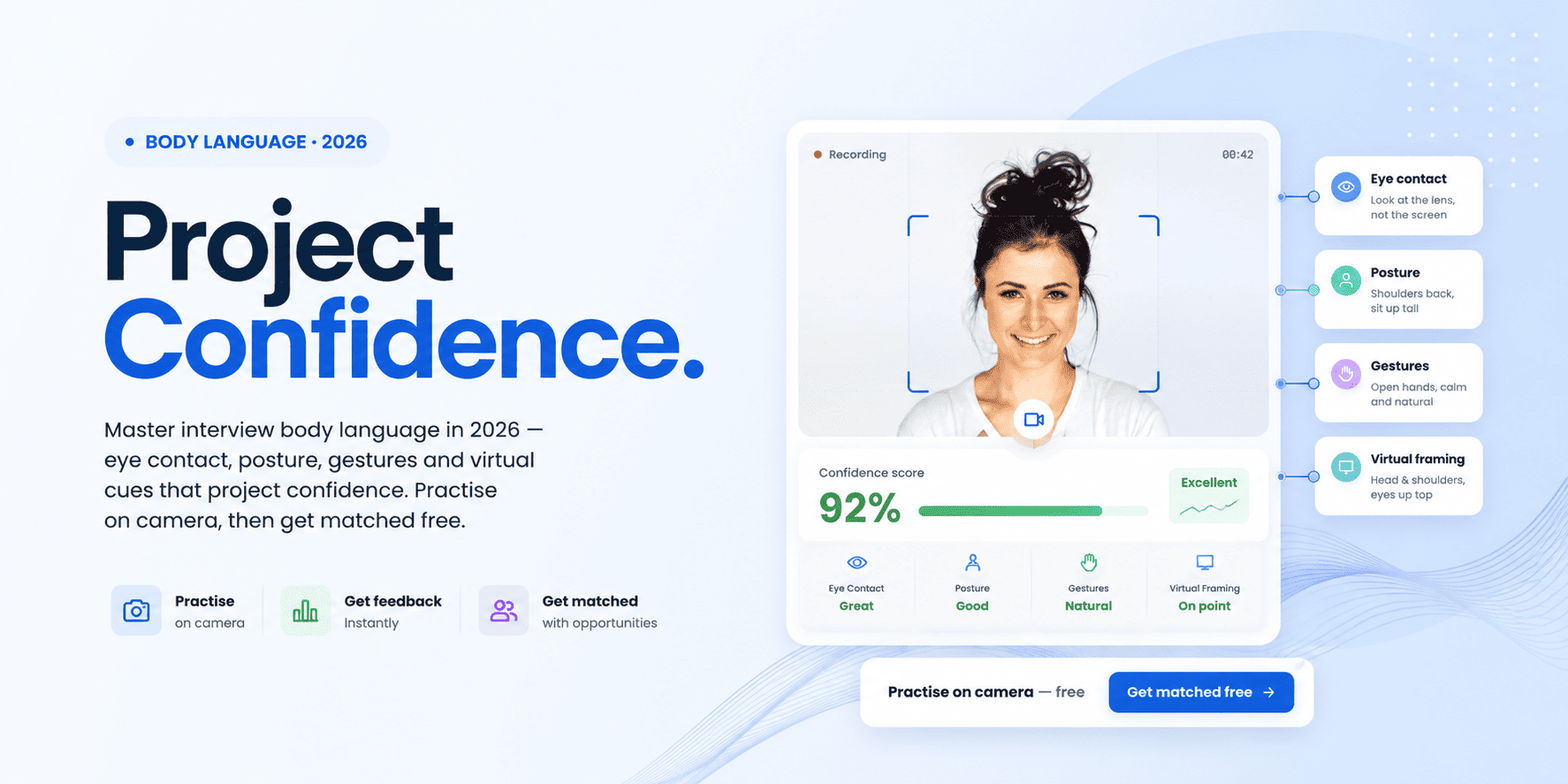
You can have perfect answers and still lose the room. That is because much of what you communicate is nonverbal. Research commonly suggests that around 55 percent of communication comes from body language, while only about 7 percent comes from your actual words. So how you carry yourself can speak louder than what you say.
Strong interview body language signals confidence, honesty, and engagement before you finish your first sentence. The good news is that these are learnable skills, not fixed traits. This guide covers practical, evidence-backed body language tips for posture, eye contact, gestures, and virtual interviews. By the end, you will know how to make your nonverbal signals work for you.
| Want a head start? Start as a seeker on CloudColleague, go through our guide on interview tips. |
Why Body Language Matters in Interviews?
Interviewers read you constantly, often without realising it. Your posture, expressions, and gestures shape their impression within seconds. So your body is part of every answer you give.
These nonverbal cues signal confidence and trustworthiness, which employers actively look for. Positive body language keeps the interviewer engaged and warm toward you. Negative cues, on the other hand, can undercut even a brilliant answer. So mastering this silent conversation is well worth the effort.
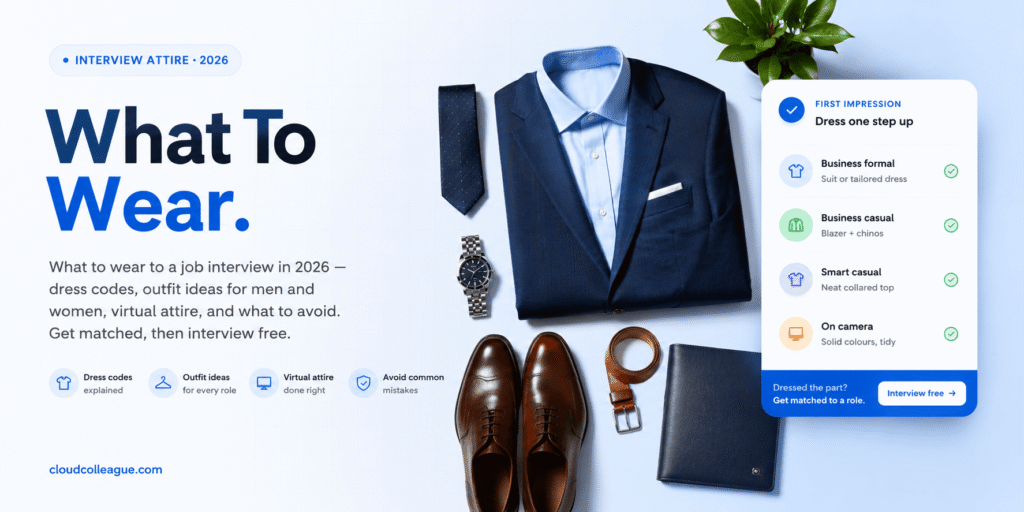
Read Next: What to Wear to a Job Interview in 2026? (Complete Guide)
Eye Contact: The Confidence Signal
Eye contact is the clearest sign of confidence and honesty. So make it a priority from the moment you arrive. People read steady eye contact as engagement and sincerity.
The key is to keep it natural. Hold eye contact for about two to four seconds at a time, then glance away briefly. Too little goes unnoticed, while constant staring makes the interviewer uncomfortable. In a panel interview, address whoever asked the question, then include the others as you answer. Imagine you are chatting with an old friend, and it will feel easier.
Posture: Sit Like You Mean It
Your posture speaks before you do. So sit upright with relaxed shoulders, and keep both feet planted. A slight lean forward signals genuine interest and attentiveness.
Just as importantly, avoid the postures that work against you. Slouching looks lazy and disinterested, while leaning back can seem arrogant. Crossed arms read as closed off or defensive. As a bonus, good posture also helps your voice carry with more confidence.
Hand Gestures: Support Your Words
Natural hand gestures bring your answers to life. So use them to emphasise key points and show enthusiasm. Open palms, in particular, signal honesty and openness.
There is even a hidden benefit. Gesturing while you speak can help you recall details and tell a clearer story. However, balance is everything. Too many or overly large movements distract from your message, so keep your gestures purposeful and calm.
Facial Expressions and Smiling
Your face should match the conversation. So let your expressions reflect the tone of what you are discussing. A warm, natural smile conveys friendliness and enthusiasm.
Nodding occasionally shows you are listening and following along. However, do not overdo it, or you risk looking like a bobblehead. Be careful too with a flat or overly serious expression, since it can read as disinterest, especially in customer-facing or collaborative roles.
How to Greet and Shake Hands?
First impressions begin before you sit down. So greet the interviewer warmly, make eye contact, and offer a firm but friendly handshake. A limp or crushing grip both send the wrong message. For a virtual interview, a warm verbal greeting and a genuine smile replace the handshake.
Mirroring to Build Rapport
Mirroring is a subtle way to build connection. It means gently matching the interviewer’s posture and energy. If they lean in, you can lean in too. The trick is to keep it natural and unforced, so it never feels like mimicry.
Nervous Body Language to Avoid
Nerves often leak out through small, unconscious habits. So learn to spot and manage them. These cues can make you seem anxious, even when your answers are strong.
- Fidgeting with your hands, pen, or clothing.
- Tapping your foot or bouncing your leg.
- Touching your face or hair repeatedly.
- Pressing your lips together tightly.
- Letting your gaze wander around the room.
To manage these, prepare thoroughly, breathe slowly, and keep your hands resting calmly. Preparation is the best cure for nervous movement.
| Want to skip interviews? CloudColleague also provides professionals with an option for freelance tasks. Go through guides on tasks and how bidding works to learn more about online and freelance tasks. |
Virtual Interview Body Language
Video interviews demand their own nonverbal approach. So adapt your body language for the camera. The fundamentals stay the same, but a few cues change.
Look directly into the camera lens, not at your own image or the interviewer’s face on screen. This simulates eye contact and builds connection. Sit centred with the camera at eye level, keep an open posture, and lean in slightly to show interest. Since gestures read smaller on screen, make them a touch more deliberate. Many CloudColleague interviews run on Google Meet, so for the full setup, including lighting and tech, see our virtual interview tips.
Body Language for Nerves and First-Timers
If you are new to interviews, keep it simple. Arrive early to settle your nerves, and take slow, deep breaths while you wait. Focus on one cue at a time rather than everything at once. Remember, interviewers expect some nerves, so be kind to yourself. If you are new to the country, our guide for those starting their first job in Australia can help with local norms.
How to Practise Your Body Language?
Awareness is the first step, but practice is what creates change. So rehearse your nonverbal habits before the real thing. The most effective method is simple.
Record yourself answering practice questions, then watch the playback. This reveals unconscious habits you would never notice otherwise. Do you fidget when nervous, or does your gaze drift? Focus on improving one habit at a time, which builds lasting confidence without overwhelm.
Practise on Camera and Get Matched
Here is the truth about body language. It improves fastest with real practice and honest feedback. So the best way to get better is to interview, review, and adjust.
CloudColleague helps you do exactly that. You build your profile, get matched to Australian roles, and interview through built-in Google Meet sessions. Afterward, you can review the transcript to reflect on how you came across and improve next time. Explore the built-in interview features, or browse live matched jobs to get started. For overall readiness, see our guides to interview preparation and the best interview tips, and to sidestep common errors, our guide to interview mistakes.
Strong interview body language turns nerves into quiet confidence. Hold natural eye contact, sit upright and lean in, use purposeful gestures, and smile with warmth. Then manage nervous habits and adapt your cues for the camera.
So practise these signals, record yourself, and refine them until they feel effortless. Then get matched, interview for real, and let your confidence speak for itself.
| Are you actively hiring? Start as an employer on CloudColleague and start hiring today. |
| Ready to project confidence? Create your free CloudColleague profile and start practising. |
Frequently Asked Questions
Much of communication is nonverbal, so your posture, eye contact, and gestures shape the interviewer’s impression within seconds. Positive body language signals confidence and honesty, while negative cues can undercut even strong answers.
Aim for natural eye contact of about two to four seconds at a time, then glance away briefly. Too little seems disengaged, while constant staring feels uncomfortable. Treat it like a friendly conversation.
Avoid slouching, leaning back, crossed arms, and fidgeting. Steer clear of tapping your foot, touching your face, or letting your gaze wander. These cues signal nervousness or disinterest.
Look into the camera lens, sit upright with the camera at eye level, and lean in slightly. Use slightly larger, deliberate gestures, and smile naturally. Keep your background clean and your posture open.
You can create a free CloudColleague profile, get matched to roles, and interview through built-in Google Meet sessions. Reviewing the transcript helps you refine how you come across.