You work hard. You show up consistently. But your career doesn’t seem to be moving as fast as you’d like. Sound familiar? In most cases, the missing piece isn’t effort, it’s skills.
The professionals who grow fastest aren’t always the most experienced or the most talented in the room. They’re the ones who continuously build the right skills, the ones employers value, the market rewards, and that open doors to bigger and better opportunities.
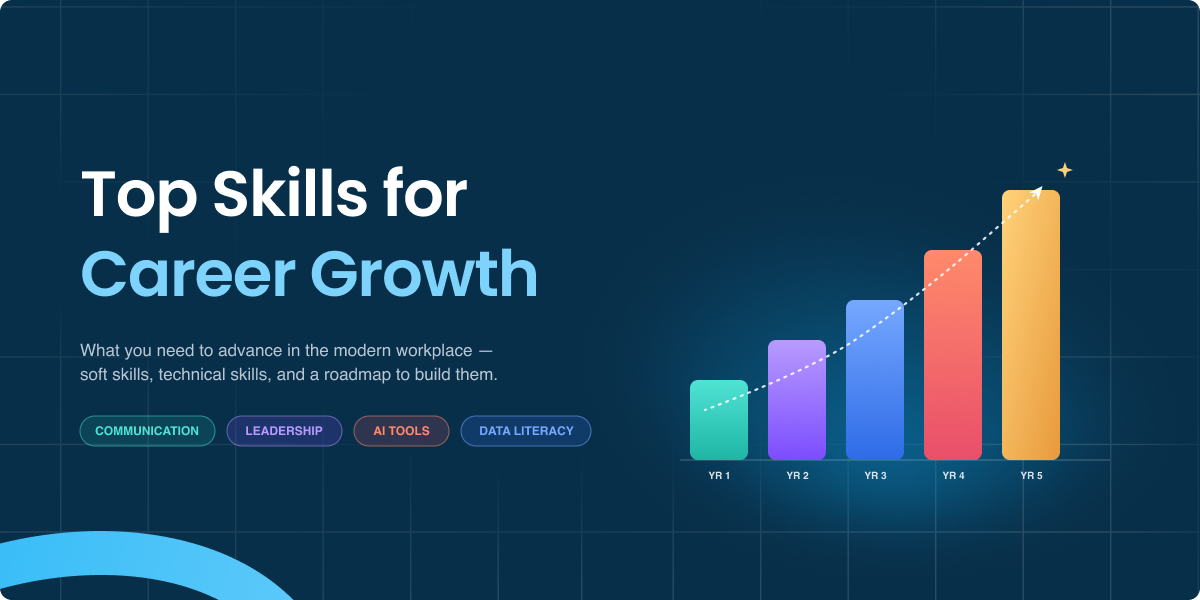
In this guide, we’ll walk you through the top soft skills and technical skills for career growth in 2026, how to identify your own areas for improvement, and a practical 5-step plan to develop the skills that will move your career forward. Whether you’re employed full-time or building your profile on CloudColleague, this is your skills roadmap.
| Quick Answer: The key skills for career growth in 2026 are a combination of soft skills (communication, leadership, adaptability, emotional intelligence, problem-solving) and technical skills (data literacy, digital marketing, project management, AI tools, cloud basics). The professionals who grow fastest develop both. |
Why Skills Are the #1 Driver of Career Growth in 2026?
The Australian job market is undergoing a significant shift. Employers are moving away from hiring based purely on qualifications and years of experience, and toward skills-based hiring, where what you can do matters more than what your CV says you’ve done.
According to Jobs and Skills Australia, the fastest-growing roles in the country are concentrated in healthcare, technology, and professional services, all areas where specific, demonstrable skills determine who gets hired, who gets promoted, and who gets paid more.
Meanwhile, artificial intelligence and automation are reshaping entire industries. The professionals who grow in this environment are not those who resist change, they’re those who actively build the skills that remain distinctly human, alongside the technical knowledge to work alongside new tools effectively.
The bottom line: your skills are your most valuable career asset. And unlike your work history, you can actively grow them, starting today.
Top 5 Soft Skills That Boost Career Growth
Soft skills are the interpersonal and cognitive abilities that determine how you work with others, solve problems, and lead in your environment. They’re harder to measure than technical skills, but they’re often the deciding factor in who gets promoted.
1. Communication
| Clear, confident communication, written and verbal, is the foundation of every successful career. Whether you’re presenting to stakeholders, writing a project brief, or navigating a difficult conversation with a colleague, how well you communicate directly impacts how you’re perceived and how far you advance. How to build it: Join a public speaking group like Toastmasters, volunteer to present in team meetings, or take a business writing course online. |
2. Leadership and Initiative
| You don’t need a title to show leadership. Taking initiative, stepping up to solve problems, suggesting improvements, or mentoring a colleague, signals to employers that you’re ready for more responsibility. Leadership is one of the strongest indicators of career growth potential. How to build it: Volunteer for cross-functional projects, offer to lead a small team initiative, or take on a stretch task through CloudColleague to demonstrate leadership in a new context. |
3. Adaptability
| The ability to pivot, learn quickly, and stay effective through change is one of the most valued traits in today’s workforce. Professionals who resist change get left behind. Those who embrace it, and help their teams navigate it, become indispensable. How to build it: Intentionally seek out new experiences: try a different type of role, work in a new industry through freelancing, or enrol in a course outside your usual area. |
4. Emotional Intelligence (EQ)
| Emotional intelligence, your ability to understand, manage, and respond to emotions (yours and others’), is consistently ranked among the top traits employers look for in leaders. High EQ professionals handle conflict constructively, build stronger teams, and make better decisions under pressure. How to build it: Practice active listening in conversations, seek honest feedback from colleagues, and reflect on your own reactions in challenging situations. |
5. Problem-Solving
| Every organization has problems. Professionals who identify issues proactively and bring well-thought-out solutions, rather than just raising complaints, are the ones who get noticed, trusted, and promoted. Strong problem-solving is a mindset as much as it is a skill. How to build it: Use structured frameworks like root cause analysis or design thinking. Practice by taking on complex freelance tasks that push you to find creative solutions. |
5 In-Demand Technical Skills for Career Growth in Australia
Technical skills are the specific, learnable competencies that qualify you for roles and responsibilities in your field. Here are the five most valuable technical skills for career growth in Australia’s 2026 job market:
1. Data Literacy Why it matters:
| Every industry now runs on data. The ability to read, interpret, and communicate data insights, even at a basic level, makes you a more valuable professional in virtually any role. Where to learn: Google Data Analytics Certificate (Coursera), Microsoft Excel advanced courses, or Tableau Public tutorials. |
2. Digital Marketing Why it matters:
| From SEO and content strategy to paid advertising and social media management, digital marketing skills are in high demand across industries, especially for SMEs using platforms to grow their presence. Where to learn: Google Digital Garage (free), HubSpot Academy, Meta Blueprint, or short courses on TAFE Digital. |
3.Project Management Why it matters:
| The ability to plan, execute, and deliver projects on time and on budget is one of the most universally valued skills in the workforce. Agile and PMP certifications open doors in tech, construction, healthcare, and beyond. Where to learn: PMI’s CAPM or PMP certification, Atlassian’s free Agile training, or short project management courses through RMIT Online. |
4. AI and Automation Tools Why it matters:
| Understanding how to use AI tools, from ChatGPT for content to automation platforms like Zapier or Make, is rapidly becoming a baseline expectation for knowledge workers. Those who can use AI to enhance their productivity will consistently outperform those who can’t. Where to learn: Experiment with AI tools in your current role, take LinkedIn Learning’s AI courses, or explore Anthropic, Google, and Microsoft’s free AI literacy resources. |
5. Cloud Computing Basics Why it matters:
| With most businesses operating on cloud platforms, AWS, Microsoft Azure, Google Cloud, even a foundational understanding of cloud services gives you a significant advantage, especially in IT-adjacent roles. Where to learn: AWS Cloud Practitioner Essentials (free), Google Cloud Skills Boost, or Microsoft Azure Fundamentals (AZ-900). |
What Are Your Top 3 Areas of Improvement at Work?
One of the most common questions in performance reviews, and one of the trickiest to answer, is: “What are your top areas for improvement?” Rather than giving a vague answer, here are the three universal improvement areas that consistently hold professionals back from faster growth:
| Time Management and Prioritization When it’s weak: Missed deadlines, reactive work habits, and a constant feeling of being overwhelmed, often signs of poor prioritization rather than lack of effort. How to fix it: Adopt a system like the Eisenhower Matrix or time-blocking. Use tools like Notion, Asana, or Trello to organize tasks by impact and urgency. |
| Communication Clarity When it’s weak: Misunderstood briefs, unclear emails, rambling in meetings, or difficulty giving feedback, these slow down teams and damage professional credibility. How to fix it: Practice the BLUF method (Bottom Line Up Front) in written communication. Take a business writing course or practice structured verbal updates in team stand-ups. |
| Technical Skill Depth When it’s weak: Being a generalist is valuable, but at some point, employers want to see deep expertise in at least one area. Shallow technical knowledge limits the complexity of projects you can lead. How to fix it: Identify the one technical skill most valued in your role or industry, then commit to 90 days of focused development, a course, a certification, or a real project that stretches you. |
How to Build the Skills You Need: A 5-Step Plan?
Knowing which skills to develop is only half the battle. Here’s a practical, repeatable process for actually building them:
- Step 1: Do a Skills Gap Assessment. Compare where you are now against the requirements of the role or level you want to reach. Job descriptions on CloudColleague are a great real-world reference for what’s actually in demand.
- Step 2: Set a 90-Day Learning Goal. Pick one skill to focus on per quarter. Trying to learn everything at once leads to learning nothing well.
- Step 3: Use the Right Resources. Combine free resources (YouTube, Google, Coursera audits) with targeted paid courses. Certifications carry more weight with employers than informal learning alone.
- Step 4: Apply Skills in Real Projects. Learning without application fades fast. Use CloudColleague to find real freelance tasks where you can practise new skills with actual clients, building your portfolio at the same time.
- Step 5: Track and Showcase Progress. Document what you’ve learned and where you’ve applied it. Update your resume, LinkedIn profile, and CloudColleague profile regularly to reflect your growing capabilities.
For help showcasing the skills you’ve built, read our guide: How to Write a Resume.
Quick Reference: Skills for Career Growth at a Glance
| Skill | Type | Impact Level | Time to Develop |
| Communication | Soft Skill | Very High | Ongoing |
| Leadership & Initiative | Soft Skill | Very High | Ongoing |
| Adaptability | Soft Skill | High | Ongoing |
| Emotional Intelligence | Soft Skill | High | Ongoing |
| Problem-Solving | Soft Skill | Very High | Ongoing |
| Data Literacy | Technical Skill | High | 1–3 months |
| Digital Marketing | Technical Skill | High | 2–4 months |
| Project Management | Technical Skill | Very High | 3–6 months |
| AI & Automation Tools | Technical Skill | High | 1–2 months |
| Cloud Computing Basics | Technical Skill | Medium–High | 1–2 months |
Your Skills Are Your Career, Start Building Today
The professionals who grow the fastest aren’t waiting for their employer to hand them an opportunity. They’re actively building the skills that create opportunities, and then going out to find them.
Whether it’s sharpening your communication, earning a project management certification, or diving into data literacy, every skill you build is an investment that compounds over your entire career.
CloudColleague is here to help you put those skills into practice. Find jobs and freelance tasks that challenge you, grow your portfolio, and connect you with employers who value what you bring. Because career growth doesn’t happen in a classroom, it happens when you take action.
| Find Skill-Building Opportunities on CloudColleague Browse thousands of jobs, tasks, and services across Australia. Take on real projects, build your portfolio, and grow your skills, all with no upfront fees and no commission on tasks. |
Frequently Asked Questions
Communication is consistently ranked as the single most important skill for career growth across almost every industry. Without it, even strong technical skills are hard to translate into advancement. That said, the most effective professionals combine strong communication with deep expertise in at least one technical area.
Absolutely, soft skills are learnable, just like technical ones. The difference is that soft skills are developed through practice and reflection rather than structured study. Consistent effort over time, seeking feedback, practising in real situations, and being intentional about how you interact with others, leads to real and lasting improvement.
For foundational technical skills (like data literacy or AI tools basics), you can build working knowledge in 4–8 weeks with consistent daily practice. For deeper technical certifications, allow 3–6 months. Soft skills like communication and leadership develop continuously, but you’ll notice meaningful improvement within 3 months of intentional practice.
Based on current labour market data and employer feedback, the three most in-demand skills in Australia’s 2026 workplace are: (1) Communication and stakeholder management, (2) Digital and data literacy, and (3) Adaptability and change readiness. These apply across industries, from healthcare and construction to technology and finance.
CloudColleague gives you access to real freelance tasks and project-based work across dozens of industries. Taking on tasks outside your usual role is one of the fastest ways to develop new skills, build a portfolio, and signal to future employers that you’re a proactive learner. Best of all, there’s very low commission on tasks, so you keep what you earn while you grow.