Learning new skills for a job is the most direct way to change your career trajectory, yet the difference between people who succeed and those who stall is rarely intelligence. It is method and consistency. Knowing how to choose what to learn, how to learn it efficiently, and how to keep going is what turns good intentions into real, hireable skills. This guide gives you that method.
Below, you get a step-by-step approach to learning new skills, the best learning formats, how to stay consistent, and what to learn in 2026. It pairs with our guides on improving workplace skills and creating a development plan, linked where they help.
| QUICK ANSWERTo learn new skills for a job, choose skills by demand, pick the right learning format, and combine courses or certifications with hands-on projects. Stay consistent with small, regular sessions rather than rare long ones. The fastest learners apply each new skill to real work immediately, which cements it and gives them proof to show employers. |
How to Learn New Skills for a Job? (Step by Step)
The steps below move from choosing the right skill to making it stick. Each is developed with an example so you can apply it directly.
- Step 1: Choose skills by demand and relevance to your goal.
- Step 2: Pick the right learning format for the skill.
- Step 3: Combine courses or certifications with real projects.
- Step 4: Apply the skill to real work to cement it.
Choose by demand
The smartest learning starts with choosing the right skill, since effort spent on a low-value skill is largely wasted. Pick skills that are in demand, relevant to your goal, and likely to stay valuable. For example, choosing AI literacy or a data skill, both highly in demand, gives you a better return than a niche tool few employers ask for. A few minutes researching what your target roles require saves months of misdirected effort.
To see what is worth learning this year, check our guide to in-demand workplace skills for 2026.
Pick the right format
Different skills suit different formats, so match the method to what you are learning. Practical software skills suit hands-on tutorials and projects, while structured knowledge suits courses, and credibility-sensitive fields suit certifications. For example, learning spreadsheets is best done by building real spreadsheets, while a cloud skill may benefit from a recognised certification. Choosing the right format makes learning faster and less frustrating.
Online courses and certifications
Online courses are an efficient way to learn, with vast free and low-cost options across almost every skill. Certifications add value where employers use them as a credibility signal, particularly in cloud, cybersecurity, and project management. For example, a free course can teach you data basics, while an AWS certification can prove cloud skills to employers. Use courses for knowledge and certifications strategically, where they genuinely strengthen your case.
Real projects
Nothing cements a skill like applying it to a real project, because real stakes force genuine understanding. Build something you will actually use, or volunteer for work that stretches the skill. For example, learning web basics by building a simple real website teaches far more than any tutorial alone, and it doubles as a portfolio piece. Real projects turn knowledge into demonstrable, hireable skill.
Best Ways to Learn Skills
The most effective learning combines a few principles into a reliable approach. Knowing them helps you learn anything faster.
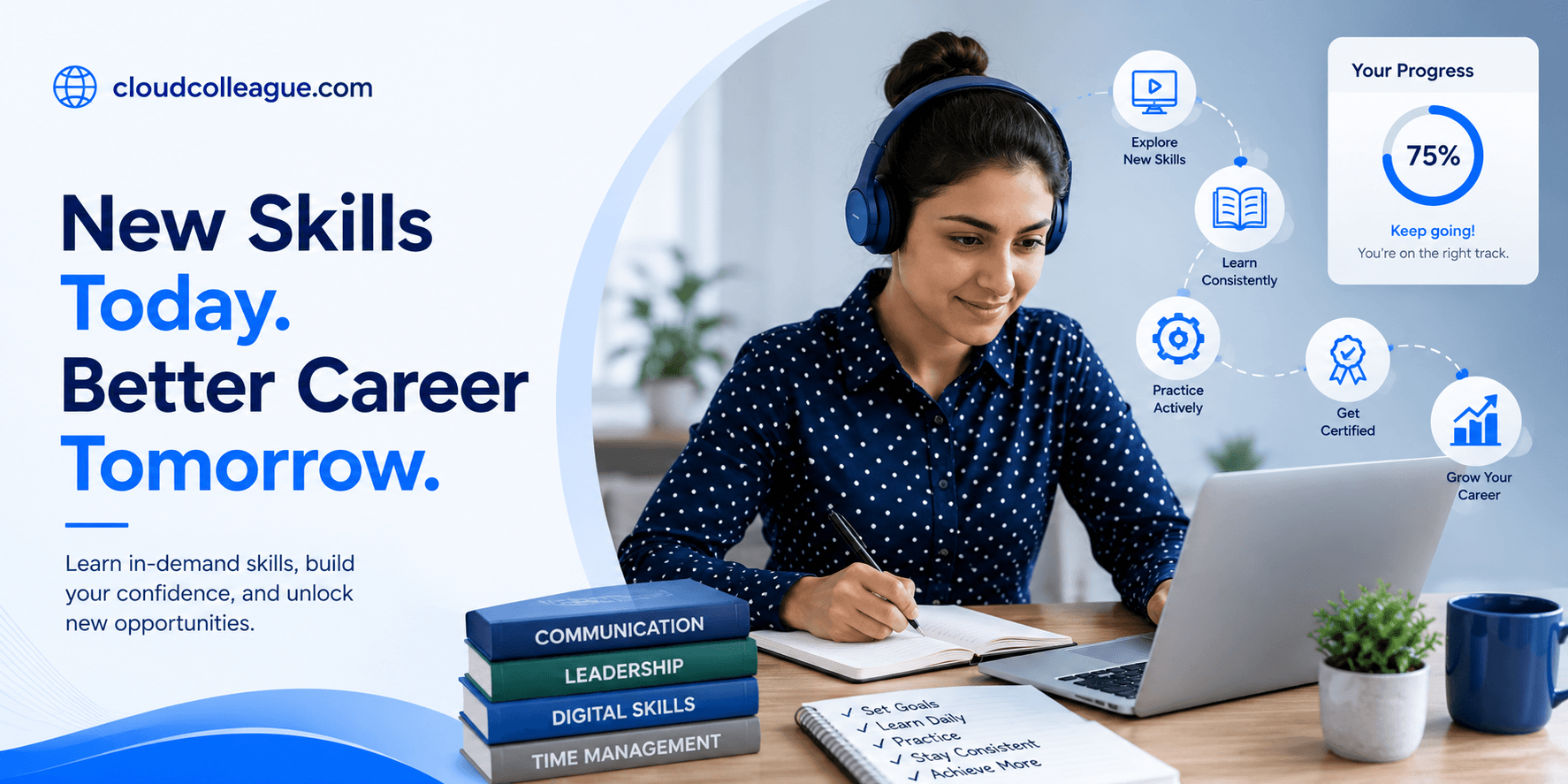
Learn actively rather than passively, by doing and testing yourself rather than only watching or reading. Apply each skill to real work as soon as possible, since application reveals gaps that passive study hides. And use spaced, regular practice rather than rare marathon sessions, because the brain retains far more from frequent short reps. For example, 30 focused minutes a day beats one long weekend session, both for retention and for building a sustainable habit.
How to Stay Consistent?
Consistency, not intensity, is what builds skills, and it is where most learners fail. The fix is to make learning small, regular, and protected, so it survives busy weeks.
Schedule short, regular learning sessions and treat them as appointments rather than optional extras. Make the habit easy by removing friction, such as keeping your course open and ready. Track your streak for motivation, and connect the learning to a clear goal so the why stays vivid. For example, committing to 30 minutes each morning before work, tied to a specific role you want, is far more sustainable than vague plans to study when you have time. Small and consistent always beats big and rare.
What Skills to Learn in 2026?
Choosing what to learn matters as much as how, so anchor your choice to current demand. In 2026, the strongest bets pair an in-demand digital skill with a durable human skill.
On the digital side, AI literacy is the standout, with data, cybersecurity, and cloud also in strong demand. On the human side, communication, adaptability, and problem solving remain essential and hard to automate. For example, learning to use AI tools well while sharpening your communication targets two of the most valued skills of the year at once. Pairing digital and human skills this way makes you broadly hireable rather than narrowly specialised.
Common Mistakes When Learning New Skills
A few mistakes cause most failed attempts to learn. Each is easy to avoid.
- Choosing skills at random instead of by demand and goal.
- Learning passively without applying the skill.
- Relying on rare long sessions instead of regular short ones.
- Collecting courses without finishing or using them.
- Quitting before the skill is built, with no clear plan.
Avoid these by choosing deliberately, applying immediately, practising consistently, and following a plan. That is the whole formula for learning skills that actually change your career.
How to Choose the Right Course?
With endless courses available, choosing well saves time and money. Not every course is worth taking, so a few checks help you pick ones that actually build the skill rather than just filling hours.
- Favour courses with hands-on projects, not just video lectures.
- Check that it teaches current tools and methods, not outdated ones.
- Prefer recognised certifications only where employers actually value them.
- Start with free options before paying, to test the topic and your interest.
For example, a free project-based course often teaches a practical skill better than an expensive but passive one. Choose for application and relevance, and you will learn faster for less.
How to Turn Learning Into a Job?
Learning a skill is only half the journey; the payoff comes from converting it into work. The bridge between the two is evidence, proof that you can actually do what you have learned, which reassures employers and clients.
As you learn, build a small portfolio of real outputs, a spreadsheet, a piece of writing, or a simple project, that demonstrates the skill. Add the skill and its evidence to your profile, and look for entry points where you can apply it for pay, even small ones. For example, someone who learns design and completes a few real tasks has both income and a portfolio, which together open the door to bigger work. Turning learning into earning is about showing, not just claiming, what you can do.
Put New skills to Work on CloudColleague
Learning a skill pays off when you put it to work. CloudColleague lets you apply new skills for real income straight away, through tasks that build experience and roles that reward what you have learned.
Find jobs that need new skills on CloudColleague
Employers are actively short of these skills. Browse the jobs marketplace for roles that reward new skills, filter by category and location, and put a short, specific example on your profile. With shortages high, well-evidenced skills win interviews fast.
Earn doing tasks that use new skills
Prefer to start earning today? Browse live tasks and pick up paid work that puts new skills to use straight away. Tasks build the income and reviews that unlock higher-value work over time.
Create a profile and start applying
Set up a free profile on the sign-up page, list your skills with a line of evidence each, and start applying. A complete, specific profile consistently wins more interest from both employers and task posters.
Frequently Asked Questions
Learn new skills by choosing them based on demand and your goal, picking the right format, and combining courses or certifications with real projects. Apply each skill to real work to cement it. Staying consistent with small, regular sessions, and using the skill immediately, turns learning into genuine, hireable ability.
In 2026, pair an in-demand digital skill with a durable human skill. AI literacy is the standout digital choice, with data, cybersecurity, and cloud also strong. On the human side, communication, adaptability, and problem solving remain essential. Learning to use AI well while sharpening communication targets two top skills at once.
Yes, online courses are an efficient, often free way to learn, especially when combined with real application. They give structure and knowledge quickly. Certifications add value where employers use them as a credibility signal, such as cloud or cybersecurity. The key is to apply what you learn, since a course alone does not build a skill.
Stay consistent by scheduling short, regular learning sessions and treating them as fixed appointments. Remove friction, track your streak, and tie the learning to a clear goal. For example, 30 minutes each morning is more sustainable and effective than rare long sessions. Consistency, not intensity, is what reliably builds new skills.
Basic competence in a workplace skill often takes a few weeks of consistent, applied practice, while deeper proficiency takes a few months. Applying the skill to real work speeds this up considerably. Regular short sessions, rather than rare long ones, produce faster, more durable learning for almost everyone.
The fastest way is to learn actively, apply the skill to real work immediately, and seek feedback, all in a tight loop. Use short regular sessions rather than marathons, and build something real with the skill. Doing, testing, and adjusting builds a skill far faster than passively watching or reading about it.
Yes, most job skills can be learned free through online tutorials, free course platforms, and hands-on projects. The most powerful method, applying a skill to real work, costs nothing. In Australia, libraries and community centres also offer free classes. Free resources plus real application build genuinely hireable skills at no cost.