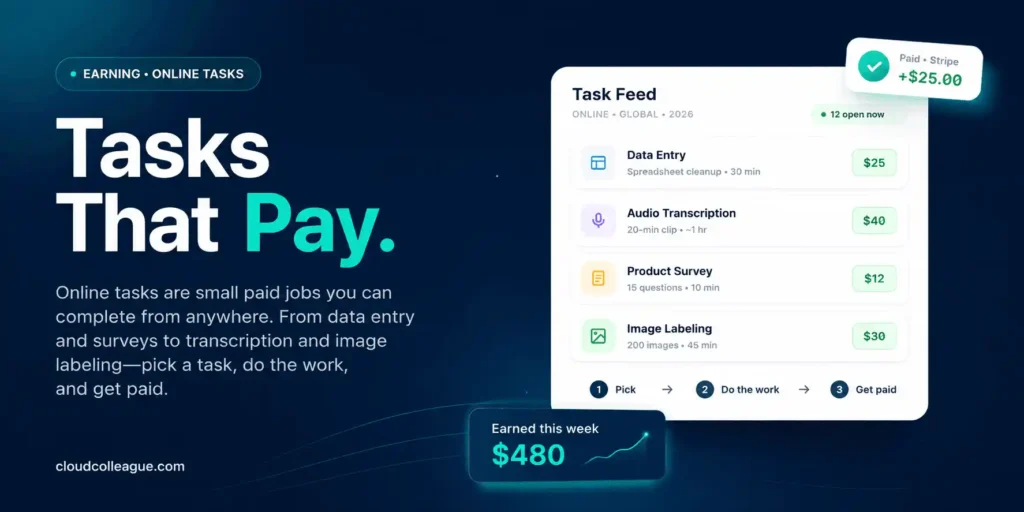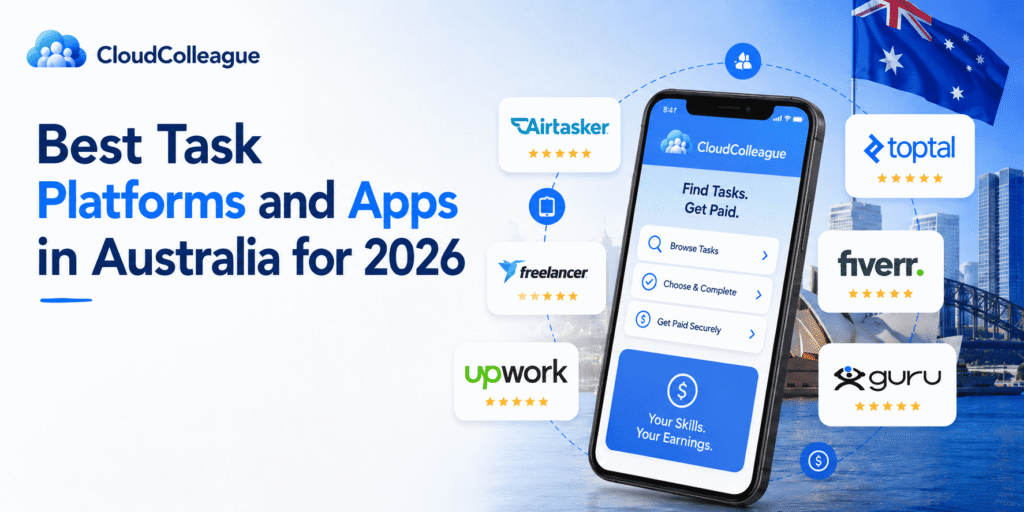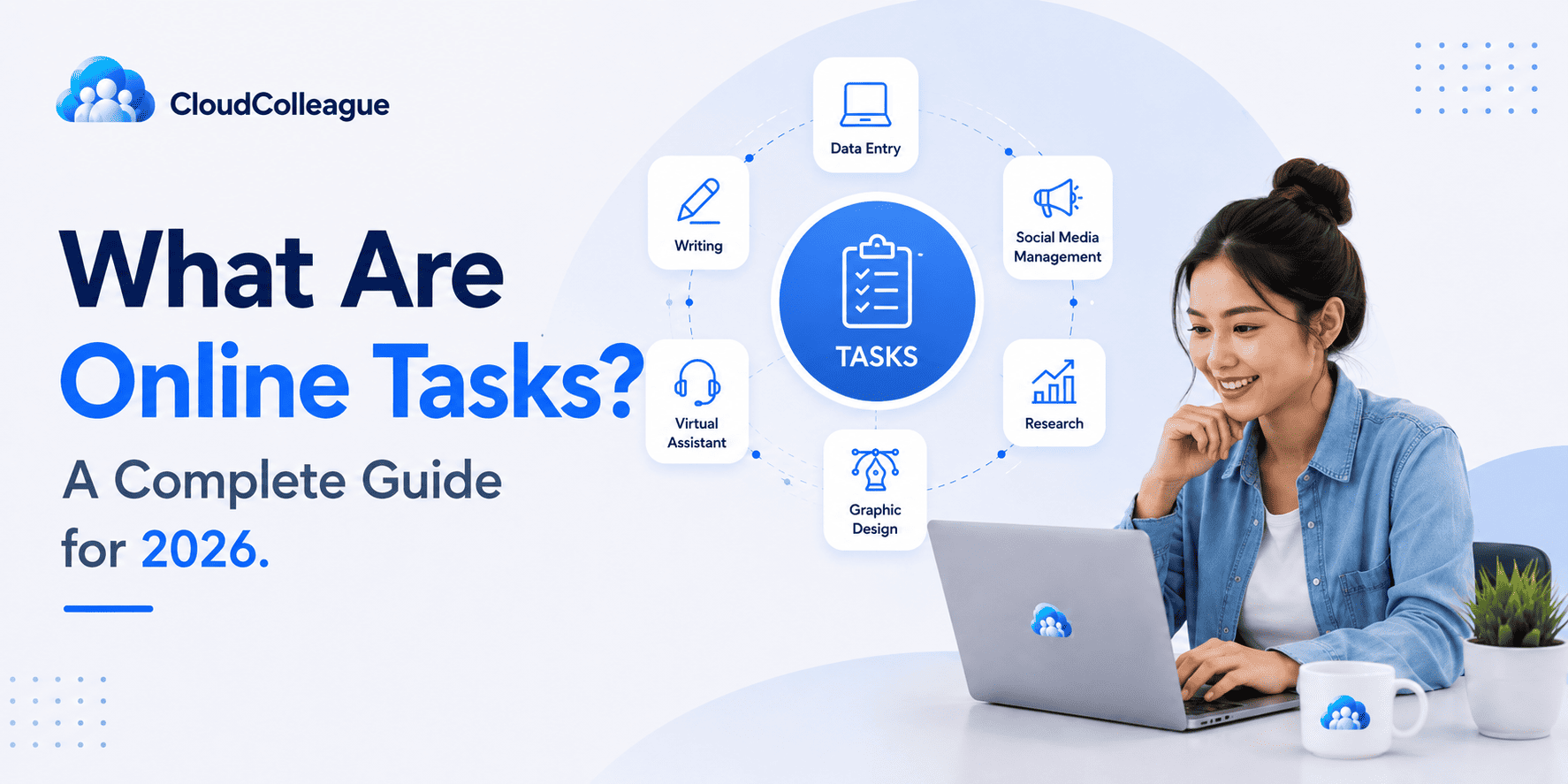
Online tasks are short, paid jobs that people and businesses post when they need help with something specific, from assembling flat-pack furniture to cleaning out a list of spreadsheets. You pick a task, agree a price, complete the work, and get paid. In Australia, this style of work has moved from a side note to a real income stream, and platforms like CloudColleague now connect everyday taskers with paying clients in minutes.
However, the term gets confused with low-value survey sites and click farms. Those are not the same thing. This guide explains what online tasks actually are, how they pay, which types are in demand, and how to start safely. Throughout, we focus on real Australian tasks rather than overseas micro-earning schemes.
What Are Online Tasks?
An online task is a defined piece of work, posted on a marketplace, that someone will pay a set fee to have done. The task has a clear scope, a price, and a deadline. Once you accept it and finish it, payment is released to you. Some tasks happen entirely online, such as data entry or graphic design. Others are arranged online but completed in person, such as gardening or a furniture move.
In short, the word online describes how the work is found and managed, not always where it is done. This matters because it widens the range of tasks far beyond screen-based gigs.
Tasks vs jobs: the key difference
A job usually means an ongoing role with set hours, a contract, and a regular wage. A task is a one-off. You are paid per completed task, not per hour clocked or per fortnight. This distinction shapes everything, from how you are matched to how tax applies to your earnings.
CloudColleague runs both sides of this. Browse ongoing roles on the jobs marketplace, or pick up one-off work through live tasks. Many users do both, using tasks for flexible income between or alongside permanent work.
Online tasks vs micro tasks vs surveys
Not all task work is equal. Micro tasks and paid surveys pay cents per action and reward speed over skill. Real online tasks pay a genuine market rate for a genuine outcome. The table below shows the practical gap, which also explains why AI Overviews and quality clients treat these categories very differently.
| Work type | Typical pay | Time per unit | Who pays you |
| Real online tasks | $30 to $300+ per task (AUD) | 30 min to a full day | A verified client on the platform |
| Micro tasks | $0.05 to $2 per action | Seconds to minutes | A crowd-work aggregator |
| Paid surveys | $0.50 to $5 per survey | 5 to 20 minutes | A market research panel |
Figures are indicative ranges for Australian users. The takeaway is simple: real tasks reward real skill, so this guide ignores survey-style micro-earning entirely.
Who posts tasks and why
Tasks come from two main sources. Households post personal jobs they cannot or do not want to do themselves, such as moving, cleaning, or repairs. Small businesses post overflow work they cannot justify hiring for, such as data entry, admin, or a one-off design. In both cases, the poster wants a reliable outcome fast, which is exactly what a good tasker provides.
How Do Online Tasks Work?
The mechanics are straightforward, and that simplicity is the point. A poster describes the work and sets a budget. Taskers send offers. The poster picks one, the payment is secured, the work is done, and the funds are released. Because the steps are standard, both sides know what to expect.
How taskers get matched and paid?
Matching usually rewards three things: how fast you respond, how relevant your profile is, and how strong your ratings are. Speed matters most early on, because posters often hire the first credible offer. Once you build a track record, ratings start to win you work on reputation alone.
| Data point: Across digital platform work, research summarized by the Fair Work Commission found that taskers who reported their hourly earnings sat at a median of roughly $30 to $32 an hour. Skilled and well-rated taskers commonly earn above this band. |
Payment is held securely once a task is assigned, then released on completion. This escrow-style flow protects both sides and removes the awkward chase for payment that plagues informal cash work.
The role of a tasks marketplace
A marketplace does three jobs at once. It brings demand and supply together, so you are not cold-pitching strangers. It holds payment safely, so you get paid for completed work. And it carries trust signals, such as ratings and verification, so clients hire with confidence. Take those away, and task work becomes risky and slow. That is the core value CloudColleague delivers.
Common Types of Online and In-Person Tasks
Demand clusters around a handful of categories. Australian marketplace data consistently shows handywork, removals, furniture assembly, cleaning, gardening, data entry, and pick-up and delivery among the most posted tasks. The table below maps common categories to indicative AUD pay so you can see where the money sits.
| Task category | Example task | Indicative AUD pay | Skill level |
| Cleaning | End-of-lease clean | $120 to $350 | Entry |
| Furniture assembly | Flat-pack wardrobe | $40 to $120 | Entry |
| Removals and delivery | Two-person small move | $150 to $450 | Entry to mid |
| Gardening | Lawn and hedge tidy | $60 to $200 | Entry |
| Handyman | Mount TV, fix shelving | $80 to $250 | Mid |
| Data entry | Spreadsheet clean-up | $25 to $45 per hour | Entry |
| Virtual assistant | Inbox and admin block | $30 to $55 per hour | Mid |
| Graphic design | Logo or social pack | $80 to $400 | Skilled |
Home and trade tasks
These are the backbone of the Australian task economy. Cleaning, gardening, removals, assembly, and minor repairs make up a large share of postings because every household generates them. They suit reliable, practical taskers and rarely need formal qualifications, though licensed trades attract higher rates.
Admin and virtual tasks
Screen-based work has grown fast. Data entry, bookkeeping support, research, and virtual assistance let you earn from home with a laptop. These tasks reward accuracy and clear communication, and they often turn into repeat work when a client trusts your output.
Delivery and errands
Pick-ups, drop-offs, queueing, and shopping runs fill the gap between gig delivery apps and personal favours. They pay modestly per task but stack well if you batch several in one trip. Flexibility is the main draw here.
| Start now on the CloudColleague sign-up page. A complete profile wins noticeably more offers than a blank one. |
Are Online Tasks Worth It in 2026?
For many Australians, yes, provided you treat tasks as skilled work rather than spare-change activity. The market is sizeable and still growing. The Actuaries Institute valued digital labour platforms at around $6.3 billion in consumer spending in 2019, up from $0.7 billion in 2015, with platform usage rising from 17 percent of the population to 46 percent over the same period. Demand has only broadened since.
| Snapshot: The ABS reported that in 2023-24, about 1.2 percent of employed people had done digital platform work in the past year, most commonly delivery and transport tasks. For roughly two in three of them, it was not their main job, which shows how often tasks supplement other income. |
Flexibility and side income
Tasks let you choose what you do, when, and for how much. That control is the real product. You can scale up during a quiet patch, scale down when life gets busy, and never commit to fixed shifts. For students, parents, and between-roles workers, this flexibility is hard to match elsewhere.
What realistic earnings look like?
Honest numbers matter. A casual tasker doing a few jobs a week might add $150 to $400 to their income. A committed tasker working most days, with strong ratings and skilled tasks, can reach part-time or near full-time pay. Earnings rise with skill, speed, reviews, and location, not with the number of low-value tasks you grind through.
Read Next: Task-Based Jobs: How They Work
How to Start Doing Tasks on CloudColleague?
Getting started takes minutes, and you do not need experience to win your first task. The path below removes the guesswork so you can move from sign-up to your first paid job quickly.
Create a profile
- Sign up and verify your identity to unlock trust badges.
- Add a clear photo, a short bio, and the task types you can do.
- List any skills, tools, or licences that lift your rates.
Browse and apply for your first task
Once your profile is live, filter tasks by category, location, and pay, then send a short, specific offer. Respond quickly, quote a fair price, and explain why you suit the task. Reliability on those first few jobs builds the ratings that win you everything afterwards.
| New to Australia and looking for flexible work? The first-time-in-Australia hub covers tasks, jobs, and getting set up. |
Frequently Asked Questions
Online tasks are short, paid jobs posted on a marketplace by people and businesses who need help. You accept a task, complete it for an agreed price, and get paid through the platform. Tasks can be done online, like data entry, or in person, like cleaning, but they are always found and managed online.
Yes, online tasks are legitimate when you use a trusted marketplace that holds payment securely and verifies users. Legit platforms never ask for upfront fees to start working. CloudColleague secures the client’s payment before you begin, so completed tasks are paid reliably and safely.
Most tasks pay a fixed price agreed before you start, while some admin and virtual tasks pay an hourly rate. The client’s payment is held securely when the task is assigned, then released to you once the work is finished and approved. Funds usually reach your account within a few business days.
A job is an ongoing role with set hours and a regular wage. A task is one-off work paid per completion. Jobs suit stable, long-term income, while tasks suit flexible, on-demand earning. On CloudColleague, you can do both from a single account, depending on what you need.